





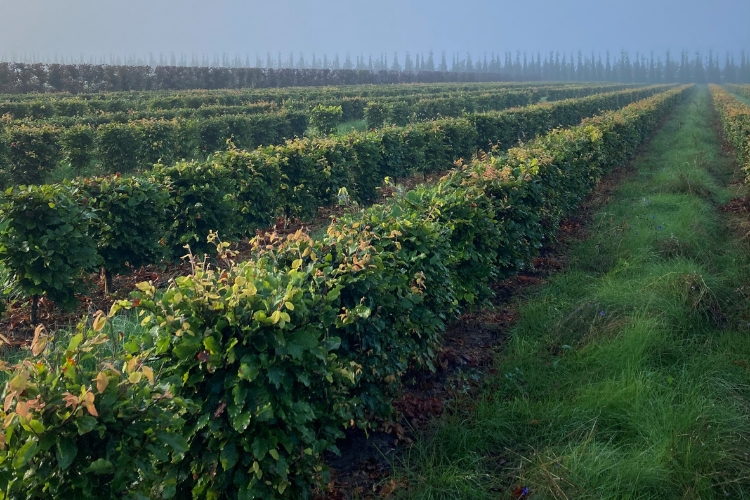
The beech hedge (Fagus sylvatica) has smooth, glossy leaves that turn green later in spring and turn copper-brown in autumn. Many leaves remain on the plant in winter, providing a sheltered hedge in the winter months.
Hornbeam (Carpinus betulus) has fresh green leaves with a serrated edge, sprouting early in spring. In autumn it turns yellow, after which most of the leaves quickly fall off
Both species give a green appearance in the growing season, but thus differ in winter appearance. This is important if you want year-round privacy or a green look.
Fagus sylvatica grows compactly, with fine branching. Carpinus betulus has slightly coarser branches and looser growth. Both are easy to prune and are widely used in garden designs.
In practice, the hornbeam hedge is often used in formal gardens or as a sleek element. Hornbeams are regularly seen in both modern and more natural designs. Both species are versatile; the choice depends on the desired final image and the style of the garden.
Hornbeams like humus-rich, well-drained soil and do less well in wet or heavy clay soils. Hornbeam is more tolerant. This species also grows well on heavier, moister soils, making it suitable for more diverse conditions. For gardens with specific soil conditions, this can be a decisive point in the choice between hornbeam or beech hedge.
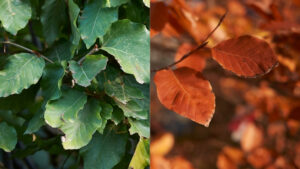
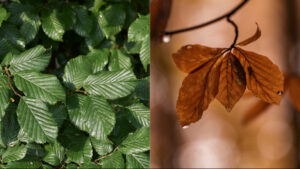
Beech hedge vs hornbeam: comparison at a glance. Fagus Sylvatica (beech hedge) on the left and Carpinus Betulus (hornbeam) on the right.
| CHARACTER | FAGUS SYLVATICA (BEECH HEDGE) | CARPINUS BETULUS (HORNBEAM) | |
| Evergreen in winter | Yes, partly | No, mostly bare | |
| Leaf shape | Smooth and shiny | Matt and jagged | |
| Growth | Compact | Slightly looser | |
| Soil type | Light, permeable | Also heavy, wet soil | |
| Application/style | Formal gardens | Versatile |
At Smits Nursery, we like to think along with you. Whether you are a private individual wanting to plant a hedge yourself, or a gardener or garden designer looking for the right species: we are happy to help you with specific advice.
Visit our nursery or contact us for advice or a quote. Discover for yourself the difference between beech and hornbeam - and which one best suits your garden plan.