Crab apple ‘Butterball’

Family: Rose family

Malus 'Butterball'

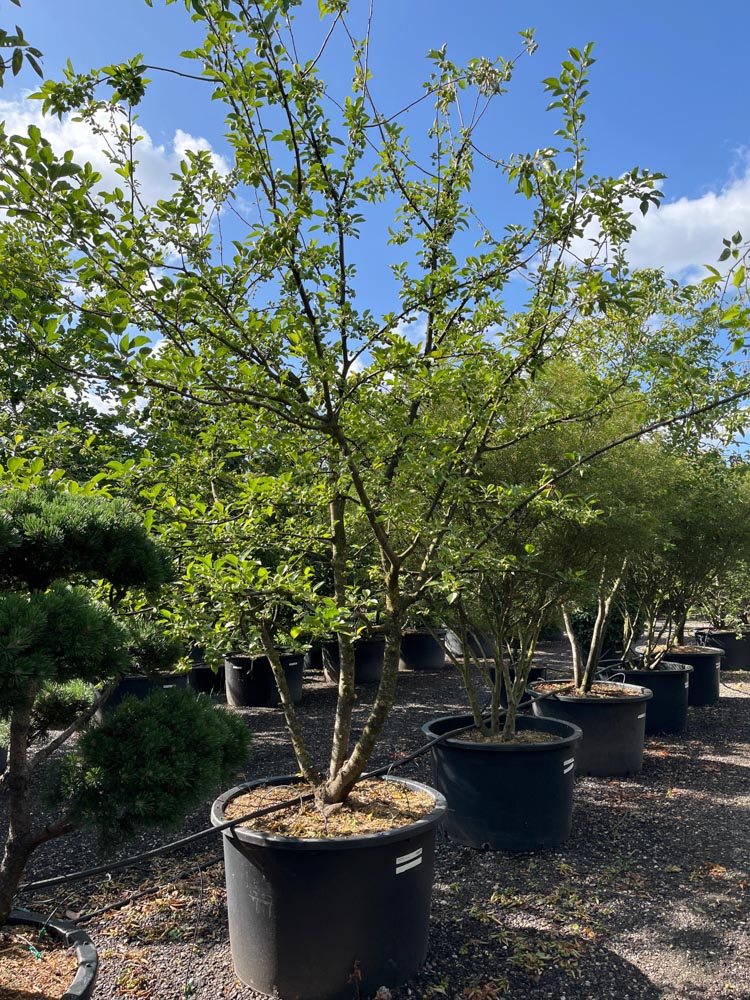
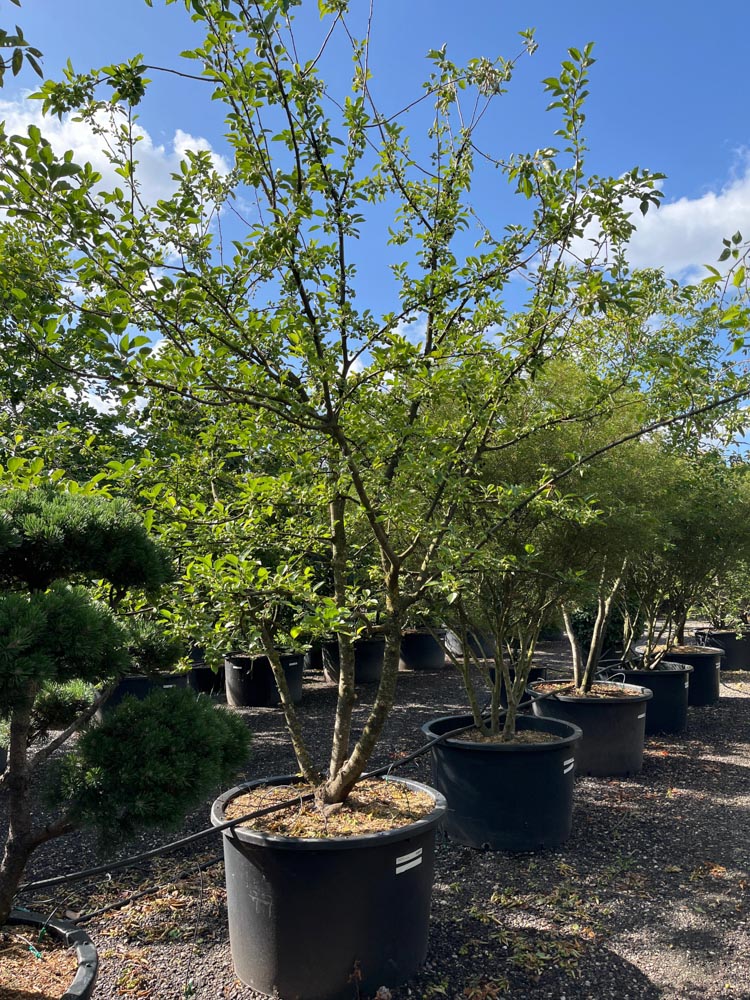
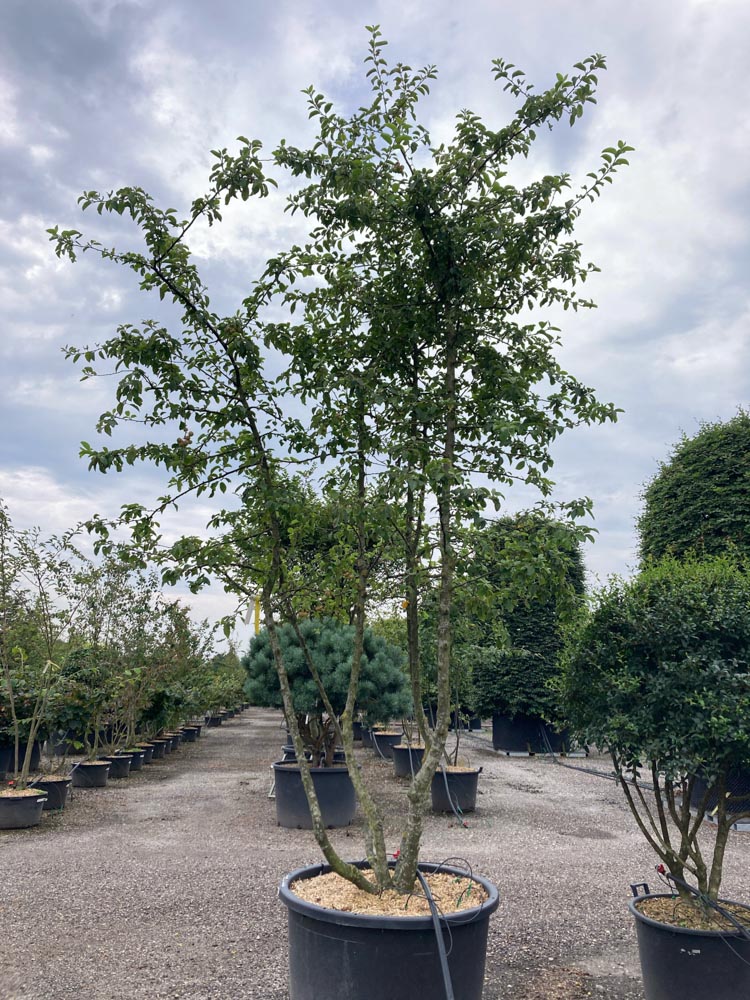
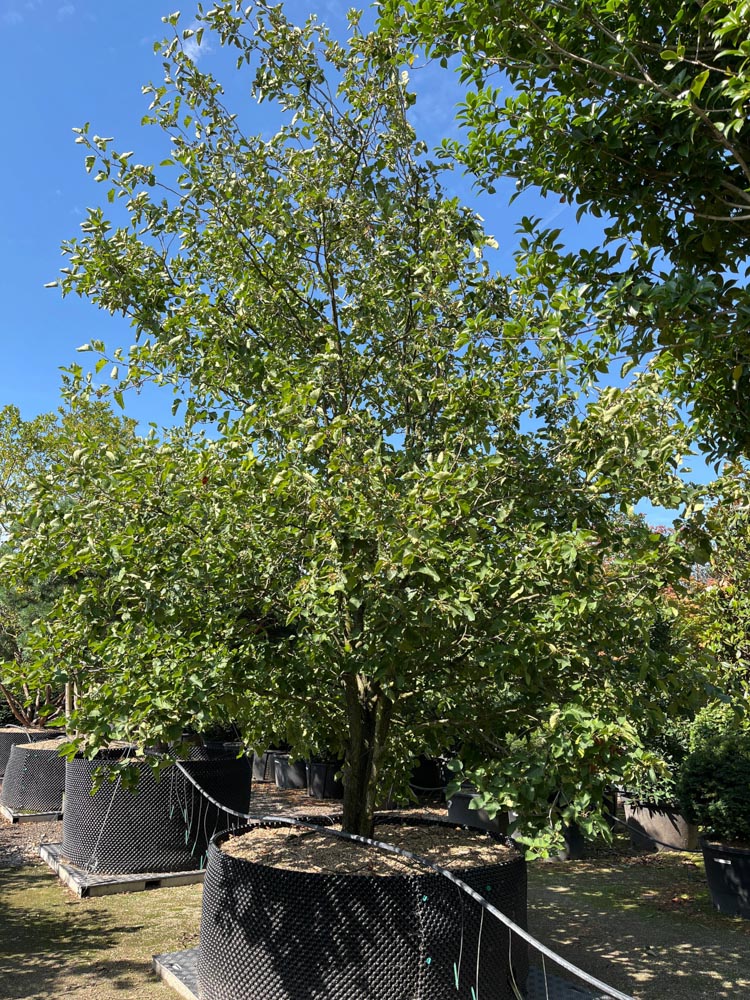
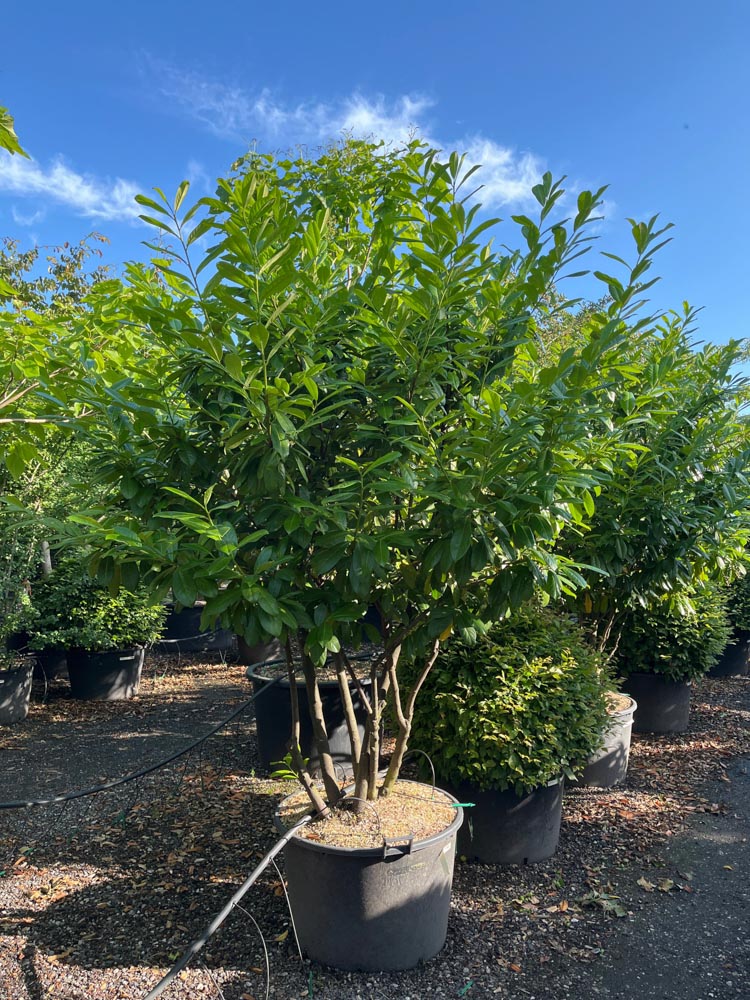
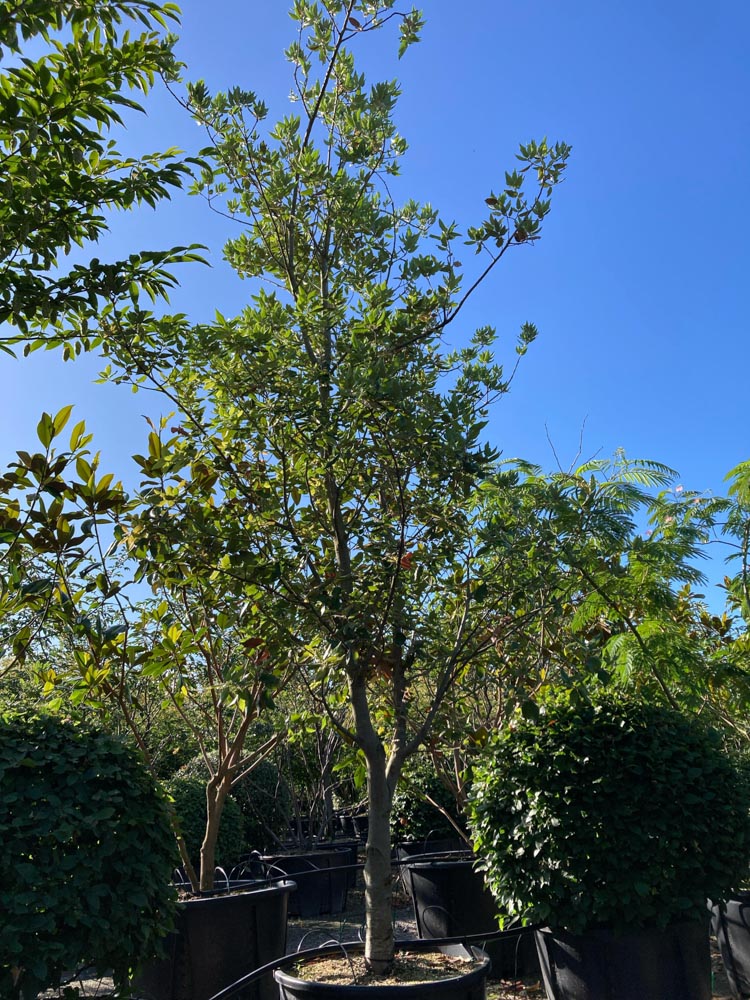
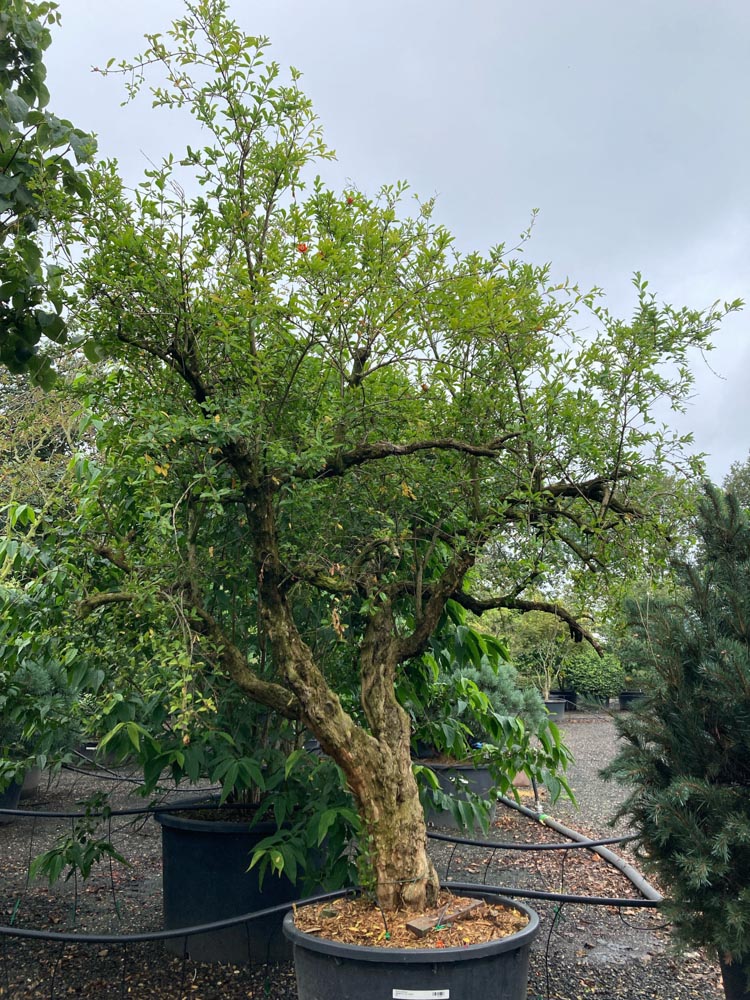
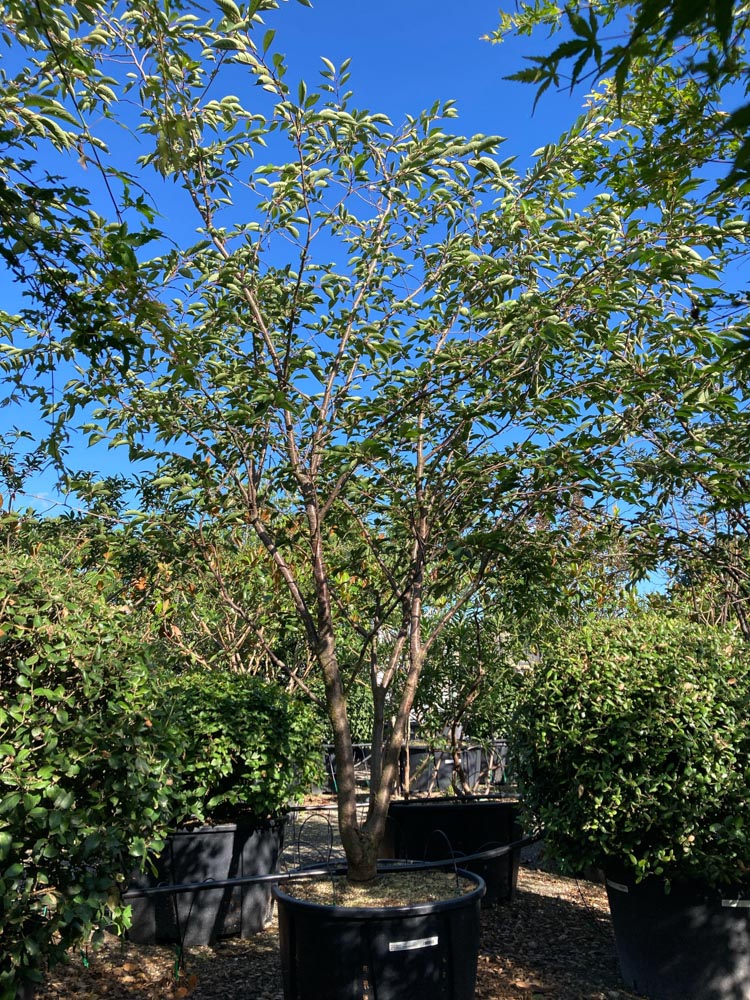
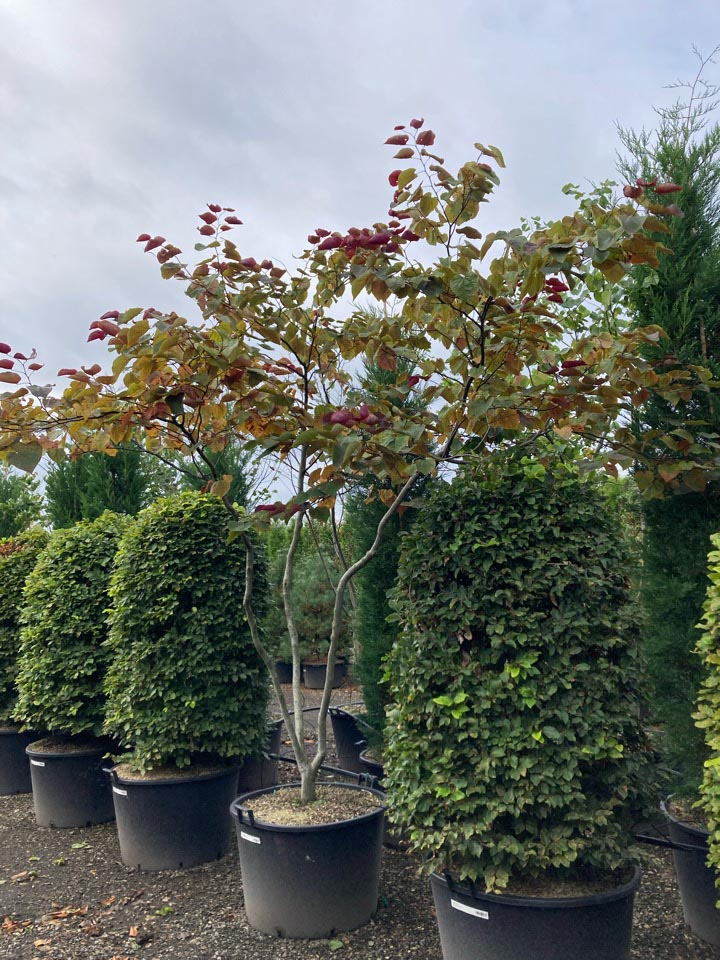
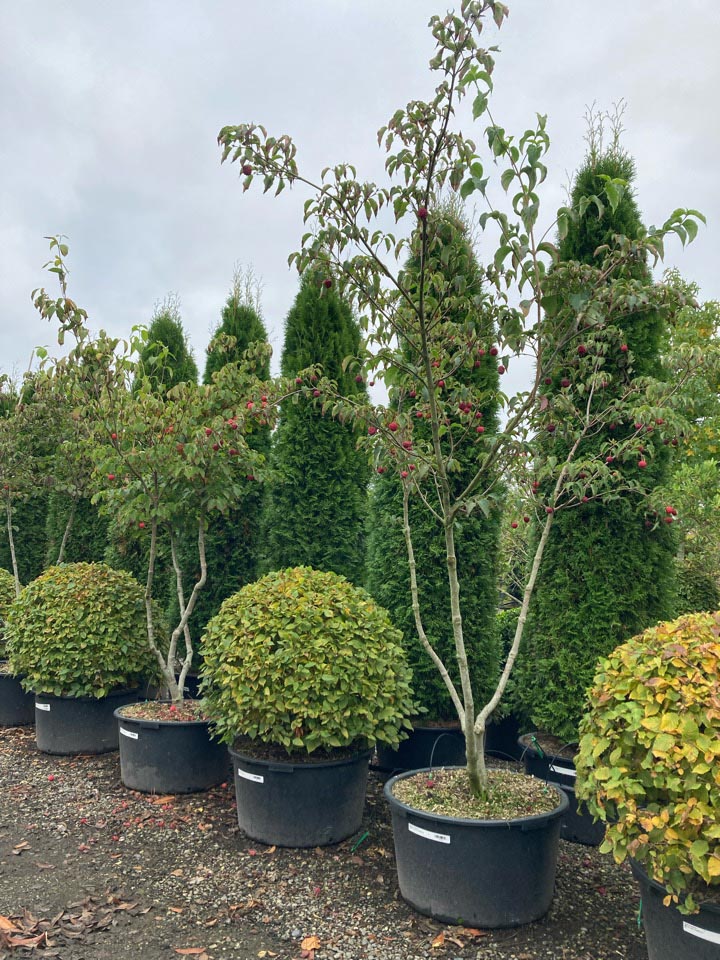
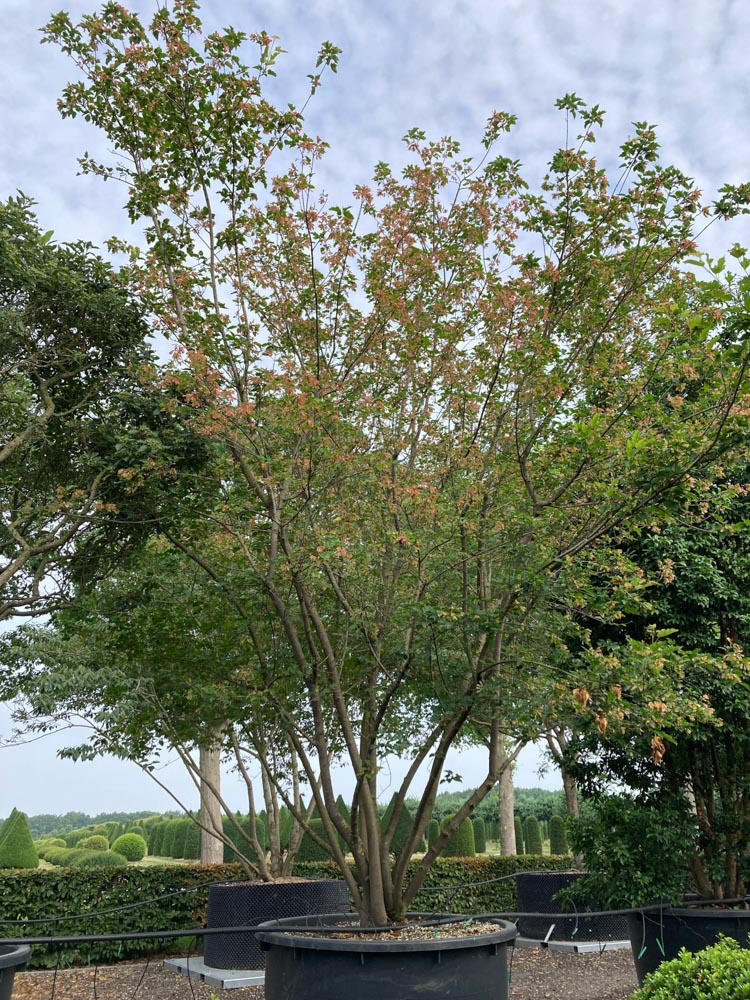
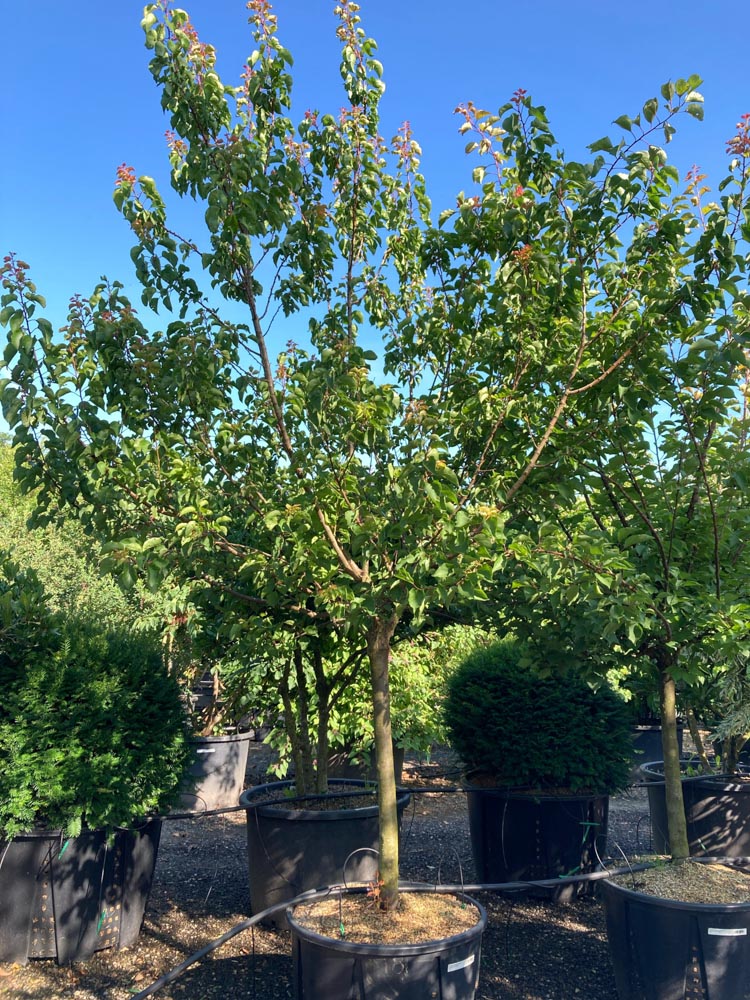
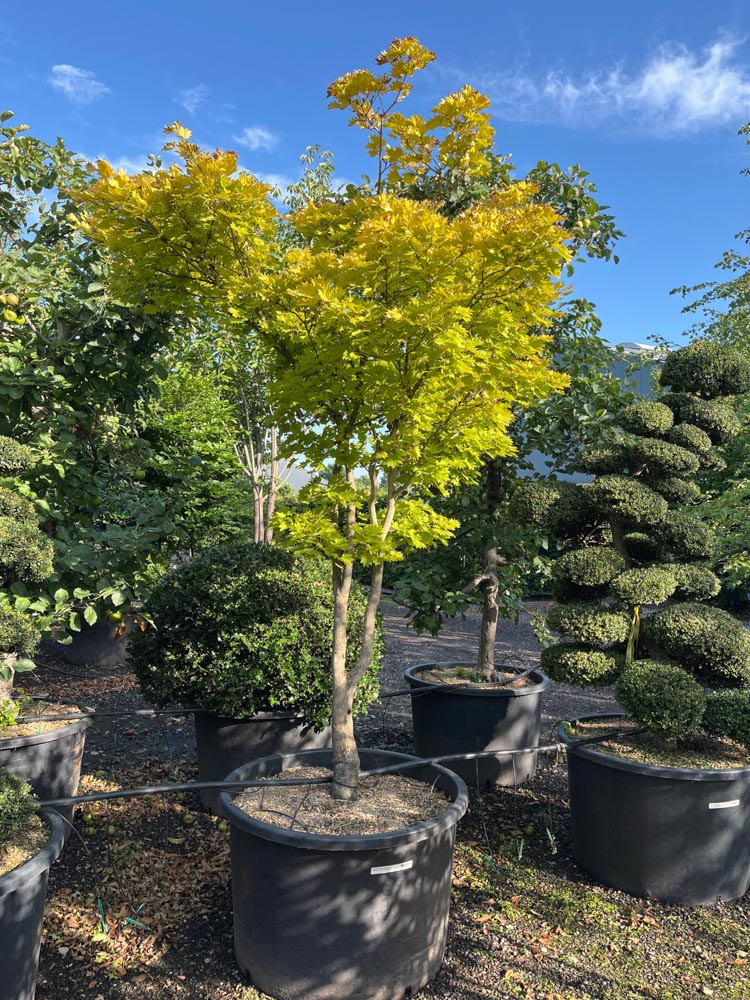
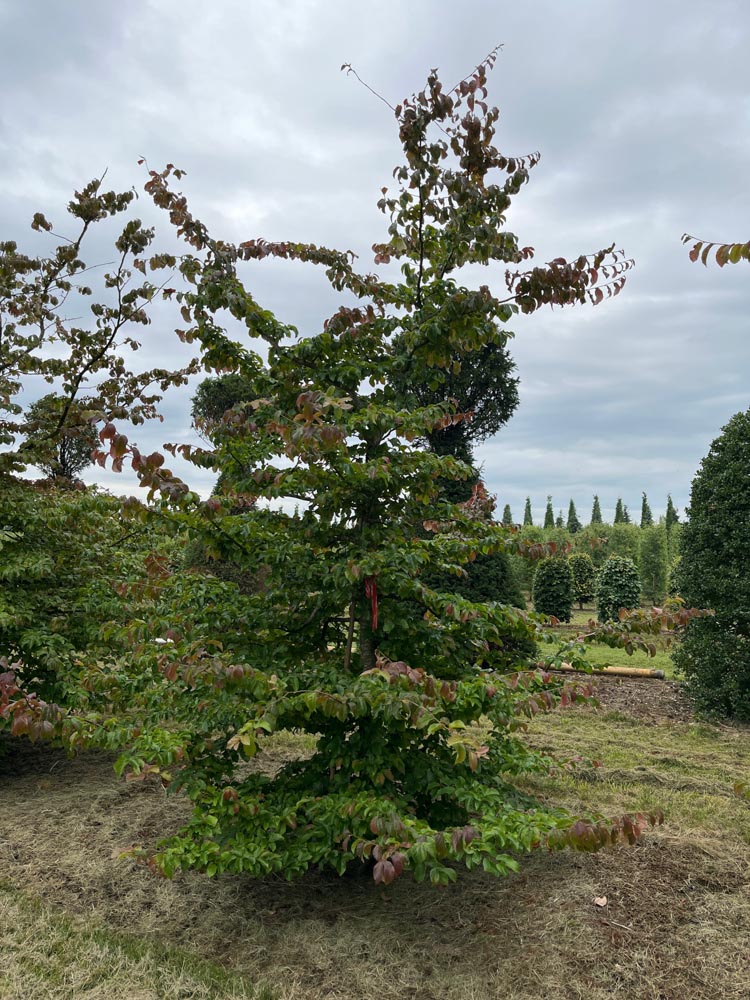
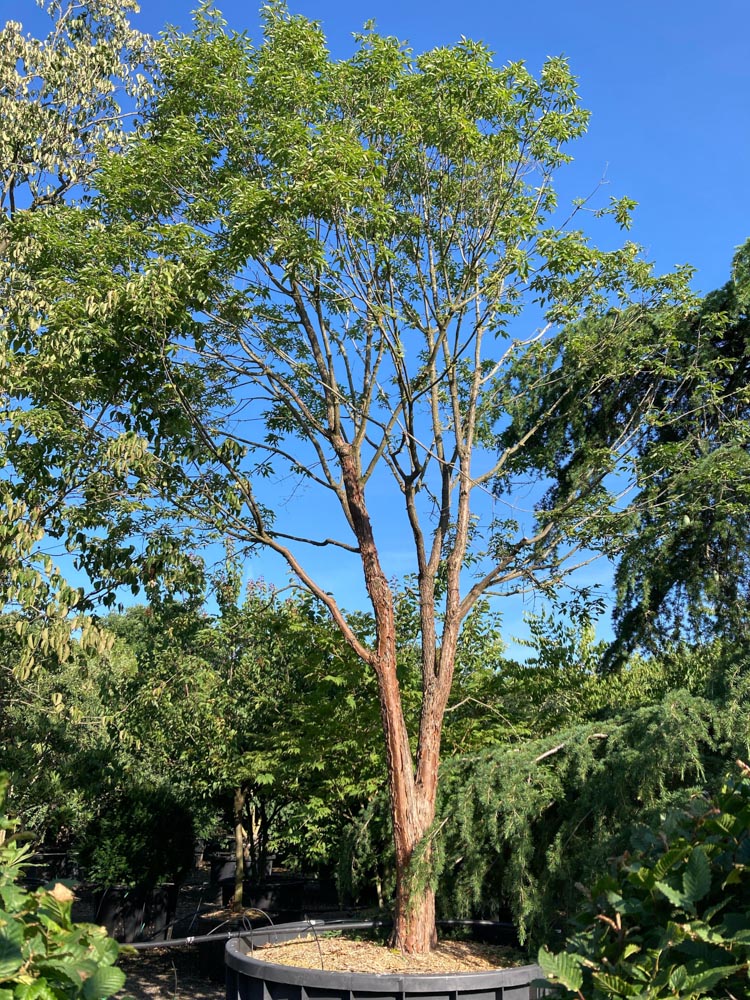
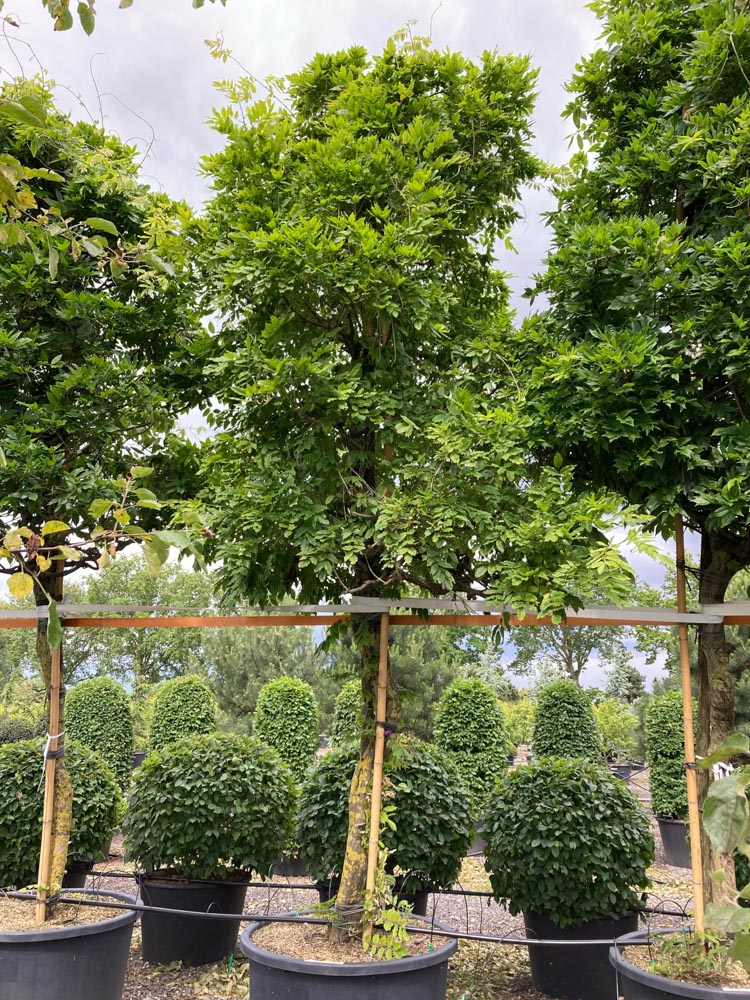
Malus 'Butterball' Crabapple ‘Butterball’ height 300/350 cm in container

About Malus 'Butterball'

Malus ‘Butterball’ is an ornamental apple cultivar that gets its name from its most distinctive feature: the extraordinarily rich production of small, buttery yellow to orange-yellow apples that shine golden in the sun in autumn. Those large quantities of small ornamental apples, which hang on the branches for a long time, are its main decorative strength. Its growth form is broad and open, with gracefully hanging twig ends. At maturity, the tree grows 4 to 6 metres tall. Available at Smits as a multi-stemmed tree in sizes from 300/350 to 350/400 centimetres in height. The trunk has a grey-brown, slightly grooved bark. On more mature specimens, the bark becomes more pleated and characterful. The leaves are elliptical, dark green. In spring, it sprouts early and fresh green. In summer, the leaf is dark green. In autumn, it turns to orange and yellow tones before falling. Completely deciduous. Flowering occurs in April and May with pinkish-red buds that open to white to pale pink flowers. That two-stage bud-to-flower transition - from dark pink buds to light opened flowers - is characteristic of the crab apple group. After flowering, the crab apples develop: small, butter-yellow to orange-yellow apples 2 to 3 centimetres in diameter that ripen in autumn. They remain on the branches for a long time and become a food source for birds in late autumn and winter. The yellow colour is striking and special in the ornamental apple assortment, which mostly turns red and orange. Growth is moderate to quite fast.

Application and location

Malus ‘Butterball’ is an attractive solitary accent tree for gardens, parks and villa plantings. The yellow ornamental apples are particularly decorative in autumn and are a valuable food source for birds. It thrives in full sun to semi-shade. It grows well on loamy, clay, calcareous soil and sand. Air pollution tolerant, suitable for urban environments. Winter hardiness is good. Available from Smits as a multi-stemmed tree from 300/350 to 350/400 centimetres in height.

Do you already know exactly what you need?

Every garden and every greenery project is different. Therefore, at Smits Arboriculture we do not make standard quotations, but we like to look together at what suits your wishes, planning and the character of the project.
our opinion

The characteristics below show the ideal conditions for a Malus ‘Butterball’. They will help you choose the right species for your project, but may vary slightly from one garden or project to another.

the runners

This is a list of the most frequently selected products. Looking for a specific product? Visit contact with us and we will be happy to help you personally. 

Dimensions

Value

Delivery form

Feature

Photo

Height
300/350 cm
Container
Multi-strain
89607-1.jpg

Is the image missing?
Mail to info@smitsbv.nl

Height
350/400 cm
Container
Multi-strain
89158-1.jpg

Is the image missing?
Mail to info@smitsbv.nl

Is the Malus ‘Butterball’ you are looking for not listed?

No worries. Chances are we still have the species you are looking for! Visit contact with us and we will be happy to help you. 

Every garden and every greenery project is different. Therefore, at Smits Arboriculture we do not make standard quotations, but we like to look together at what suits your wishes, planning and the character of the project.
Get inspired by our park, container field and the way trees and hedges come together in the design. Ideal for getting ideas for your next project.
Discover how gardeners and designers apply our greenery in high-quality garden and green space projects. From villa gardens to larger landscape projects.

FAQ

Frequently asked questions about Malus 'Butterball'

The yellow to orange-yellow colour of the ornamental apples is the most distinctive feature of ‘Butterball’. Most ornamental apples turn red or orange; ‘Butterball’ turns buttery yellow to warm yellow. That striking yellow colour is special and combined with its rich fruit production makes it recognisable.
In April and May with pinkish-red buds that open to white to pale pink flowers. That transition from darker bud to lighter flower is characteristic of ornamental apples. After flowering, the yellow ornamental apples develop during the summer and ripen in autumn.
The yellow ornamental apples ripen in autumn and remain on the branches for a long time - sometimes well into winter, until birds eat them. That long presence of the decorative fruits gives the tree an ornamental value that extends well beyond the flowering season.
At maturity, the tree grows 4 to 6 metres tall with a wide, open crown. At Smits, it is available as a multi-stemmed tree in sizes ranging from 300/350 to 350/400 centimetres in height.
Technically, yes but ornamental apples are small, sour and bitter - not pleasant to eat raw. They can, however, be used for jam or jelly and are a valuable food source for birds like thrushes, blackbirds and starlings in late autumn and winter.
Yes, well hardy. Ornamental apples are generally reliably hardy in the Netherlands. The tree tolerates harsh winters well. In winter, when the tree is bare, the yellow ornamental apples are extra decorative.
Yes, fully deciduous. The leaves turn orange-yellow in autumn before falling. After leaf fall, the yellow ornamental apples are optimally visible on the bare branches - a beautiful combination of bare winter branching with hanging yellow fruits.
Loam, clay, calcareous soil and sand are suitable. The Crabapple is fairly soil-tolerant and also works well in urban environments with limited soil quality. The soil is preferably well-drained.

See also