About Acer palmatum Sangokaku
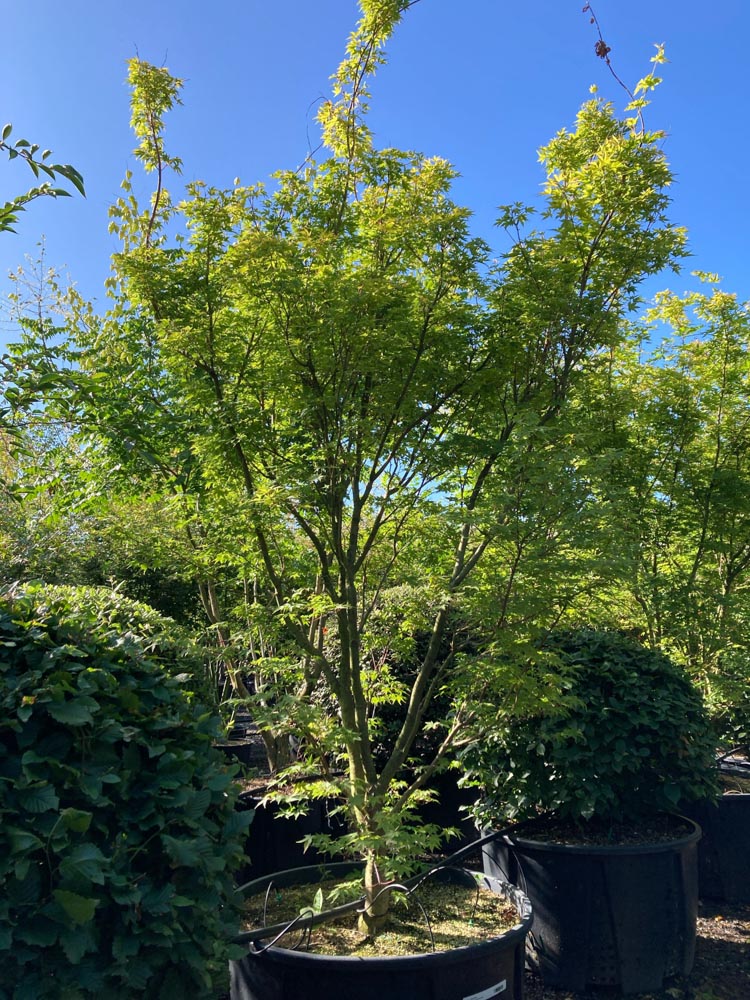
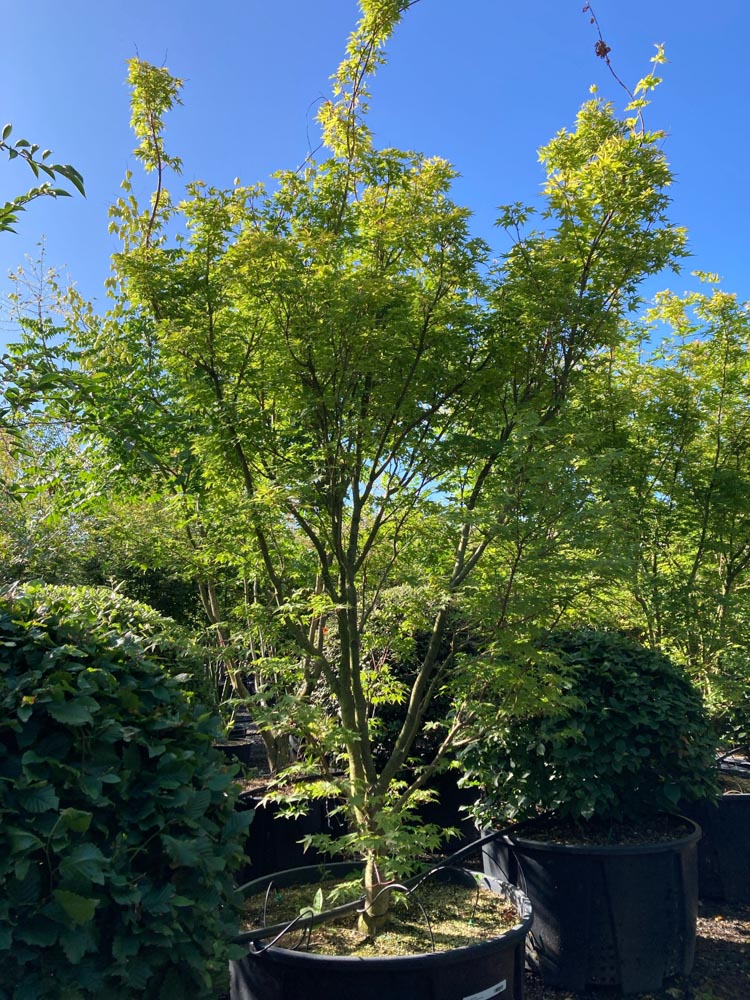
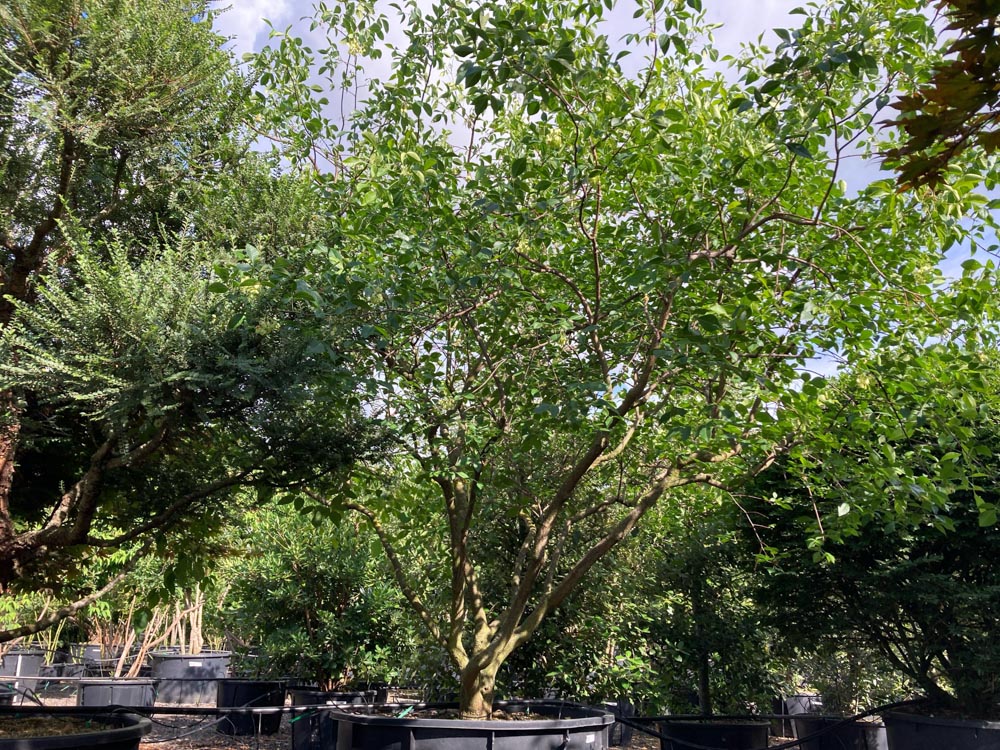
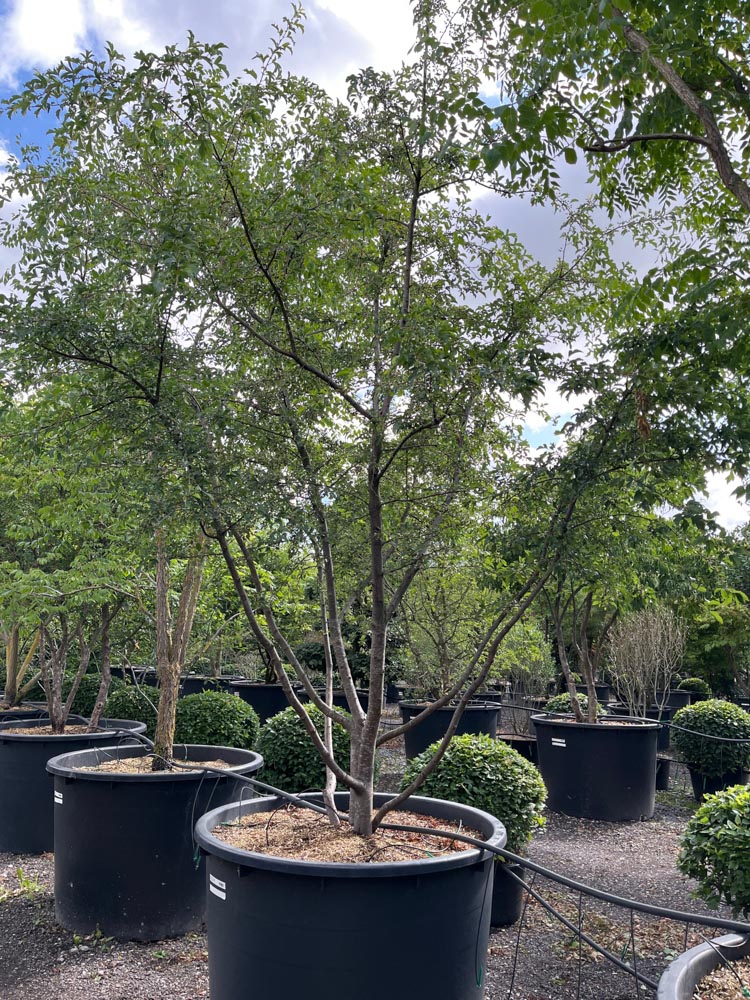
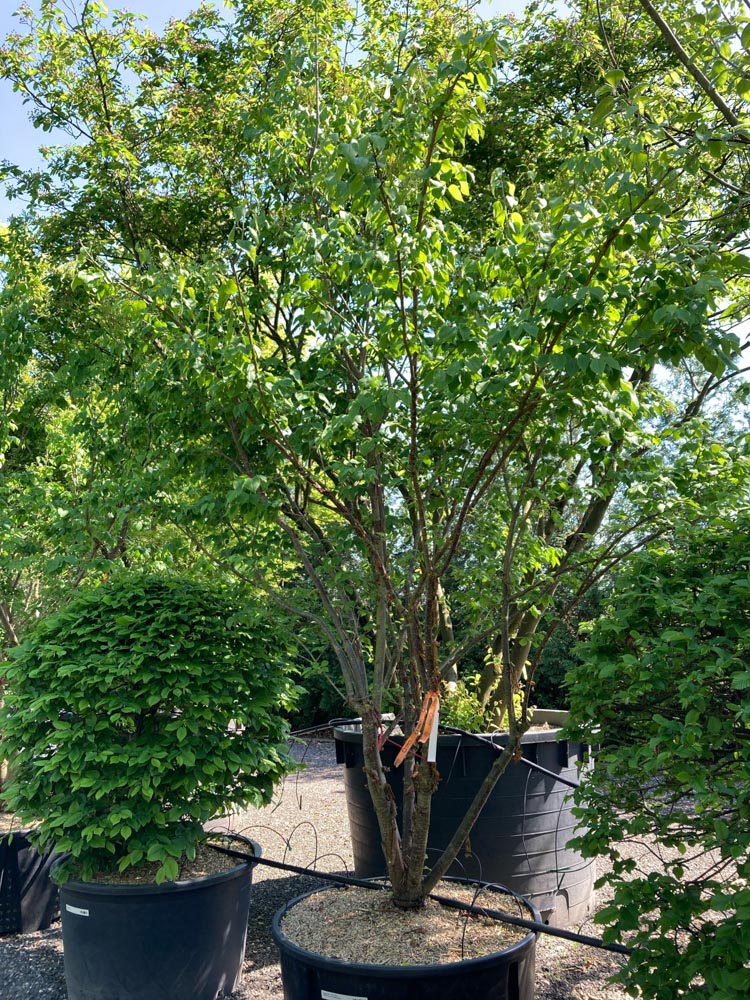
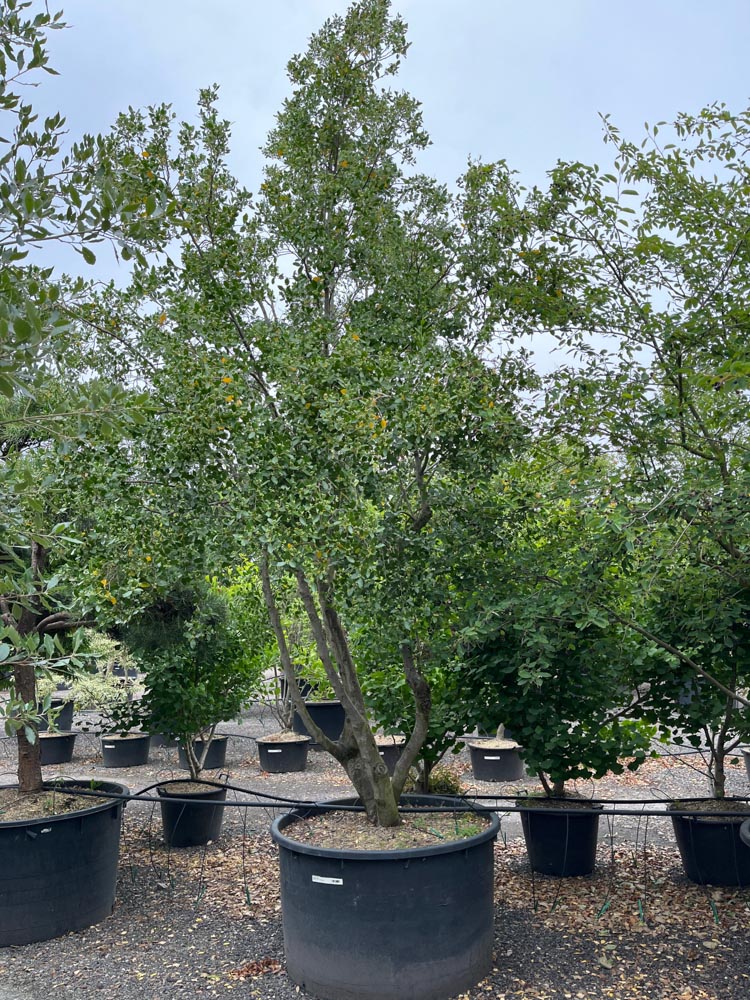
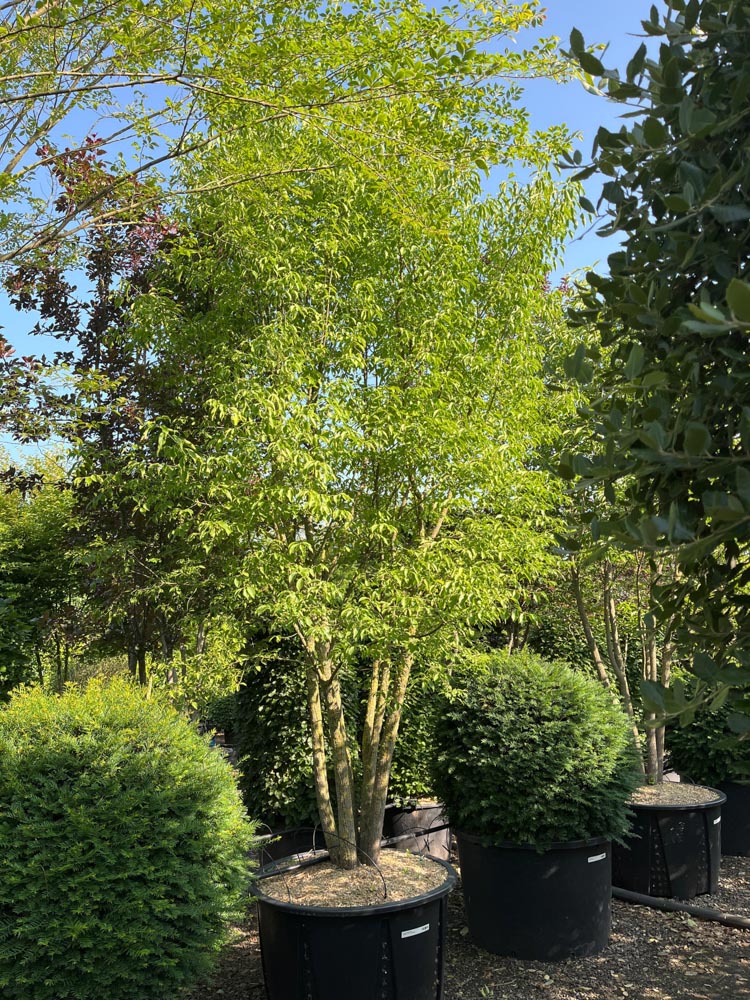
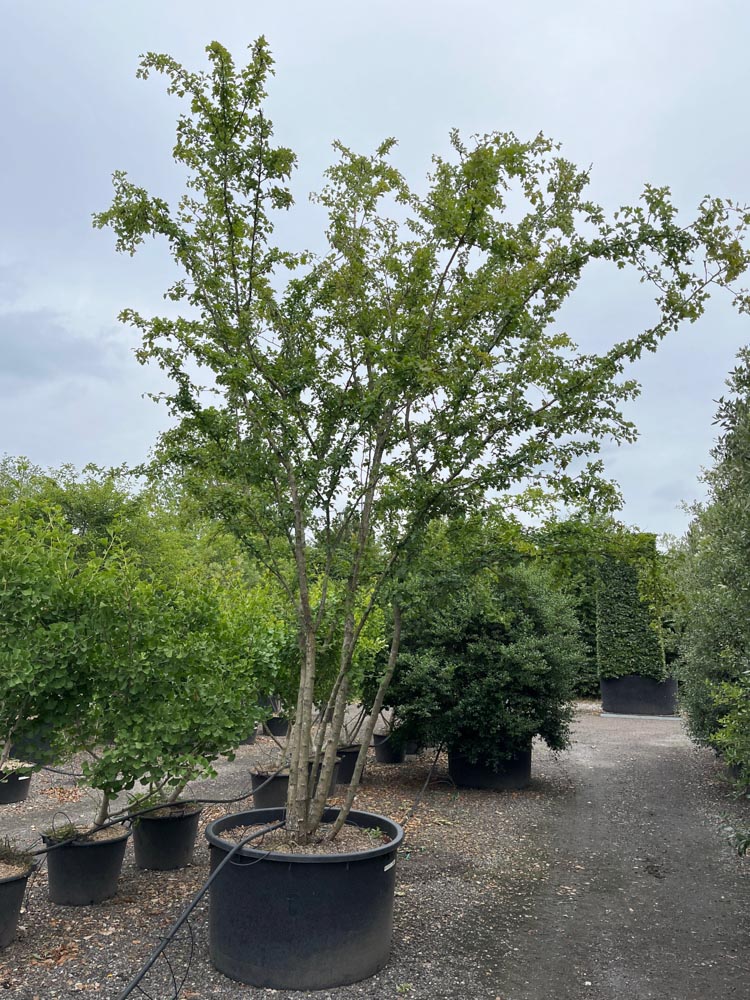
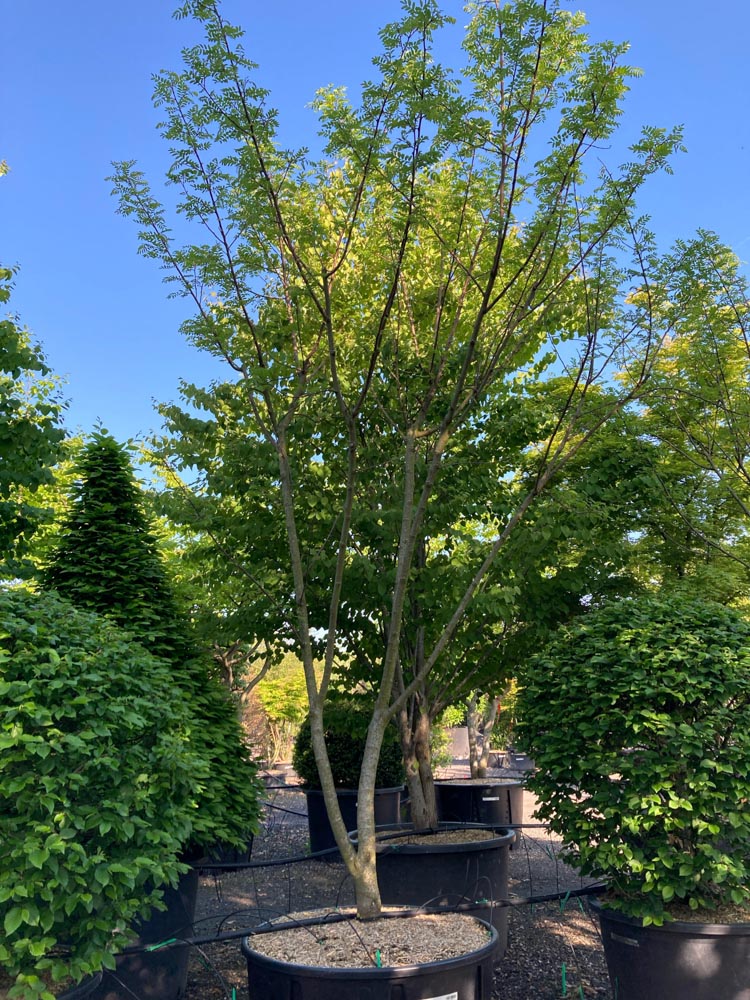
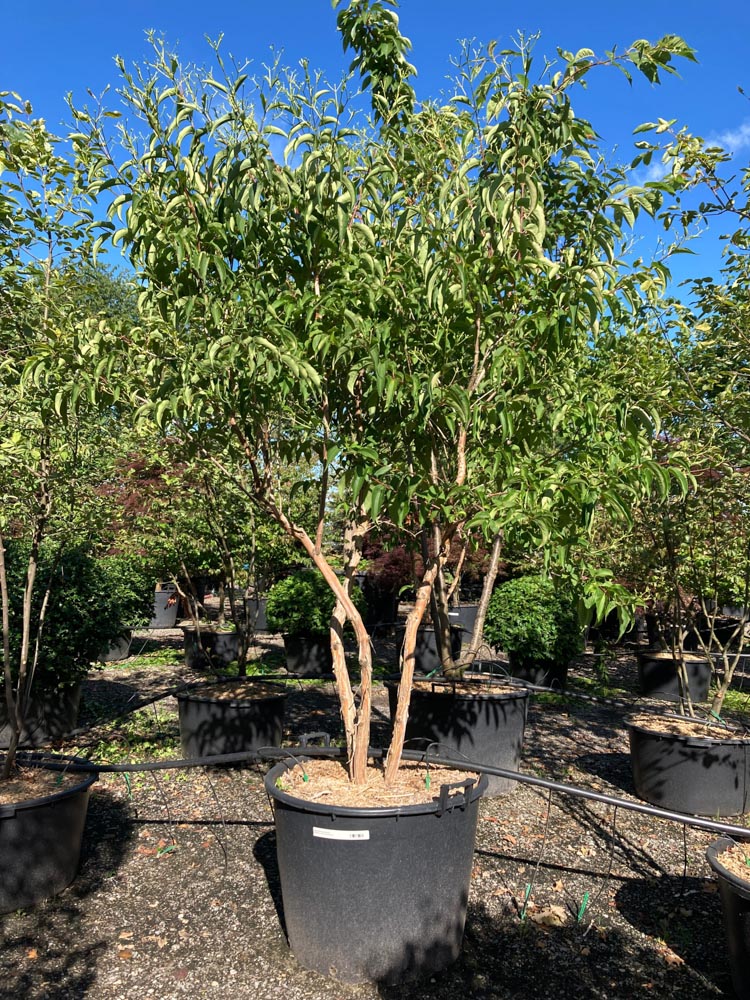
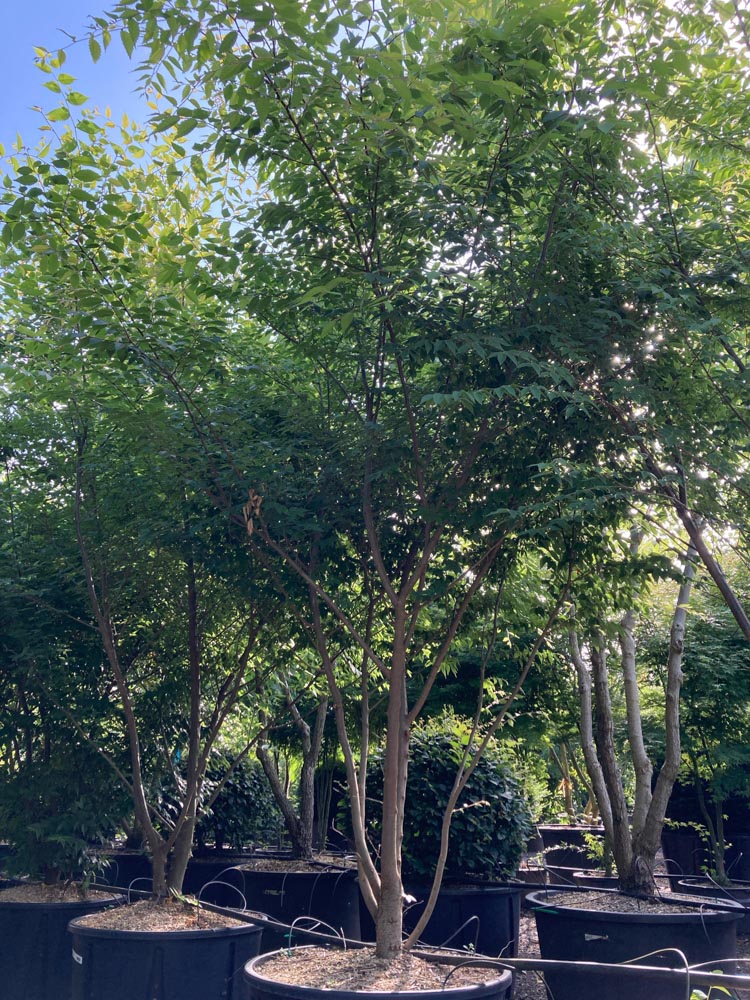
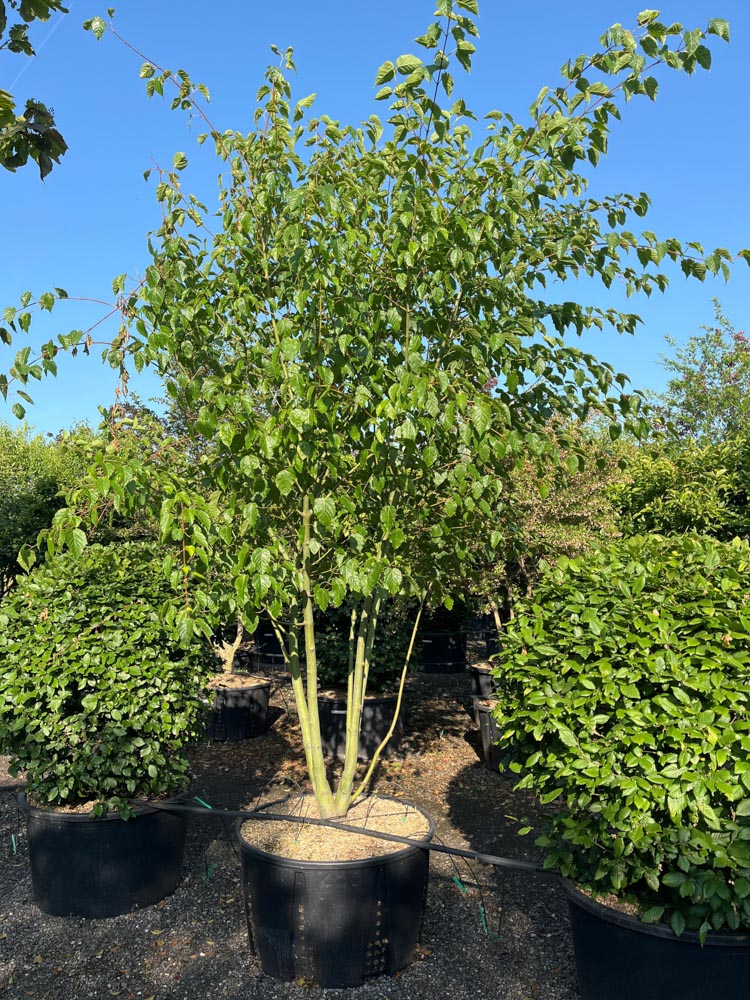
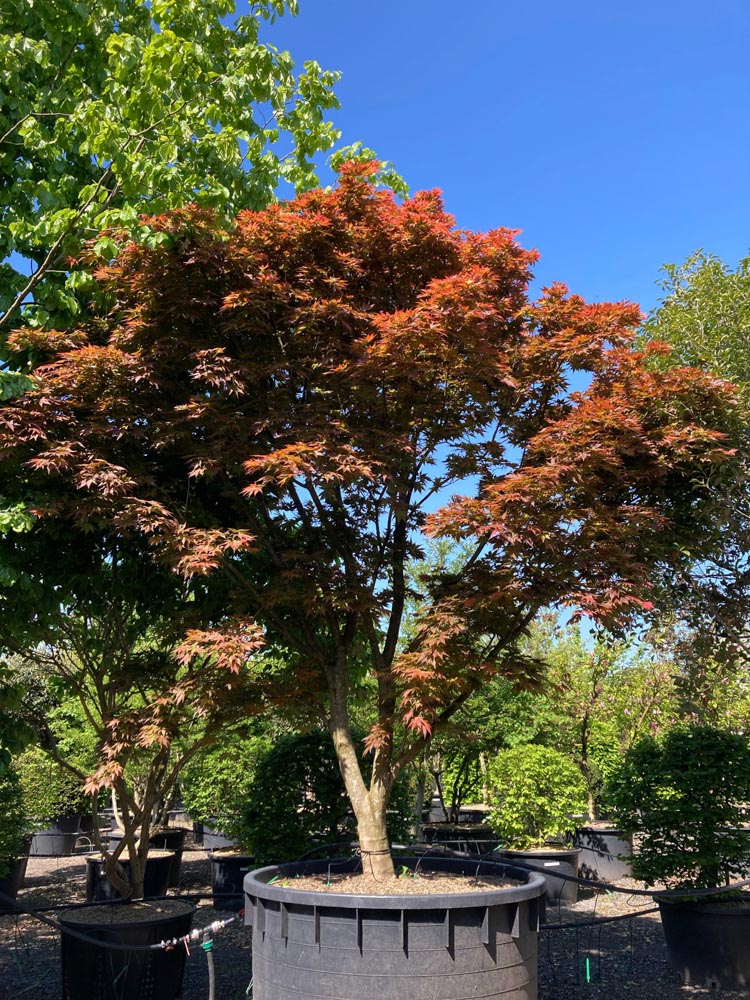
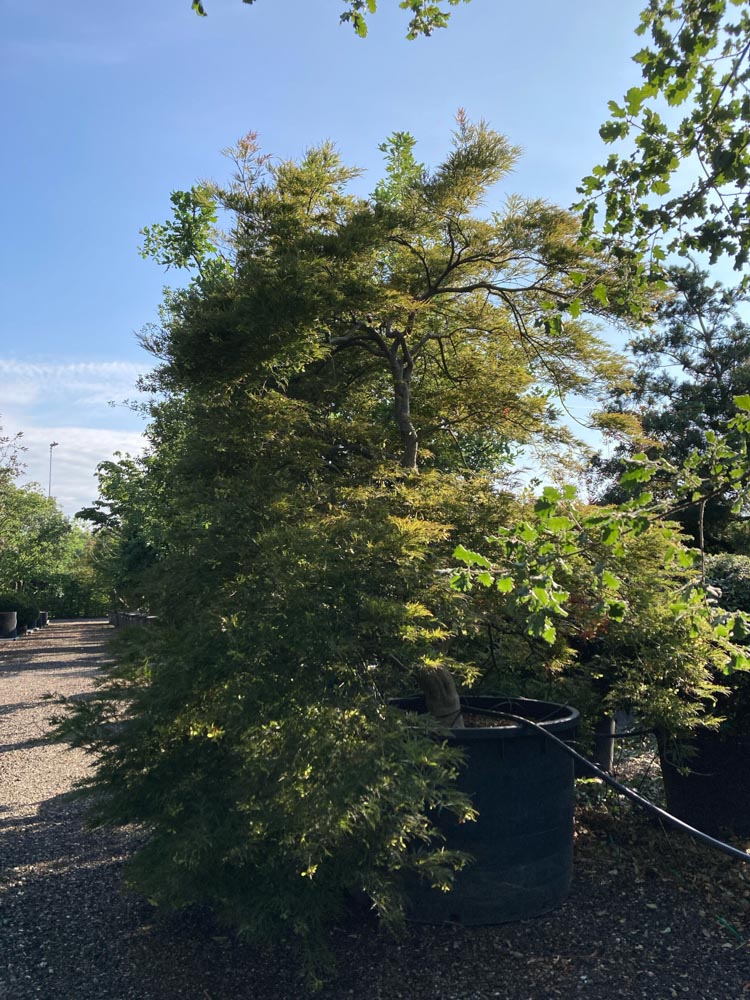
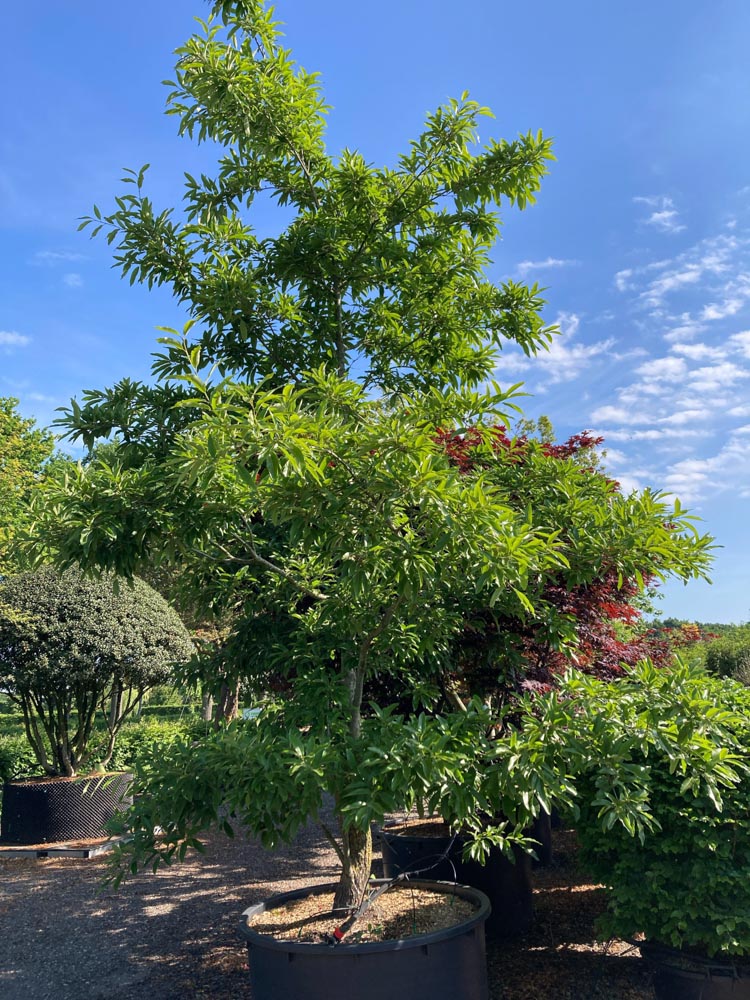
Acer palmatum ‘Sangokaku’, also known as the coral maple in Dutch, is one of the most striking cultivars of Japanese maple. The name ‘Sangokaku’ is Japanese for ‘coral column’ and refers to the characteristic coral-red colour of its young twigs and shoots, which offer year-round ornamental value but are most striking in winter when there are no leaves on the tree. The coral maple has its home in Japan, where it has been appreciated for centuries in classical landscaping. The growth habit is upright and relatively narrow for a Japanese maple, with an airy, open crown structure. The trunk and branches are grey-green and the young shoots turn intense red, giving the tree an elegant appearance even as a multi-stemmed set-up. The leaves are hand-shaped lobed and appear in spring in a light green to yellow-green hue, changing to fresh dark green in summer. In autumn, the colour changes to warm orange and yellow, a beautiful conclusion to the growing season. The flowers in April are small and red in colour, inconspicuous but present early in the season. After flowering, small winged fruits form. The growth rate is moderate, keeping the tree manageable. The most distinctive feature of ‘Sangokaku’ is its winter silhouette: the coral-red twigs glow in winter light and, when combined with snow or hoarfrost, the effect is exceptional. At Smits, multi-stemmed specimens are available from 250/300 cm to 300/350 cm in height.
Application and location
Acer palmatum ‘Sangokaku’ is ideally a solitary accent tree for gardens, villa grounds and park designs where year-round ornamental value is central. In winter, its coral-red twig structure gives a special effect, especially near water or in a spot with a light background. A sheltered position in semi-shade or soft morning sun is ideal; bright afternoon sun and strong winds affect the fine foliage. The soil should be humous, moist and well-drained, preferably slightly acidic to neutral. Lime and drought are unfavourable. Winter hardiness is good for Dutch conditions. The tree is suitable for garden and park, not specifically for urban planting. As a multi-stemmed set-up, the red twig structure comes out best.
Do you already know exactly what you need?
Every garden and every greenery project is different. Therefore, at Smits Arboriculture we do not make standard quotations, but we like to look together at what suits your wishes, planning and the character of the project.