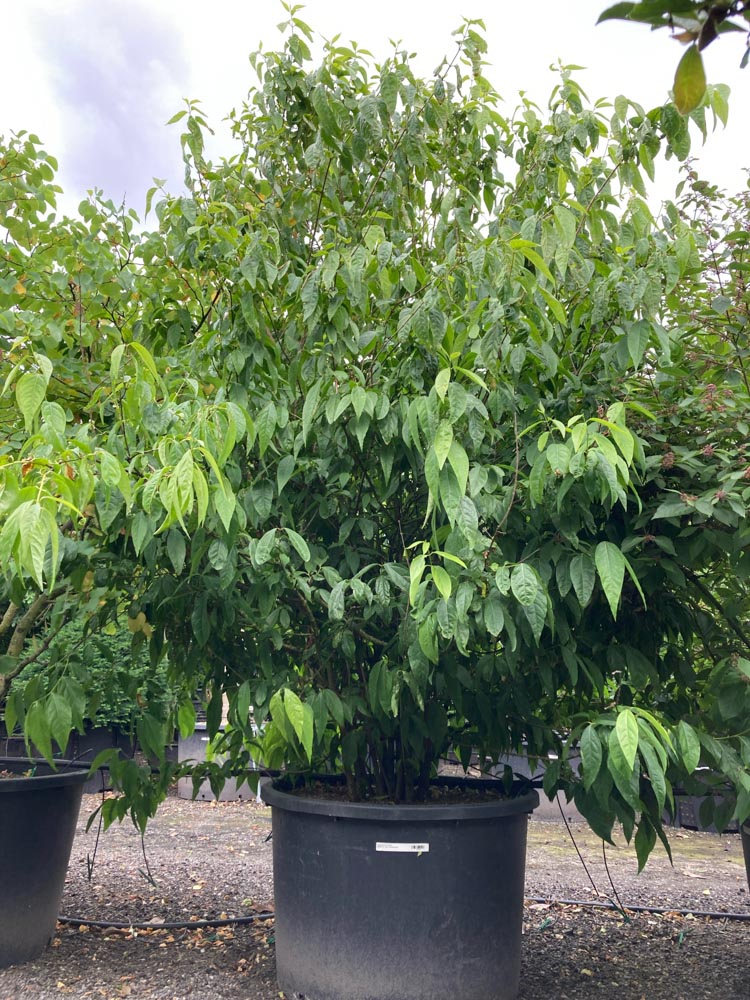
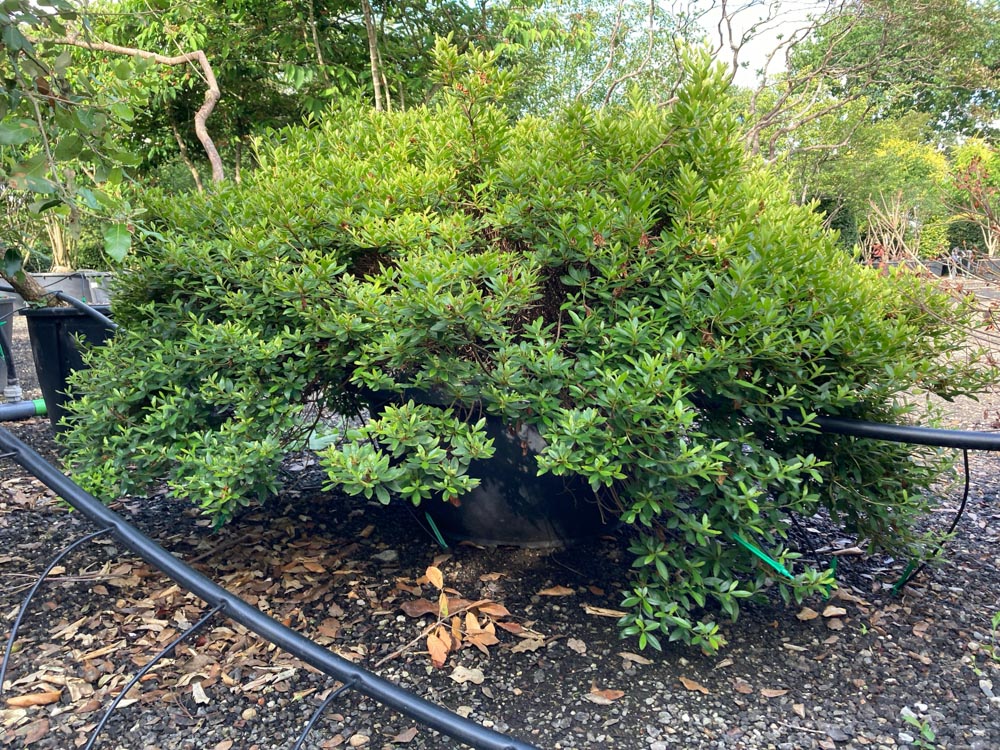
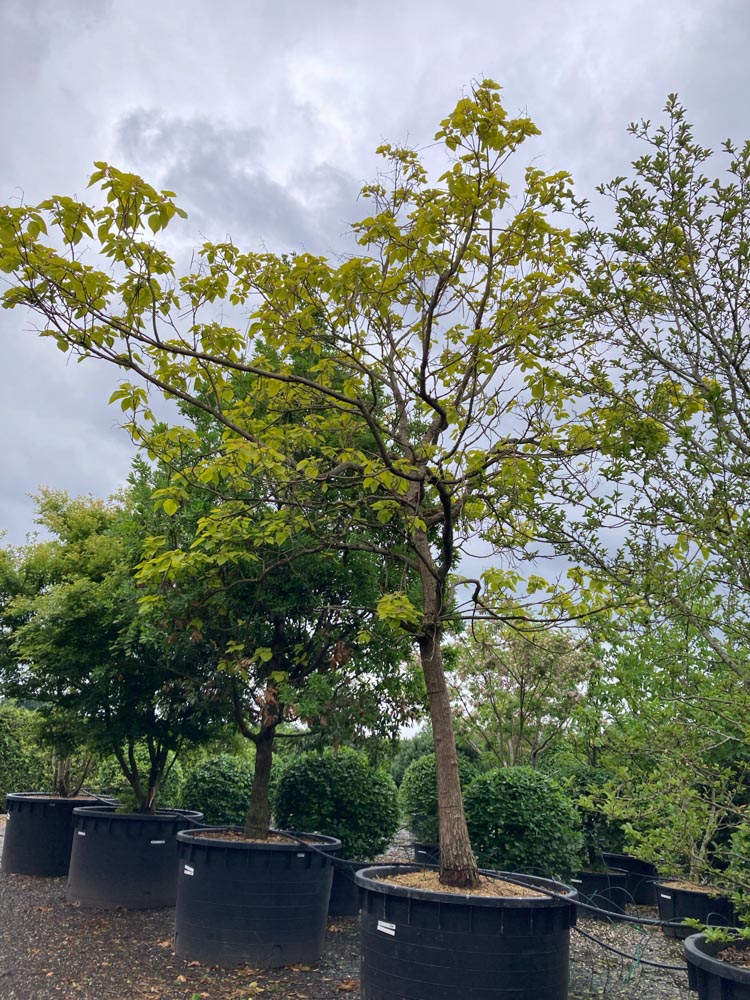
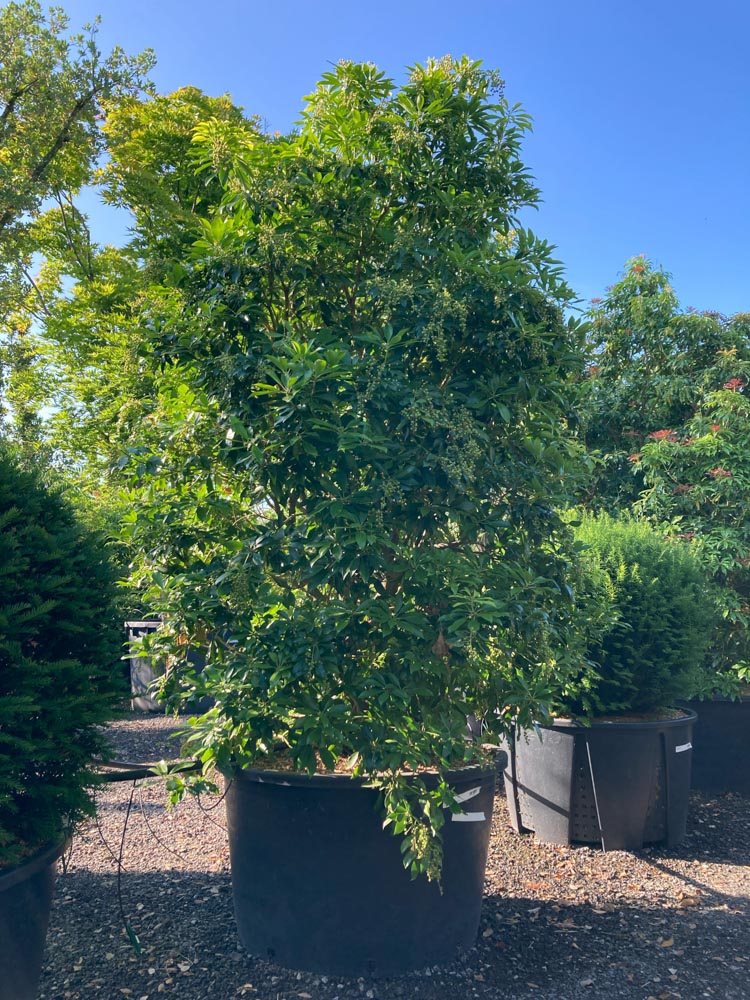
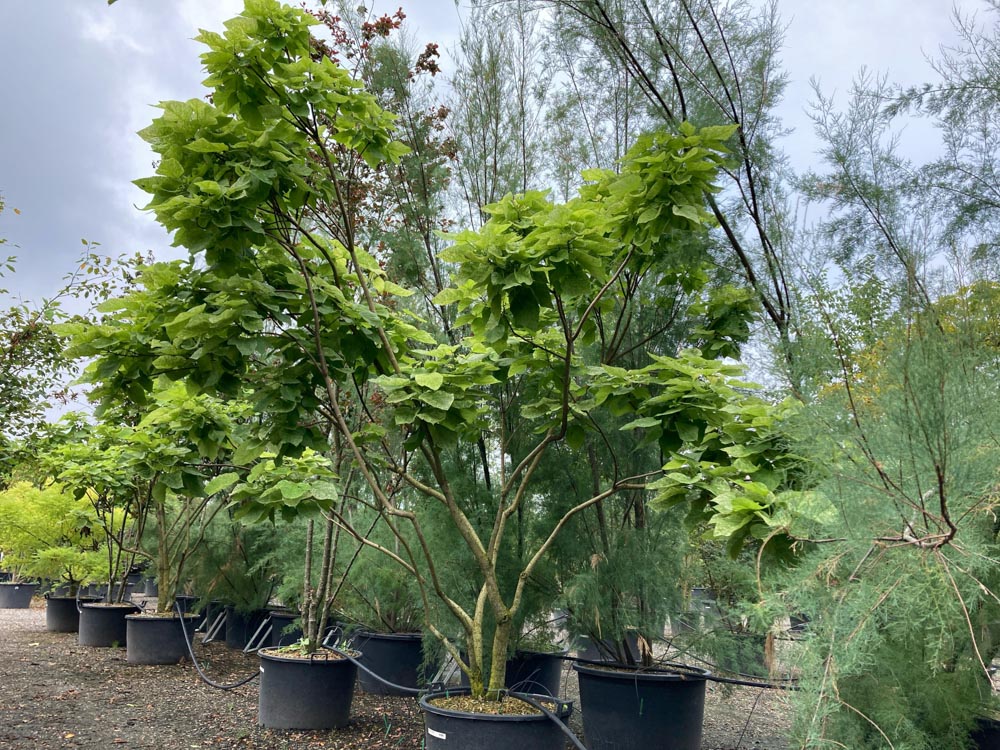
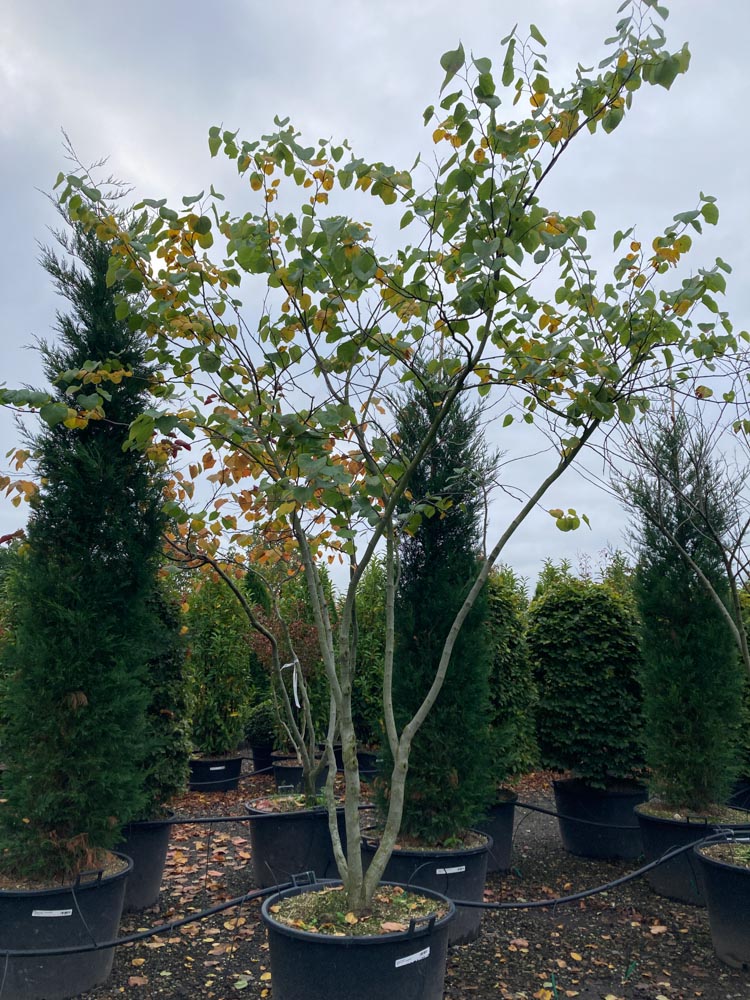
About Koelreuteria paniculata
The lampoon tree (Koelreuteria paniculata) is one of the few trees that blooms in high summer, occupying a unique position in the flowering calendar of a garden or park. The species originates from northern China and Korea and was introduced to Europe in the 18th century.
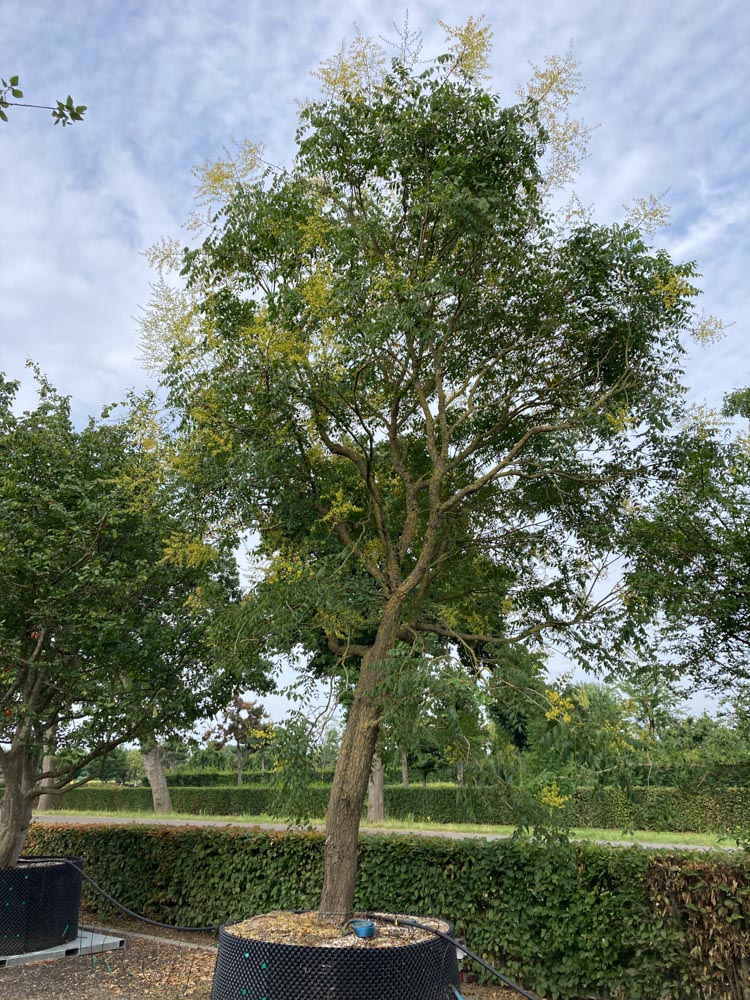
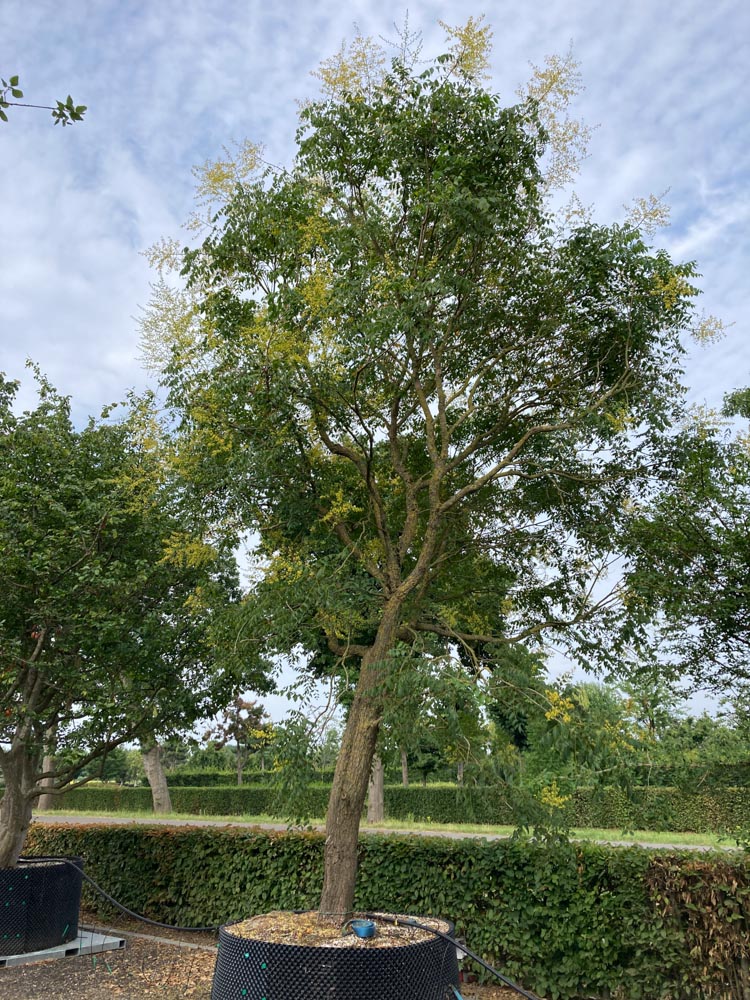
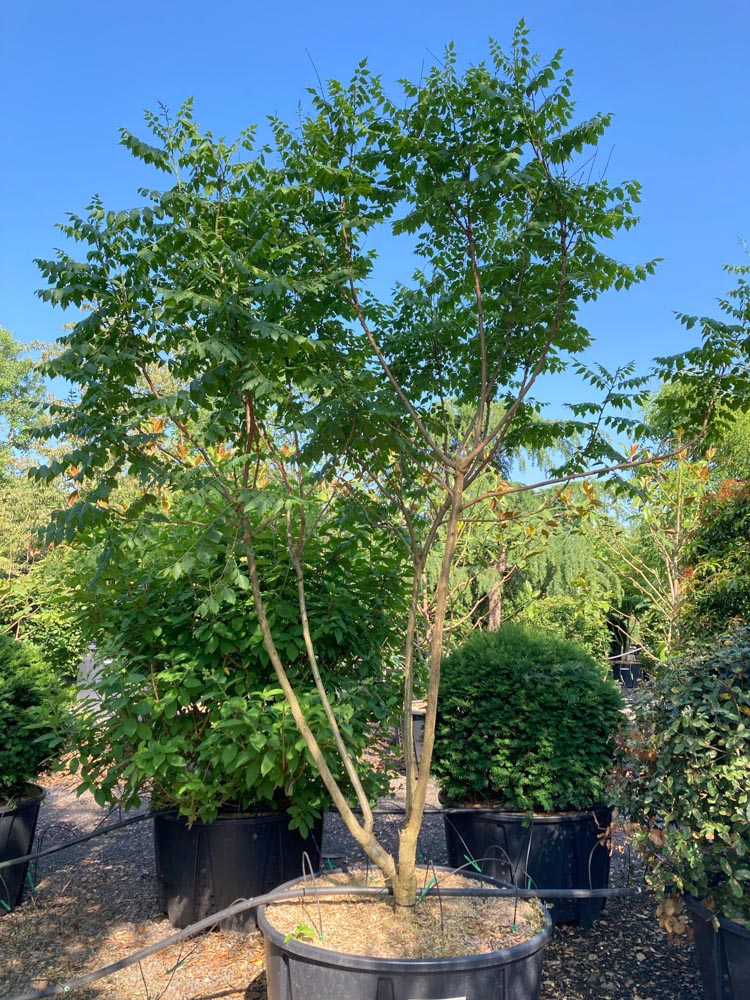
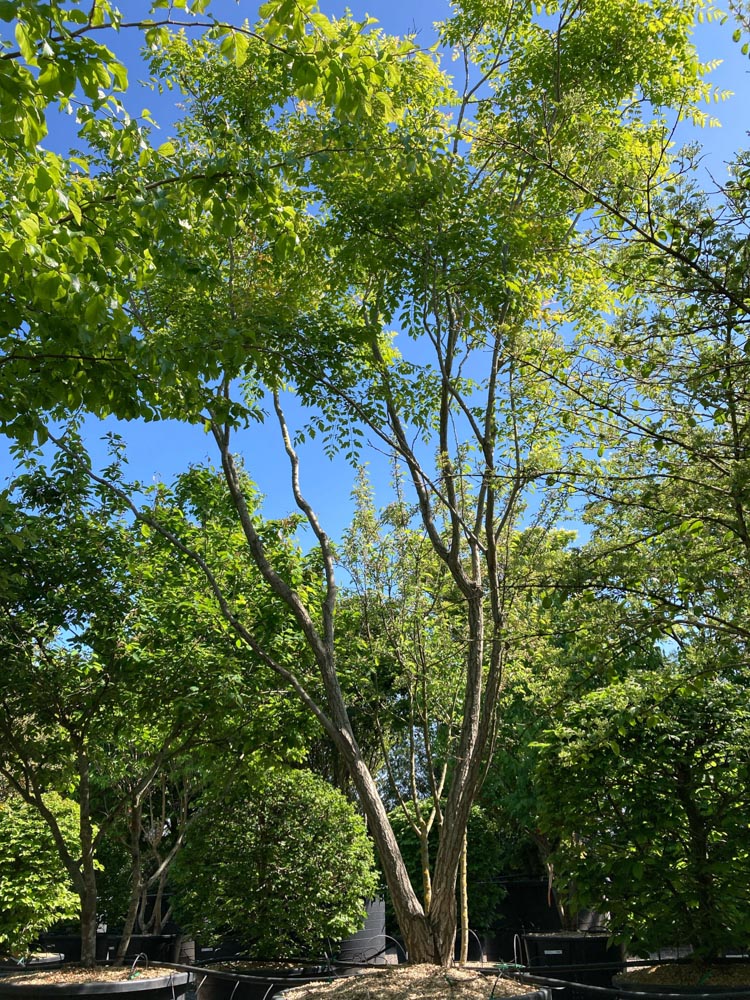
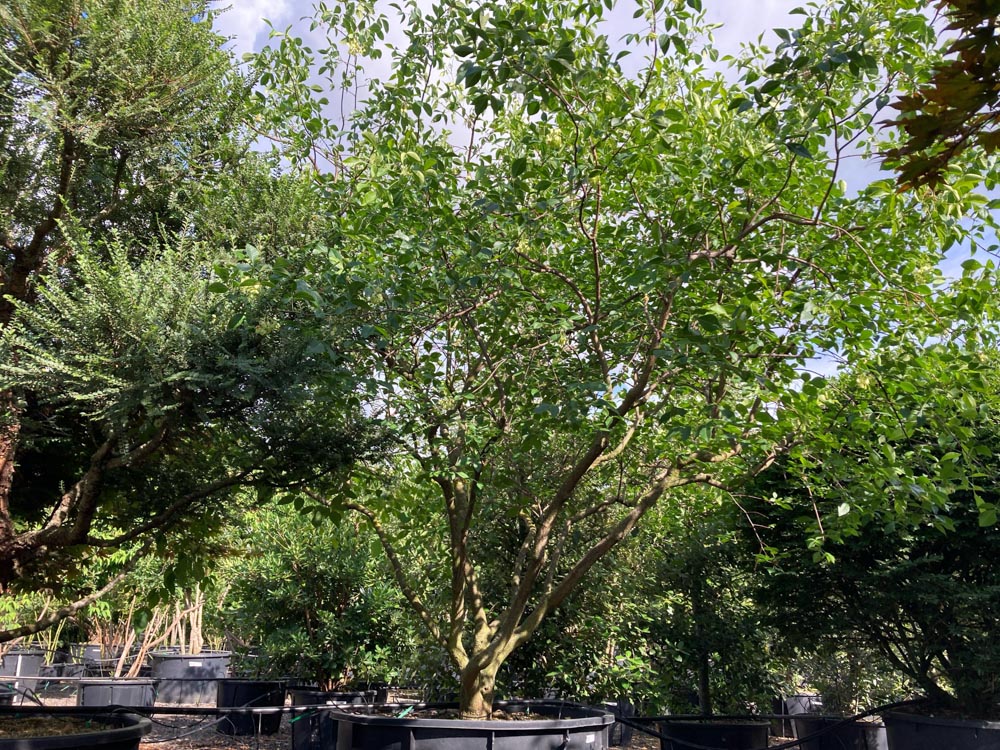
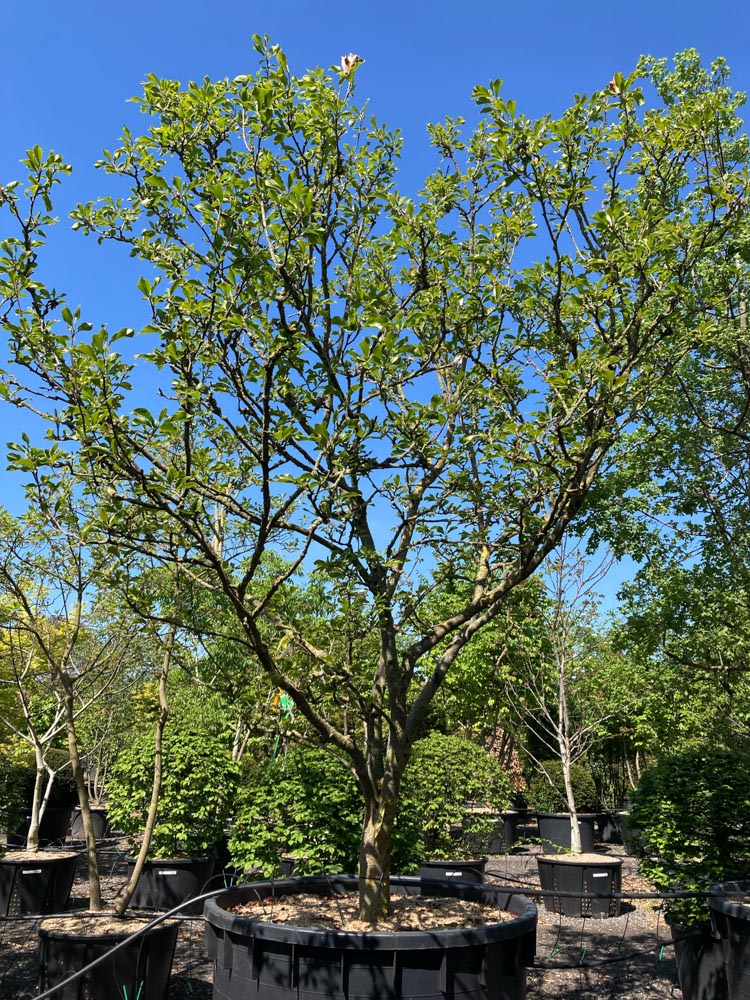
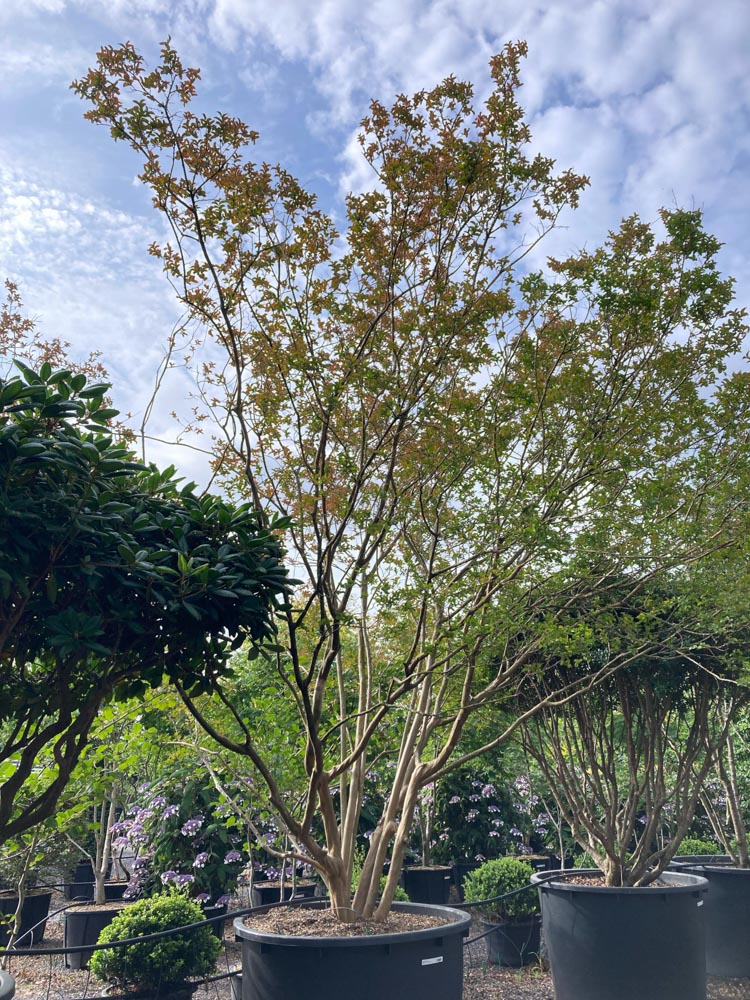
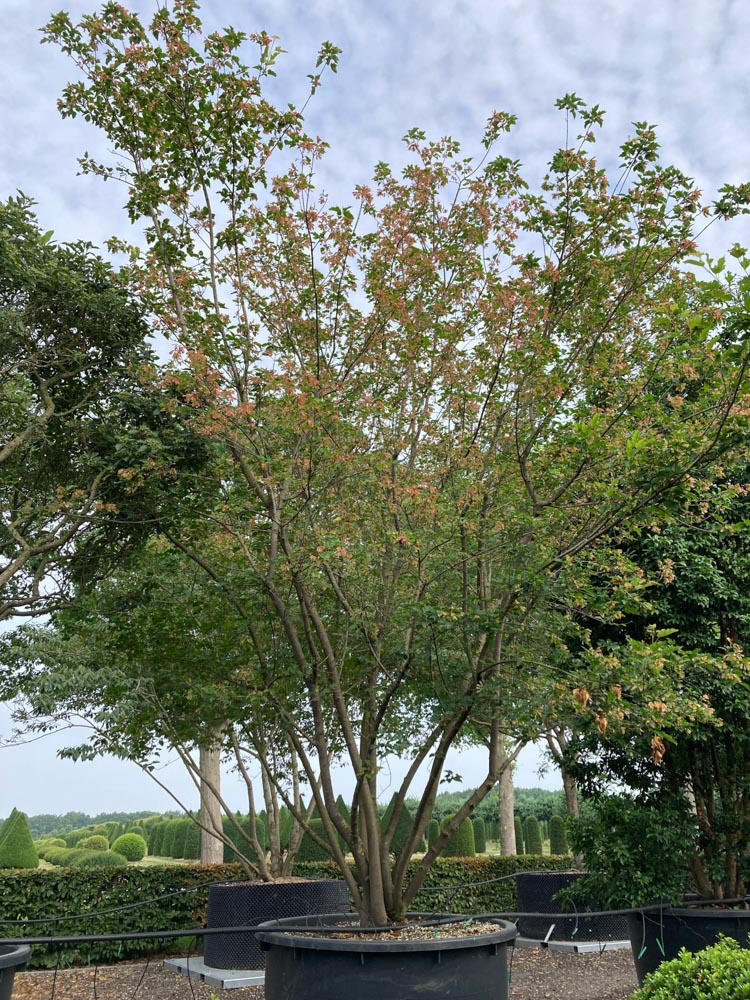
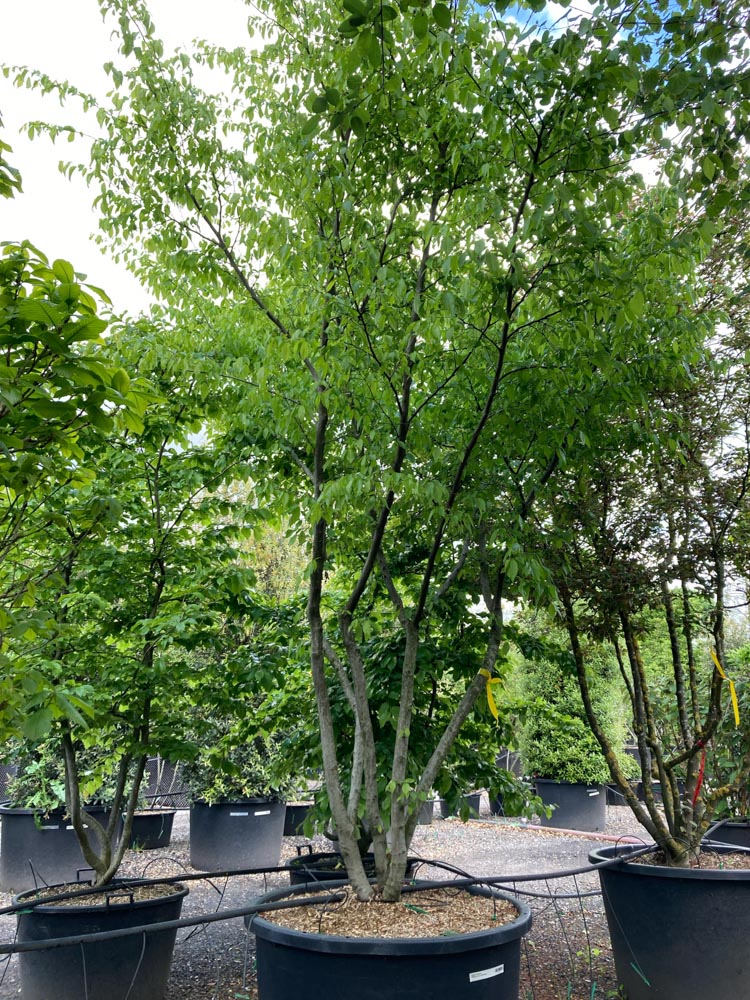
The growth form is broad and open, with a rounded crown that develops a rather broad habit when more mature. The trunk is upright and has a grey-brown, slightly grooved bark. The tree usually remains medium-sized: 8 to 12 metres high and wide, which makes it suitable for environments where not all the space for a monumental tree is available.
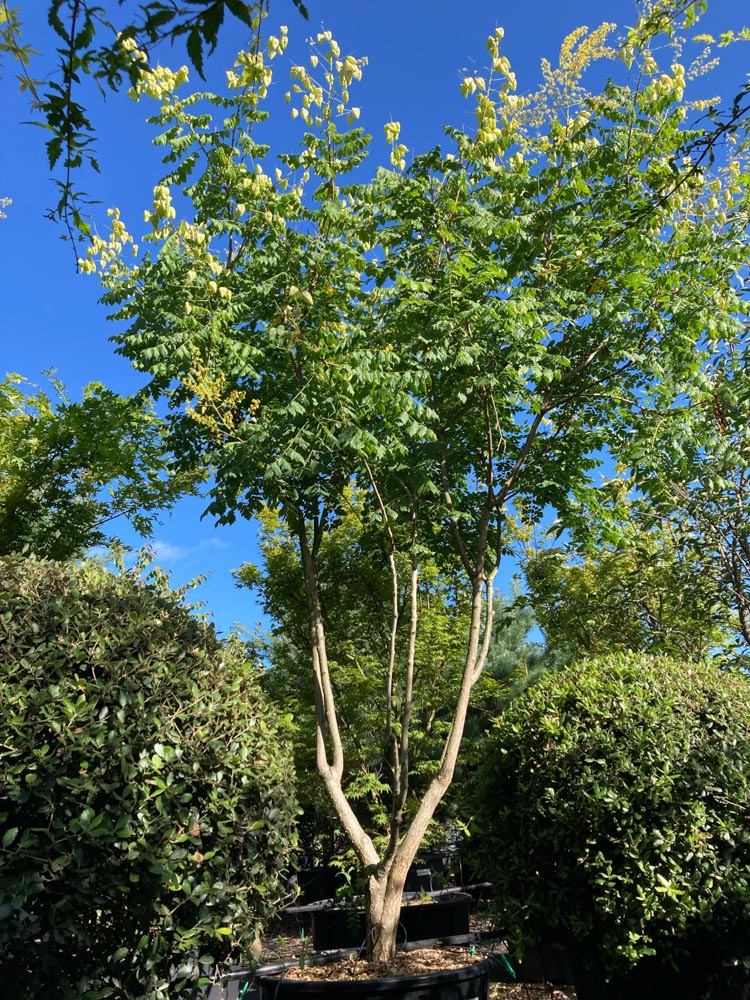
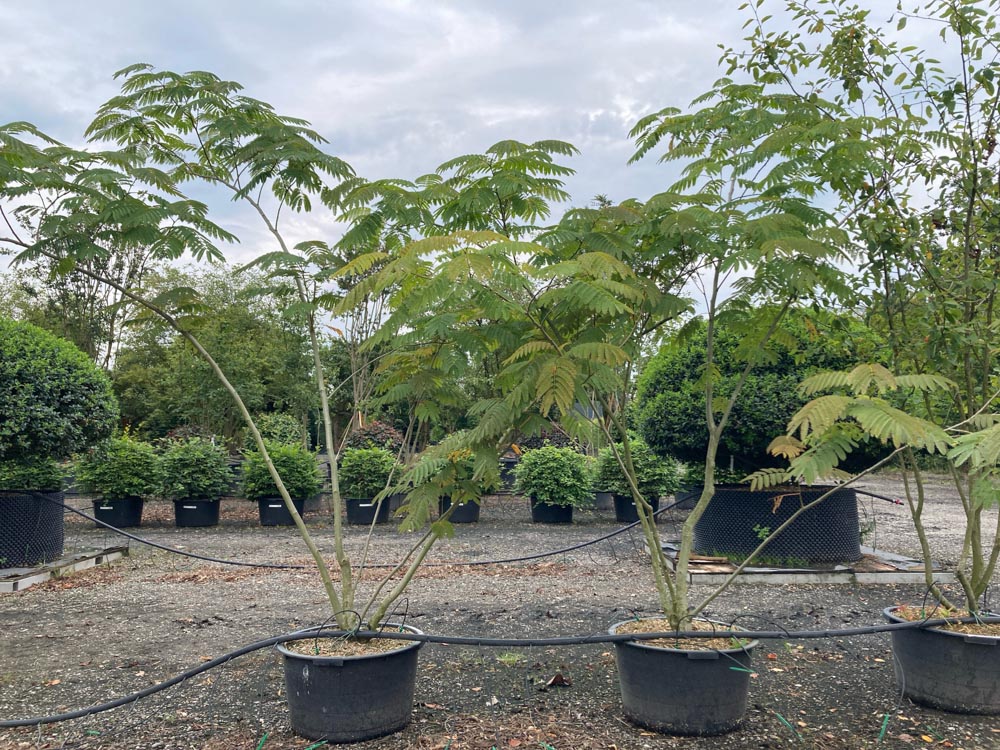
Its pinnate leaves are unusual: each leaf consists of 9 to 15 unevenly notched lobed leaflets. In early spring, the leaves appear with an attractive reddish to bronze hue, which quickly changes to light green and later deep green. In autumn, the leaves turn yellow to orange, giving a warm finish to the growing season.
Flowering occurs in July and August - a period when few trees flower. The large panicles of small yellow flowers are highly visible and attractive to insects. After flowering, the namesake fruits form: three-sided bladder-shaped fruits that closely resemble paper lanterns and are initially light green, later orange-pink and eventually brown. They remain on the tree for a long time and provide a decorative image even in winter.
Koelreuteria paniculata is drought-tolerant and grows best in a sunny, warm location.
Application and location
The lantern tree is an excellent choice as a solitary tree in gardens, parks and urban settings. Its medium size, exceptional flowering period and striking fruits make it a real eye-catcher over several seasons. It is also suitable for courtyards and sheltered patio environments.
The tree prefers a sunny, warm and sheltered spot. Koelreuteria paniculata is drought-tolerant and thrives in a variety of soil types: loam, clay, calcareous soil and sand are all suitable. It requires well-drained soil and does not tolerate wet feet.
Hardiness is fair to good for Dutch conditions, but in cold winters with prolonged periods of frost, a sheltered location is recommended. Young trees are slightly more sensitive to frost than fully-grown specimens.
Do you already know exactly what you need?
Every garden and every greenery project is different. Therefore, at Smits Arboriculture we do not make standard quotations, but we like to look together at what suits your wishes, planning and the character of the project.