Fur-leaved layered dogwood

Family: Dogwood family

Cornus controversa Variegata

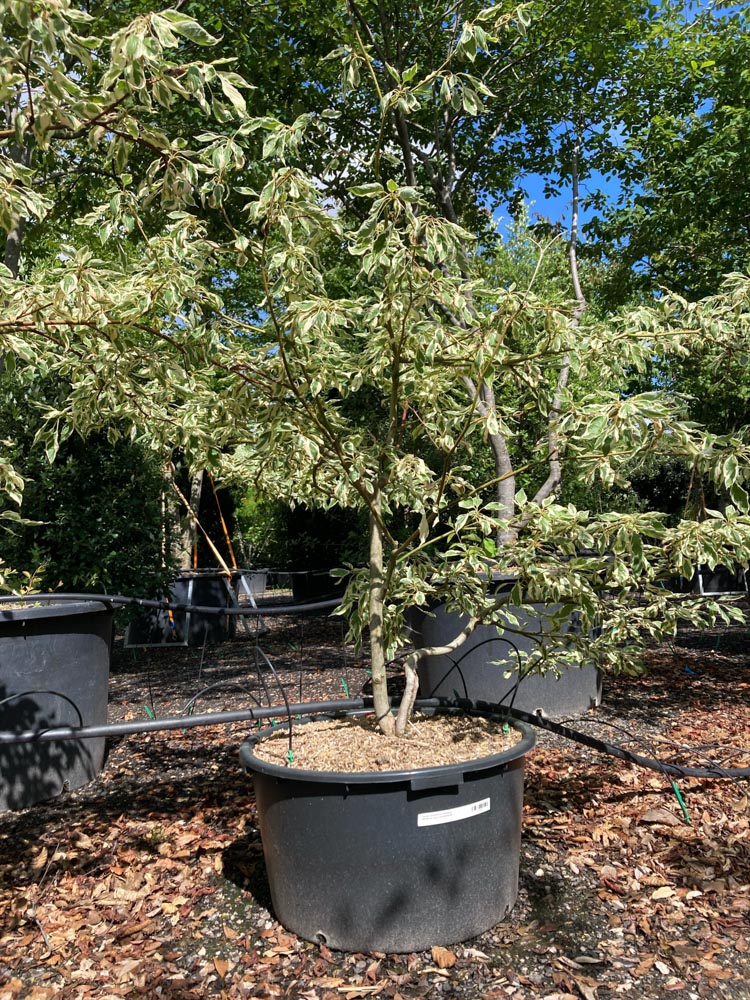
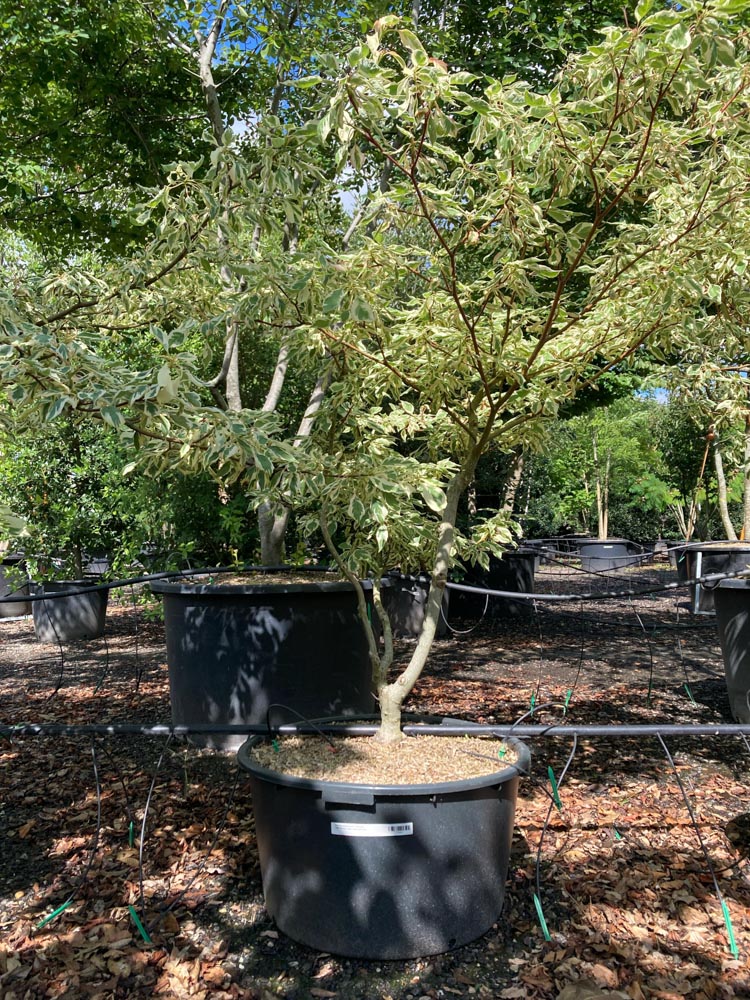
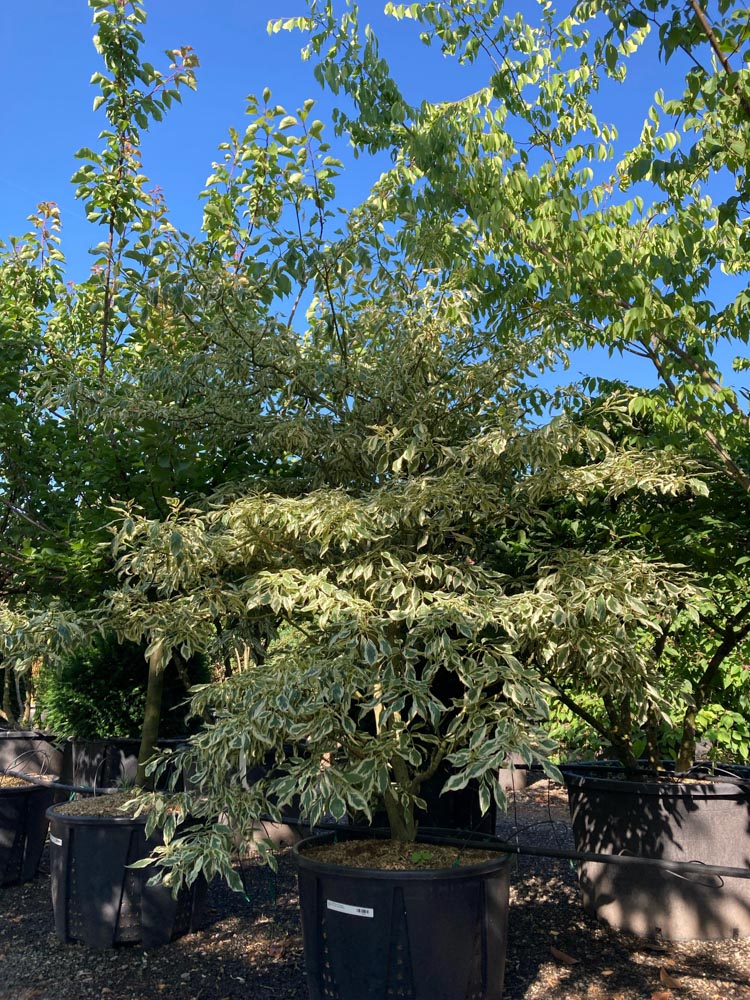
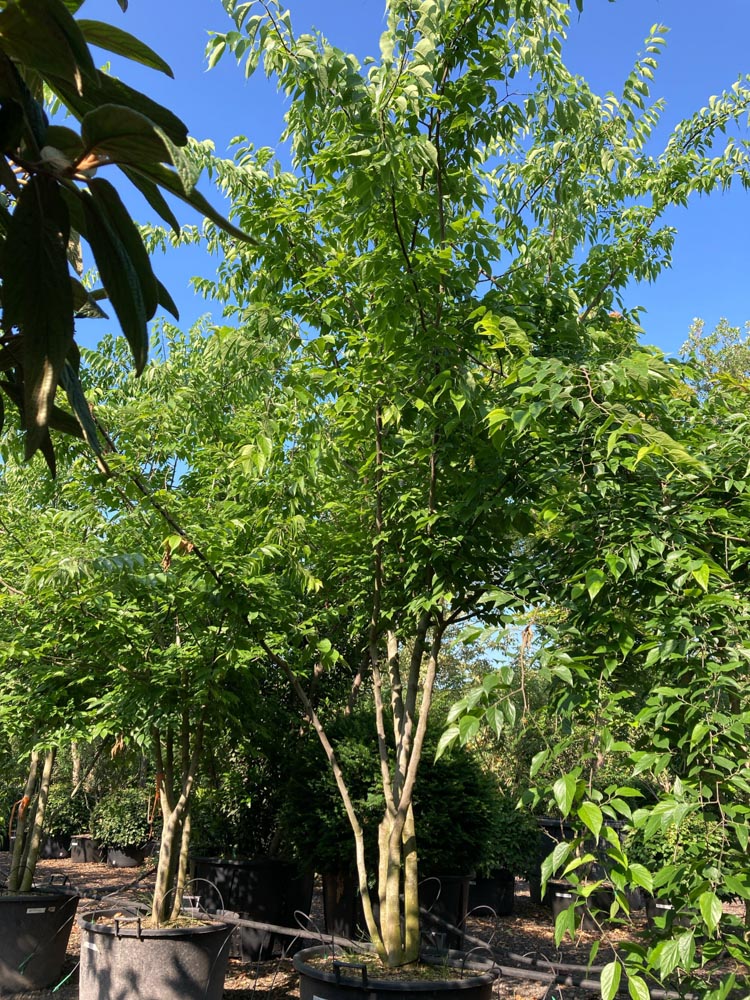
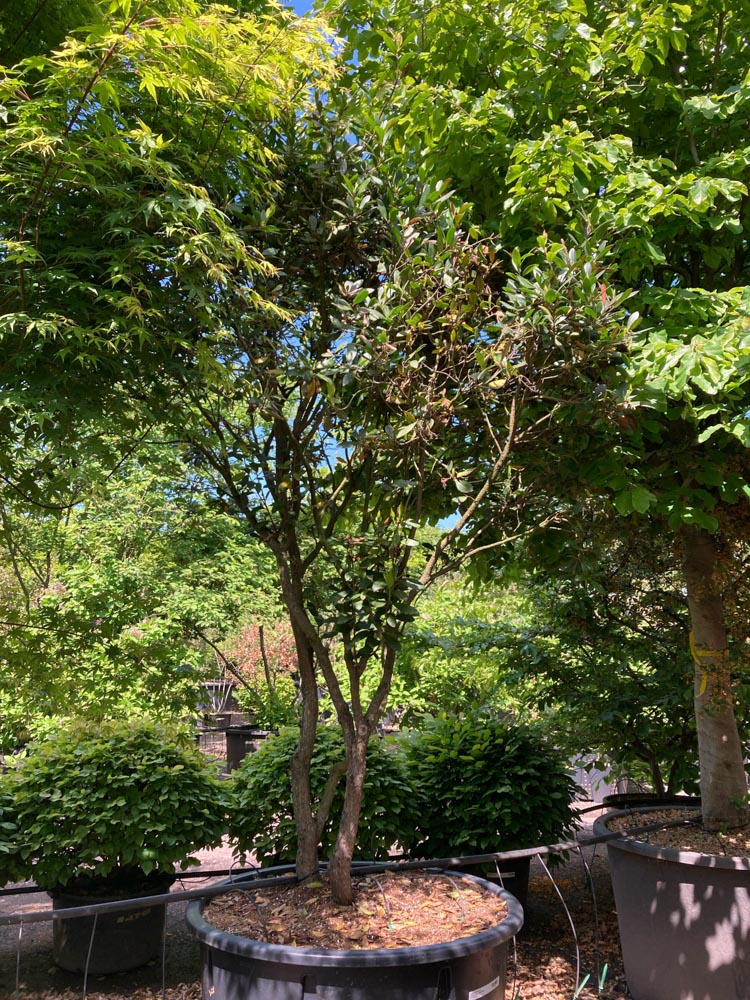
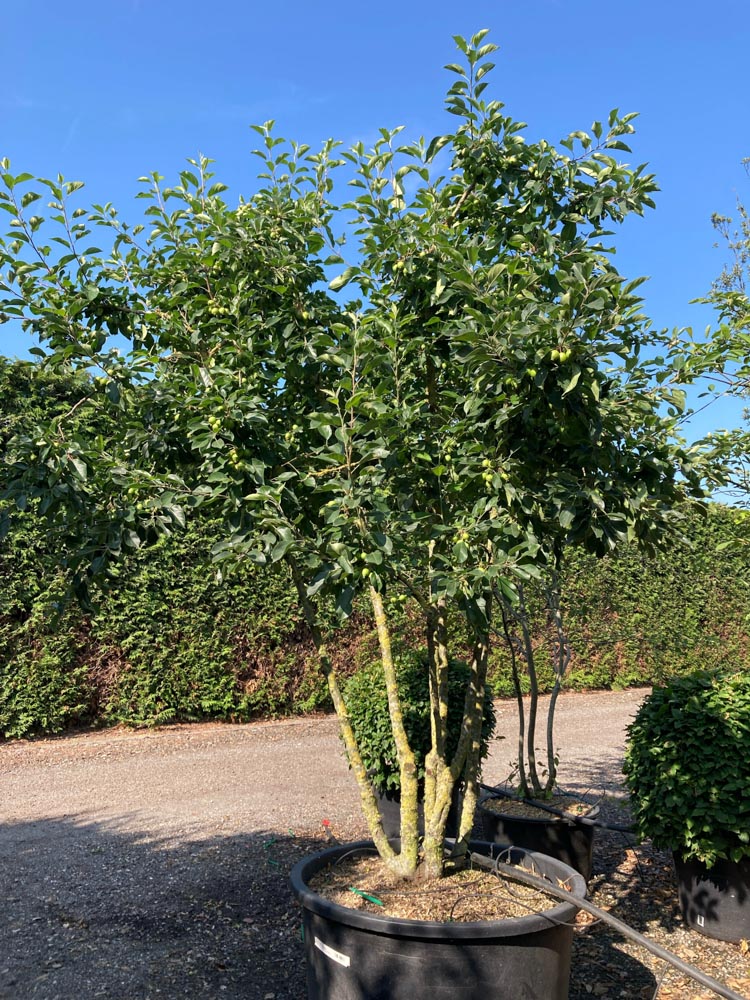
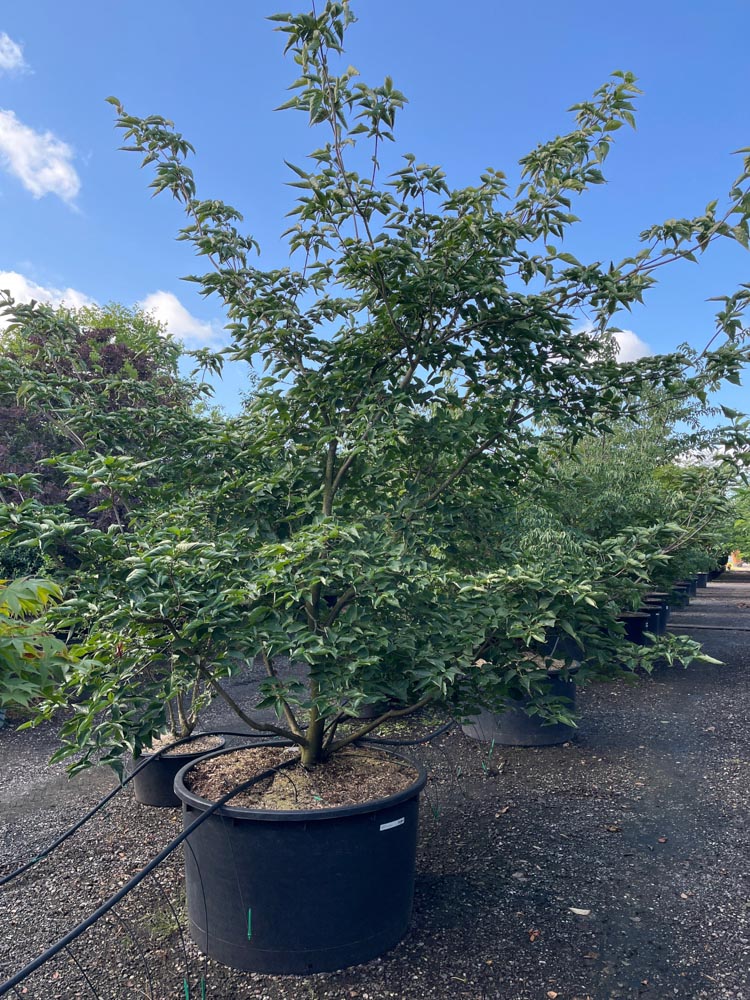
Cornus controversa 'Variegata' Spotted-leaved layered dogwood height 100/125 cm in container

About Cornus controversa Variegata

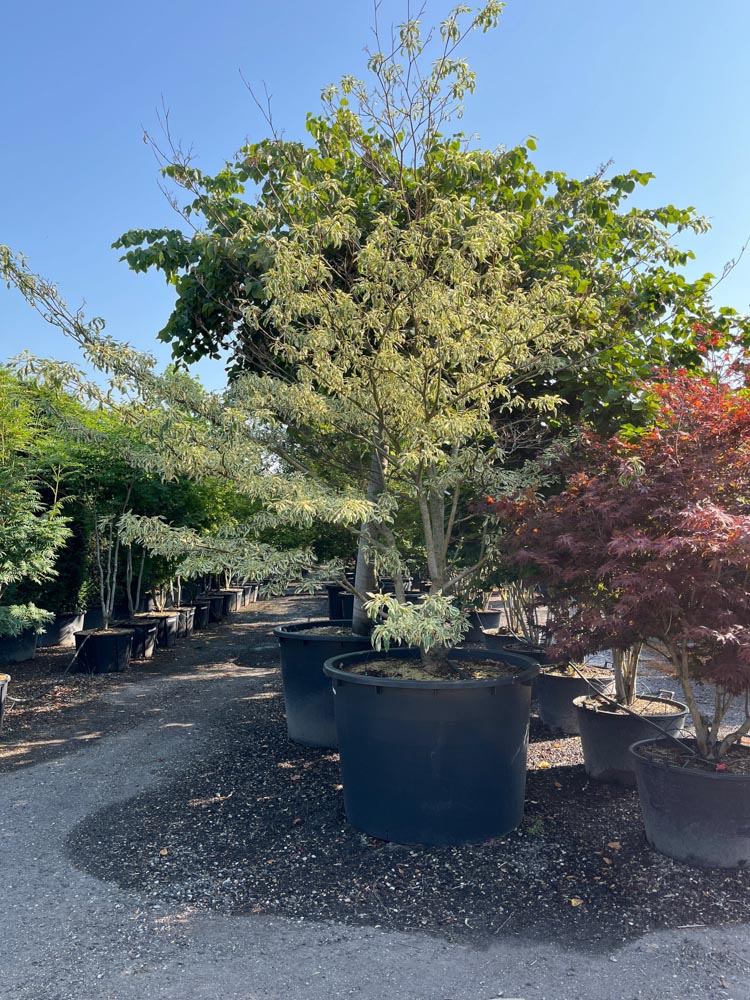
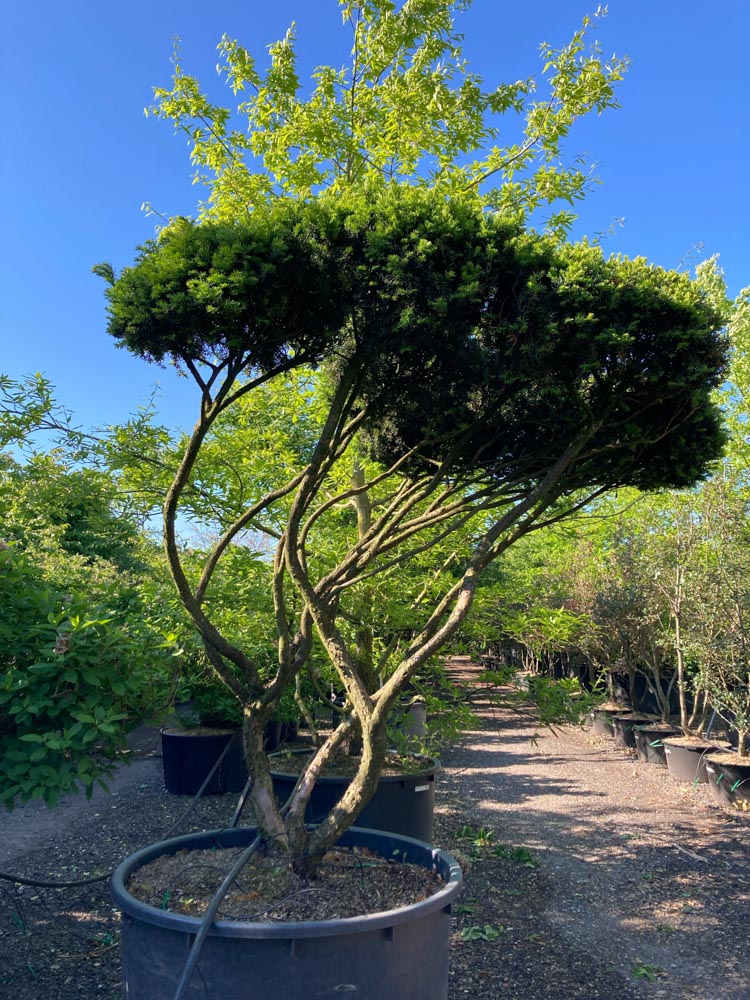
The variegated layered dogwood is a spectacular appearance that is among the most beautiful variegated trees. This cultivar of the layered dogwood is distinguished by its horizontal branch structure and creamy-white mottled leaves. Its growth form is highly architectural: the branches grow in clear, horizontal layers one above the other, creating a stepped, layered crown. This unique growth habit gives the tree an Asian look reminiscent of a pagoda. The trunk is straight and strong, with a smooth, grey bark that has little texture when young. The branches branch in a regular pattern and spread horizontally, each level being slightly narrower than the one below. This symmetrical structure makes the tree highly recognisable and decorative. The leaves are the most striking feature: each leaf has a broad, irregular creamy white to creamy white margin around a green centre. Some leaves are almost completely white, while others have a narrower margin. This varied pattern creates a pale, almost white crown visible from afar. The leaves are elliptical with distinct veins. In spring, the young leaves appear with a pink tinge, especially at the edges. In autumn, the leaves turn purplish red to pinkish red, with the variegated parts often taking on pink hues. Flowering occurs in May-June with small, creamy-white flowers arranged in umbels. The flowers contrast nicely with the mottled leaves. After flowering, small, blue-black berries develop, which are eaten by birds but inedible to humans. The variegated layered dogwood grows slowly to moderately fast and remains more limited in size than the green-leaved species, usually to 4-6 metres. The tree requires good, moist soil and does not tolerate drought. Its spectacular appearance and architectural form make this an excellent solitary tree for a prominent spot in the garden. It is a plant that demands space and attention, and more than repays that with its unique appearance.

Application and location

The variegated layered dogwood requires a prominent location as a solitary specimen where its architectural shape and mottled leaves are shown to their full advantage. This tree is suitable for spacious gardens, parks and business parks where it acts as an eye-catcher. Give it enough space and preferably surround it with lower plants so that its layered structure is clearly visible. Plant the tree in semi-shade to light shade. Too much sun can cause leaf burn on the white leaf parts, while too much shade will cause less variegated leaves. The soil should be nutrient-rich, humus-rich and above all moisture-holding. This dogwood does not tolerate drought and grows best in moist to wet soil without permanent waterlogging. A slightly acidic to neutral soil is preferred. Hardy to about -20°C, but cold winds can damage the leaves so some shelter is favourable. Give the tree ample development space: at least 8-10 metres in diameter. Pruning is basically not necessary and usually undesirable as it disturbs the natural shape. At most, remove dead wood. Note that this tree grows very slowly, so be patient. Provide regular fertilisation and plenty of water, especially in dry periods. With proper care, this is a spectacular sight that gets more beautiful every year.

Do you already know exactly what you need?

Every garden and every greenery project is different. Therefore, at Smits Arboriculture we do not make standard quotations, but we like to look together at what suits your wishes, planning and the character of the project.


our opinion

The characteristics below show the ideal conditions for a Cornus controversa Variegata. They will help you choose the right species for your project, but may vary slightly from one garden or project to another.

the runners

This is a list of the most frequently selected products. Looking for a specific product? Visit contact with us and we will be happy to help you personally. 

Dimensions

Value

Delivery form

Feature

Photo

Height
100/125 cm
Container
Specimen shurbs
87847-1.jpg

Is the image missing?
Mail to info@smitsbv.nl

Height
125/150 cm
Container
Specimen shurbs
87844-1.jpg

Is the image missing?
Mail to info@smitsbv.nl

Height
150/175 cm
Container
Specimen shurbs
87845-1.jpg

Is the image missing?
Mail to info@smitsbv.nl

Height
175/200 cm
Container
Specimen shurbs
85986-1.jpg

Is the image missing?
Mail to info@smitsbv.nl

Height
200/250 cm
Container
Specimen shurbs

Is the image missing?
Mail to info@smitsbv.nl

Height
175/200 cm
Container
Multi-strain
89428-1.jpg

Is the image missing?
Mail to info@smitsbv.nl

Height
250/300 cm
Container
Multi-strain
85819-1.jpg

Is the image missing?
Mail to info@smitsbv.nl

Height
300/350 cm
Container
Multi-strain
58415-1.jpg

Is the image missing?
Mail to info@smitsbv.nl

Height
350/400 cm
Container
Multi-strain
89367-1.jpg

Is the image missing?
Mail to info@smitsbv.nl

Height
250/300 cm
Container
/
58106-1.jpg

Is the image missing?
Mail to info@smitsbv.nl

Is the Cornus controversa Variegata you are looking for not listed?

No worries. Chances are we still have the species you are looking for! Visit contact with us and we will be happy to help you. 

Every garden and every greenery project is different. Therefore, at Smits Arboriculture we do not make standard quotations, but we like to look together at what suits your wishes, planning and the character of the project.

Get inspired by our park, container field and the way trees and hedges come together in the design. Ideal for getting ideas for your next project.
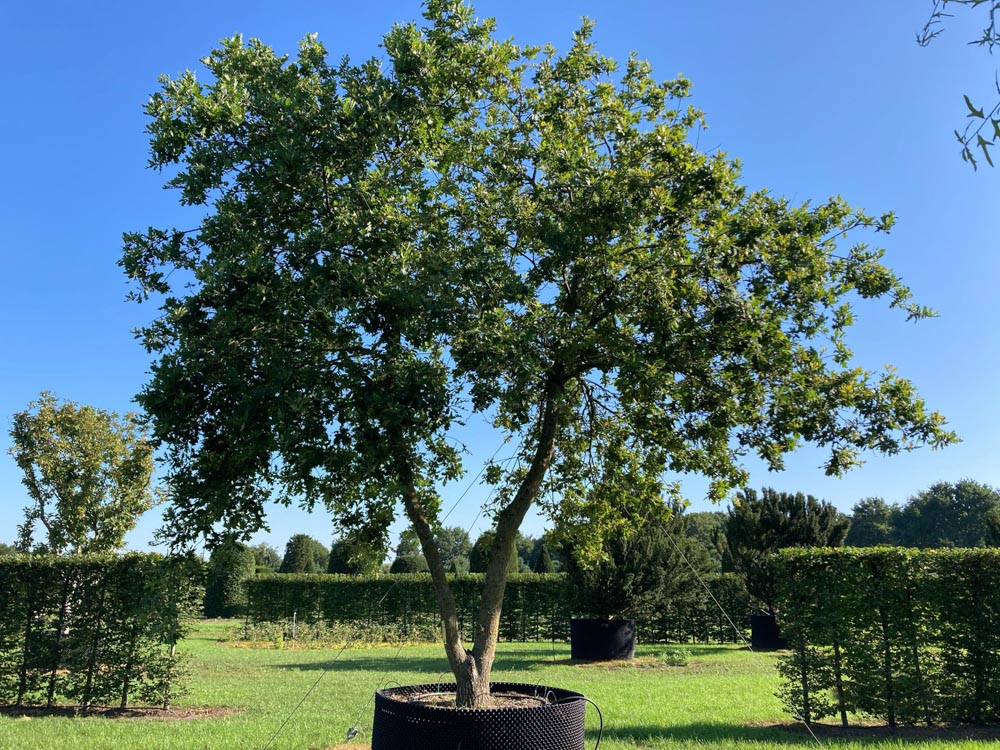
Discover how gardeners and designers apply our greenery in high-quality garden and green space projects. From villa gardens to larger landscape projects.

FAQ

Frequently asked questions about Cornus controversa Variegata

The variegated variety remains more limited in size than the green-leaved layered dogwood. You can expect a height of 4 to 6 metres and a width of 3 to 5 metres when fully grown. The tree grows slowly to moderately fast, with about 15-25 centimetres of growth per year. Due to the variegated leaves, growth is slower than for the green species. It does take years for the tree to reach its full size, but the spectacular appearance makes the wait more than worth it. The slow growth makes the tree well suited to gardens where space is limited.
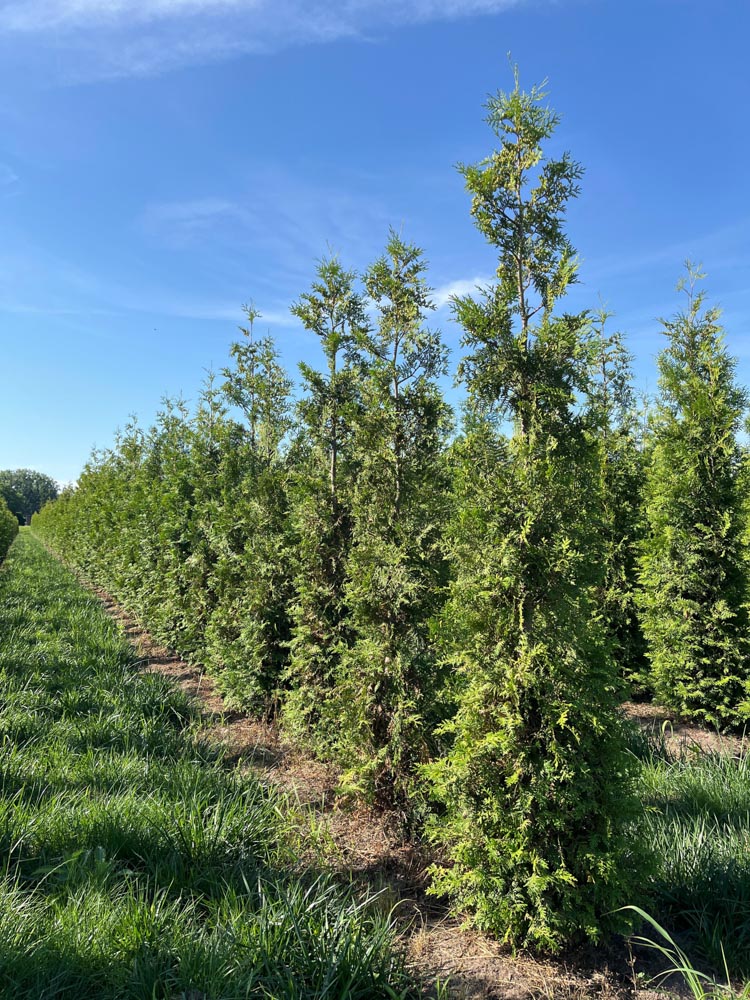
The white in the leaves is due to a lack of chlorophyll in the outer parts of the leaf. Each leaf has a broad, irregular creamy white to creamy white margin around a green centre. Some leaves are almost completely white. This varied pattern is a genetic trait of this cultivar. The variegated leaf arises from a spontaneous mutation that has been carefully selected and further bred. The white part cannot photosynthesise, so growth is slower than in green plants and the tree requires good care.
Plant the tree in semi-shade to light shade. Too much sun can cause burning of the white leaf parts, especially in summer. Too much shade, however, reduces the amount of variegated leaves. A spot with morning sun and afternoon shade is ideal. The soil should be nutrient-rich, humus-rich and above all moisture-holding. This dogwood does not tolerate drought and requires constantly moist soil without waterlogging. A slightly acidic to neutral soil is preferred. Protection from strong winds prevents leaf damage.
The tree is hardy to about -20°C. In normal Dutch winters it survives well, but in very harsh winters damage to young twigs can occur. Cold, dry winds in winter can be especially damaging. It is wise to plant the tree in a sheltered spot where it is not too exposed to strong east or north winds. Young trees are more susceptible than older, established specimens. Once well rooted, winter hardiness is not a problem.
Pruning is basically unnecessary and often not desired. The tree naturally develops its characteristic layered shape and any intervention can disturb it. At most, you can remove dead or damaged wood. Pruning should be done immediately after winter before the tree buds. Do not remove branches just to keep the tree smaller, this disturbs the natural architecture. If green water locks appear (without variegated leaves), remove them as soon as possible because they grow stronger and may overgrow the variegated branches.
Slow growth is normal and inherent in variegated plants. The white part of the leaf cannot photosynthesise, so the tree produces less energy than an all-green tree. This results in slower growth of 15-25 centimetres per year. The tree also requires a lot of energy to maintain its variegated pattern. Good care can stimulate growth, though: make sure it gets enough water, regular fertilisation and a good, moist soil. Patience will be rewarded with a spectacularly beautiful tree.
Yes, it can happen that completely green branches (water locks) appear. This is a throwback to the green species and is because the variegated pattern is genetically unstable. These green waterlots usually grow stronger than the variegated branches and may eventually overgrow the tree. It is important to remove these green waterlots as soon as possible by cutting them away at the base. Pay particular attention to this in spring and summer. Staying vigilant will keep the tree beautifully variegated.
Due to its variegated leaves, this tree needs more nutrition than green trees. Fertilise in early spring with an organic fertiliser or slow-release fertiliser. A second fertilisation in June can boost vitality. Use a balanced fertiliser with nitrogen, phosphorus and potassium. Too much nitrogen can encourage green water locks, so dose in moderation. Mulching around the trunk with compost or leaf mould also helps to keep the soil fertile. Good nutrition supports the tree in producing beautiful variegated leaves and healthy growth.

See also