Banksspar

Family: Pine family

Pinus banksiana

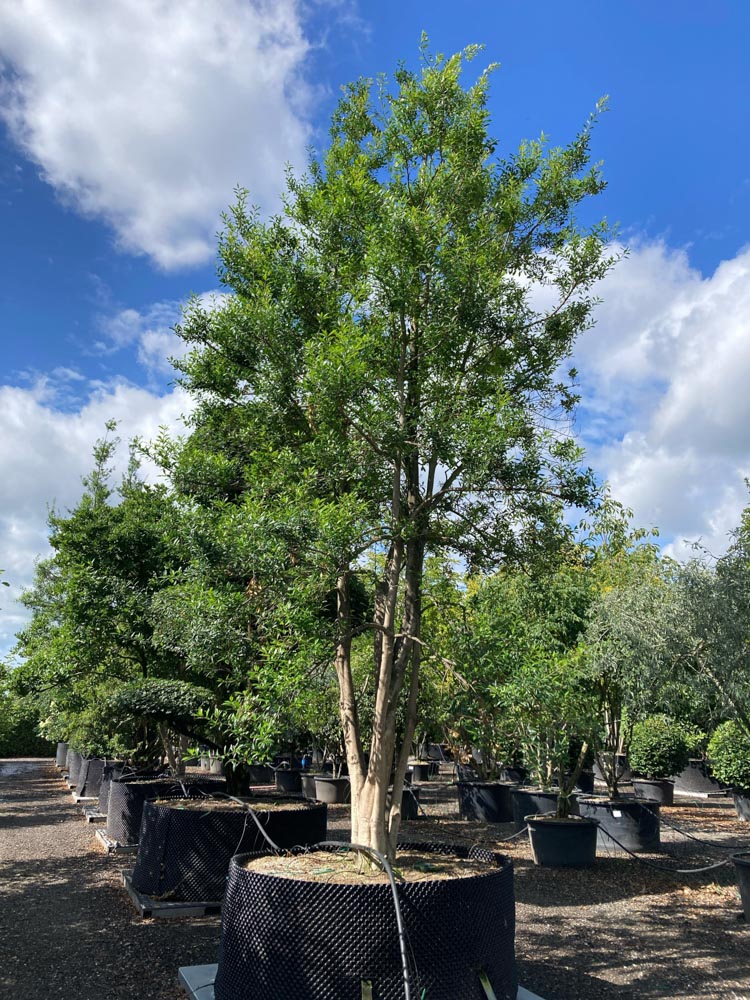
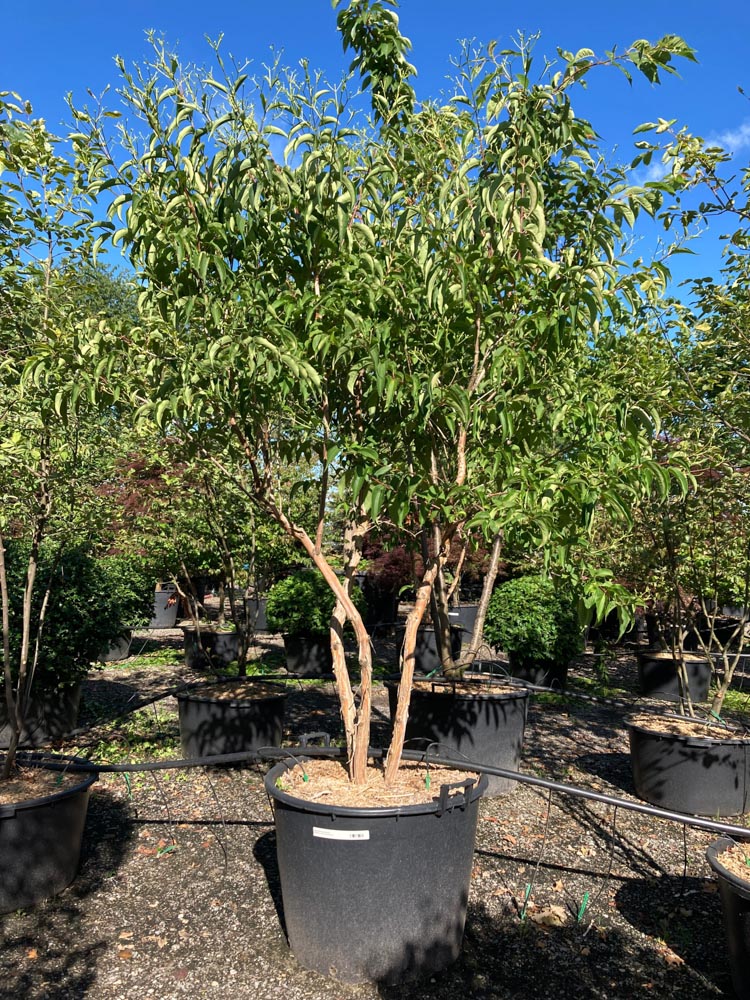
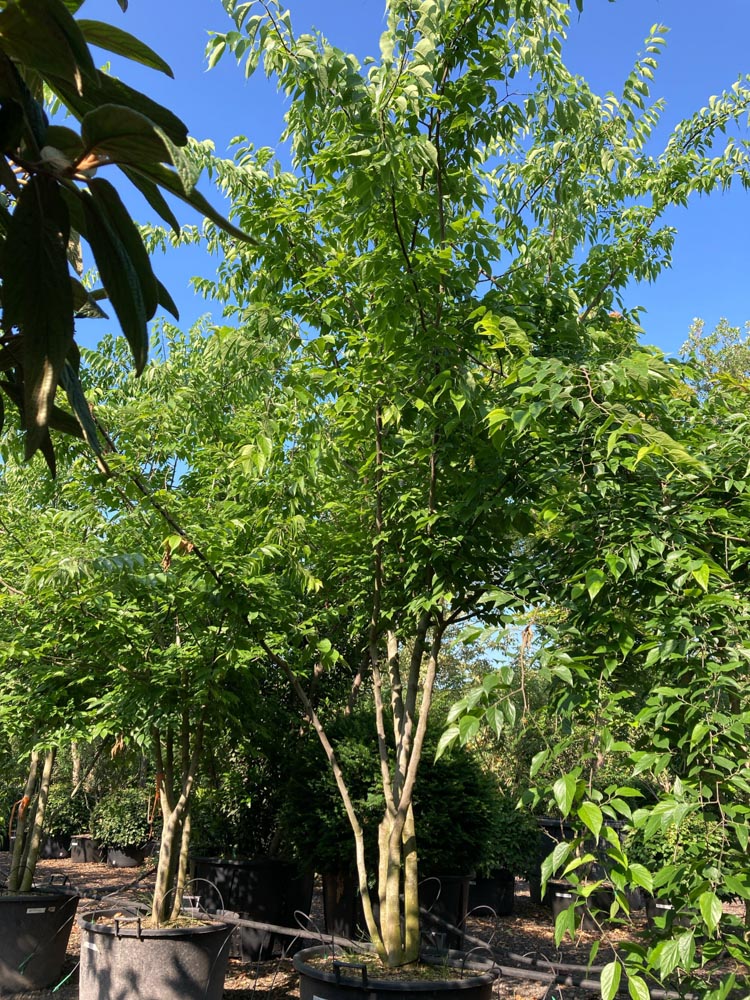
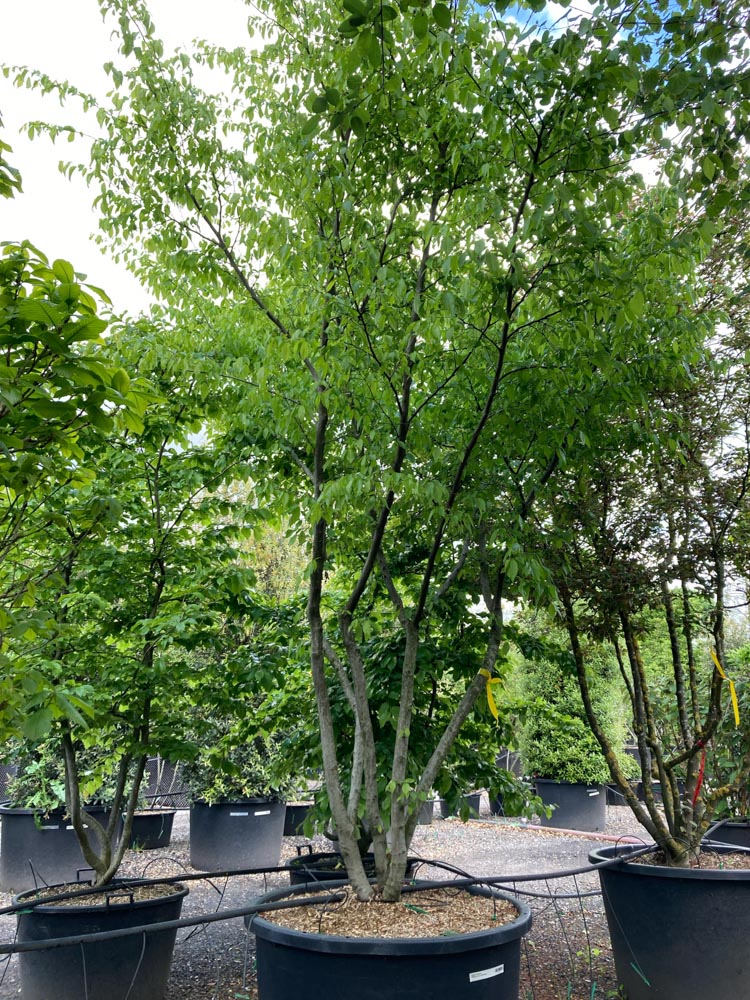
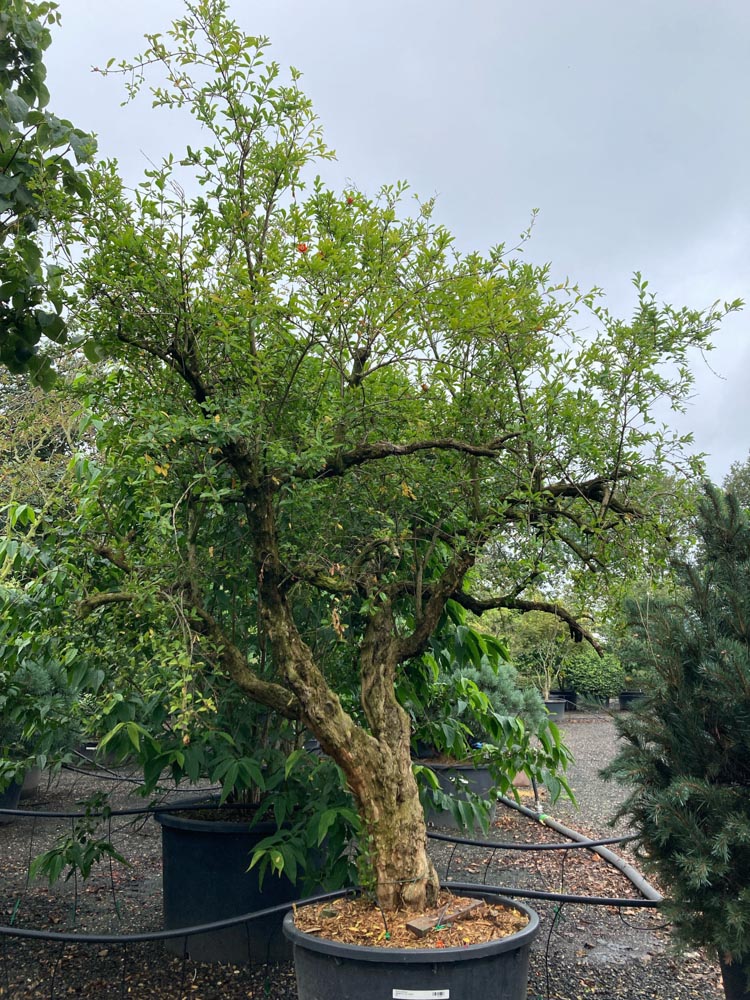
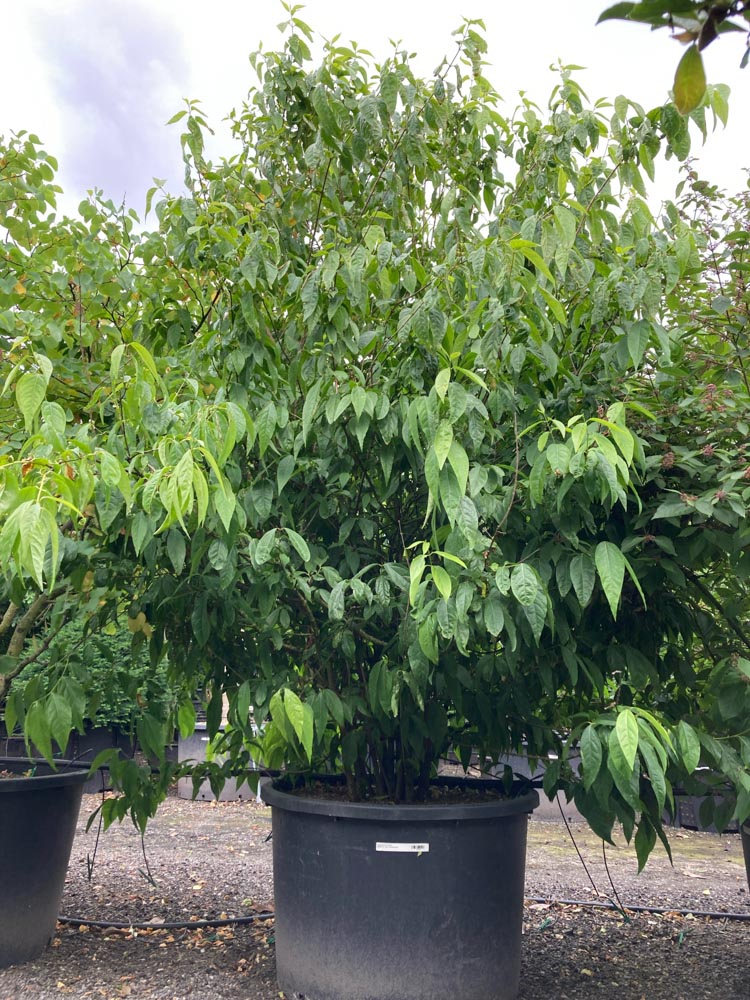
Pinus banksiana Bench spruce height 300/350 cm in container

About Pinus banksiana

Pinus banksiana, the Banks fir, is a northern pine native to Canada and the northern United States, where it is native to the boreal forests of the taigar zone - from Alaska to Nova Scotia. The species gets its name from the English botanist Joseph Banks, companion of James Cook on his first voyage around the world. It is one of the most hardy pine species in existence and grows naturally in the poorest, most sparse soils. Its growth form is irregular to broad cone-shaped, often somewhat picturesquely irregular with jagged branches that give the tree its own character. Available from Smits as a multi-stemmed tree of 300/350 centimetres in height and as a free plant of 200/250 centimetres. At maturity, it grows 10 to 20 metres tall. The trunk has a grey-brown, grooved plate-like bark. The needles are short - 2 to 4 centimetres - twisted and in pairs, dark green. They remain on the branches for 3 to 4 years. Fully evergreen, the same colour all year round. A botanically special feature of Pinus banksiana are its cones: they are crooked, curved and grey-brown and can remain closed on the tree for years. They open only during extreme heat - on fire, a phenomenon called ‘serotinia’. In forest fires, the seeds then germinate en masse. This adaptation to fire makes the bank spruce especially interesting ecologically. Growth is moderate to quite fast for a pine. Pinus banksiana is drought-tolerant, wind-resistant, salt-tolerant and highly resistant to air pollution.

Application and location

Pinus banksiana is a robust, hardy choice for open, dry and sparse sites in gardens, parks and coastal areas. Its whimsical, characterful habit makes it special as a solitary accent tree. It thrives in full sun to semi-shade. It grows well on loamy, clay, calcareous soil and sand - also on poor, dry soils. Excellent drought tolerant, wind resistant and salt tolerant. Winter hardiness is excellent. Available from Smits as a multi-stemmed tree of 300/350 cm and as a free plant of 200/250 cm.

Do you already know exactly what you need?

Every garden and every greenery project is different. Therefore, at Smits Arboriculture we do not make standard quotations, but we like to look together at what suits your wishes, planning and the character of the project.
our opinion

The properties below show the ideal conditions for a Pinus banksiana. They will help you choose the right species for your project, but may vary slightly from one garden or project to another.

the runners

This is a list of the most frequently selected products. Looking for a specific product? Visit contact with us and we will be happy to help you personally. 

Dimensions

Value

Delivery form

Feature

Photo

Height
300/350 cm
Container
Multi-strain
86713-1.jpg

Is the image missing?
Mail to info@smitsbv.nl

Height
200/250 cm
Container
/

Is the image missing?
Mail to info@smitsbv.nl

Is the Pinus banksiana you are looking for not listed?

No worries. Chances are we still have the species you are looking for! Visit contact with us and we will be happy to help you. 

Every garden and every greenery project is different. Therefore, at Smits Arboriculture we do not make standard quotations, but we like to look together at what suits your wishes, planning and the character of the project.

Get inspired by our park, container field and the way trees and hedges come together in the design. Ideal for getting ideas for your next project.
Discover how gardeners and designers apply our greenery in high-quality garden and green space projects. From villa gardens to larger landscape projects.

FAQ

Frequently asked questions about Pinus banksiana

Serotinia is the property that the cones of Pinus banksiana can remain closed on the tree for years and only open during extreme heat - such as a forest fire. After a fire, the seeds germinate en masse on the burnt soil. This is an evolutionary adaptation to regular forest fires in the North American taiga.
At maturity, the bench spruce grows 10 to 20 metres tall. At Smits, it is available as a multi-stemmed tree of 300/350 centimetres in height and as a free plant of 200/250 centimetres.
Yes, fully evergreen. The dark green needles remain on the tree for 3-4 years and the colour is the same all year round. This makes the couch spruce a full, green presence even in winter.
Excellent hardiness - one of the hardiest pine species. It grows naturally in northern Canadian boreal forests with harsh winters down to -40°C. Dutch winters are therefore no problem at all.
Yes, par excellence. Pinus banksiana grows naturally on the poorest, most sparse, driest soils of the North American taiga. On dry, sparse sandy soils where other trees give up, the banksiana spruce still functions extremely well.
Yes. The combination of wind resistance, salt tolerance and drought tolerance makes the bench spruce excellent for coastal areas and open, exposed sites. On dry coastal dune soil, it functions better than most other trees.
Not necessary. Pine naturally retains its growth form. Pruning in pines is always careful: never prune into old wood, as it will not recover. Slight corrections are possible on young growth.
Its short, twisted needles in pairs, curved crooked cones that remain closed for years, and particularly robust constitution on poor soil are its most distinctive features. Its erratic, irregular growth form also gives it a picturesque character that other pines lack.

See also