Western tree of life ‘Emerald’

Family: Cypress family

Thuja occidentalis Emerald

Thuja occidentalis Emerald Western life tree ‘Emerald’ height 200/225 cm in coconut box

About Thuja occidentalis Emerald

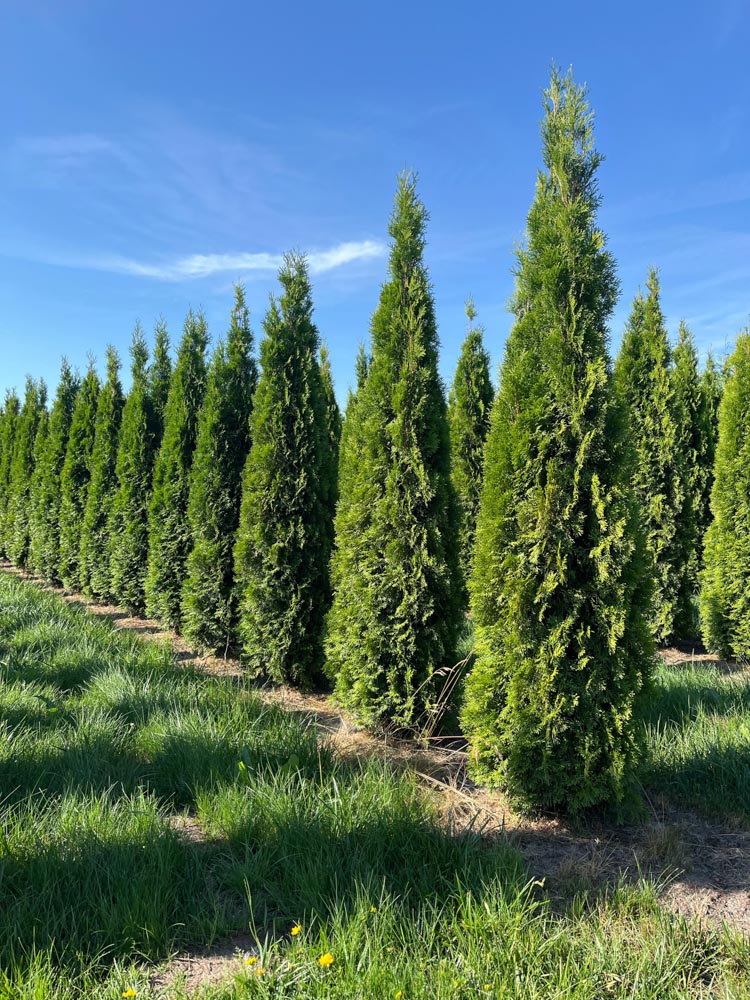
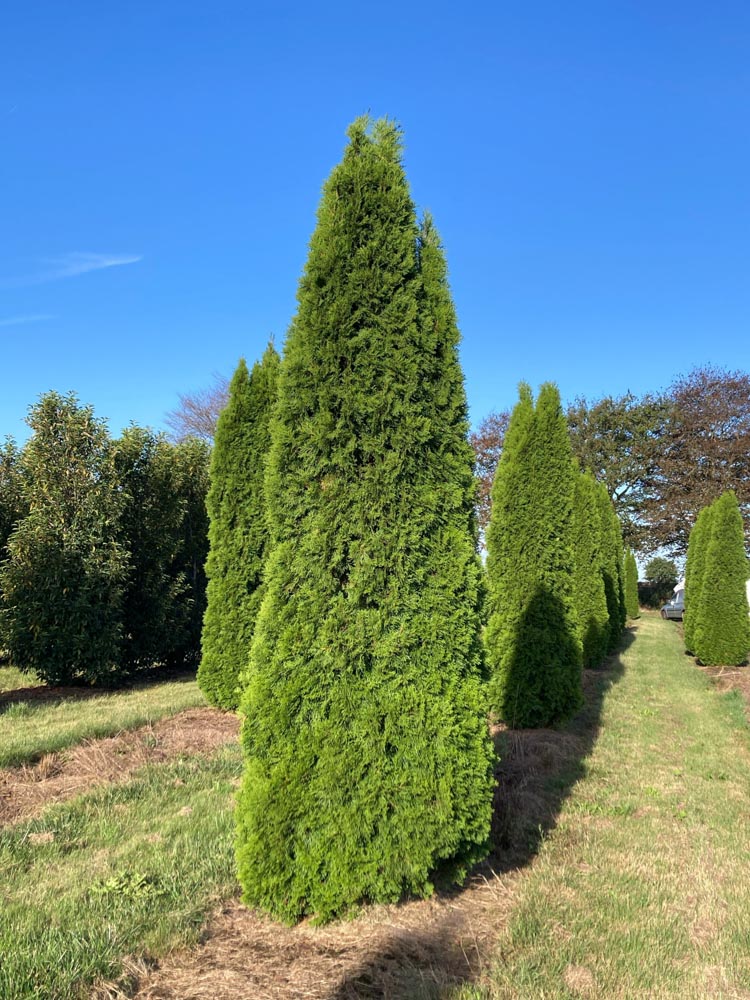
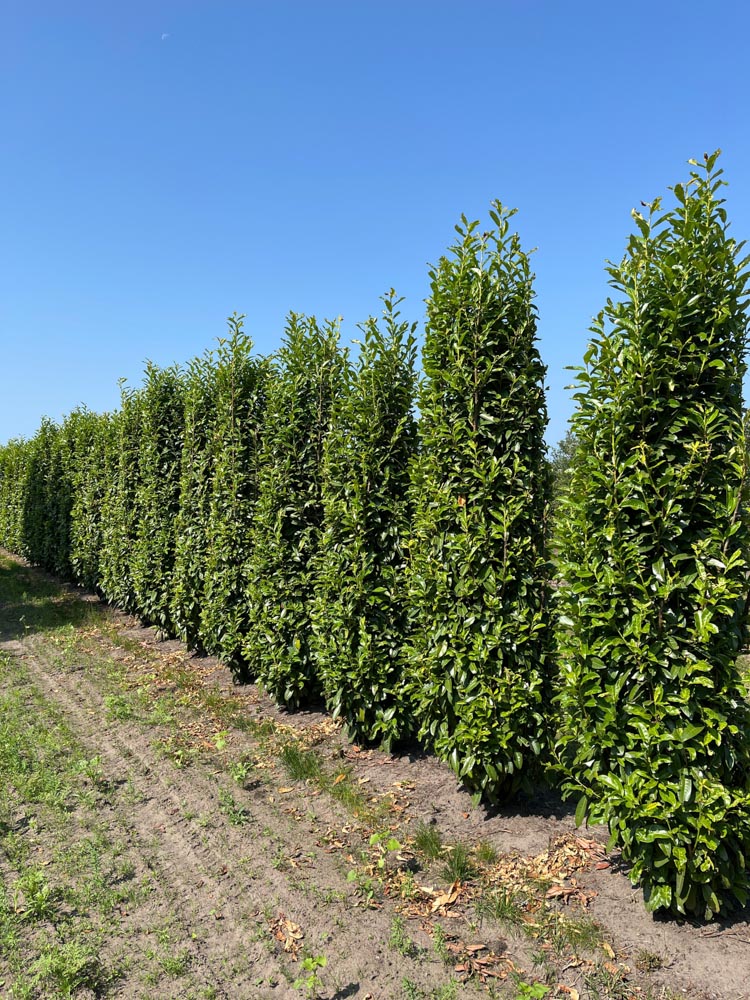
Thuja occidentalis Emerald is a cultivar of the western life tree, which in its native form is native to eastern North America, from Canada to the Appalachians. The cultivar ‘Emerald’ - the name refers to the emerald green colour of its leaves - was selected in Denmark in the 1950s and has since become the most widely grown thuja species for hedge and privacy applications in north-western Europe. The growth habit is narrow, upright and conical. The twigs bear flat, closely spaced scales that remain an intense emerald green all year round - even in winter, when many other thuja varieties turn unattractively bronze. The trunk is straight with a reddish-brown, finely grooved bark pattern. The shrub/tree blooms in spring with inconspicuous flowers; the fruits are small, oval cones. Growth rate is moderate, averaging 20 to 30 centimetres per year in height. This makes ‘Emerald’ a lot slower than the leyland cypress, but also much more manageable. The maximum height is usually 4 to 5 metres in our climate zone, although well grown specimens can grow a little taller. In winter, the tree fully retains its fresh, green colour, making it attractive all year round. Smits supplies Emerald in sizes from 200 to 400 centimetres, grown on root ball soil in Molenschot.

Application and location

Thuja occidentalis Emerald is the most established choice for a neat, evergreen hedge or privacy screen in gardens and business premises. It also suits as a solitary accent tree or in avenue context on formal garden designs. Position: full sun to semi-shade. In shade, growth is thinner. Soil type: loam, clay, peat, lime and sand are all suitable; the soil should not be too dry. It is wind-resistant and suitable for urban environments with air pollution. Fully hardy in the Netherlands. Attention: Thuja can be susceptible to leaf mould (Didymascella thujina) if there is poor air circulation in dense plantings; sufficient planting distance helps prevent this. In hedge applications, annual pruning in August is sufficient to keep the tree compact.

Do you already know exactly what you need?

Every garden and every greenery project is different. Therefore, at Smits Arboriculture we do not make standard quotations, but we like to look together at what suits your wishes, planning and the character of the project.


our opinion

The characteristics below show the ideal conditions for a Thuja occidentalis Emerald. They will help you choose the right species for your project, but may vary slightly from one garden or project to another.

the runners

This is a list of the most frequently selected products. Looking for a specific product? Visit contact with us and we will be happy to help you personally. 

Dimensions

Value

Delivery form

Feature

Photo

Height
200/225 cm
Coconut box
/
84866-1.jpg

Is the image missing?
Mail to info@smitsbv.nl

Height
225/250 cm
Wire clod
/
67644-1.jpg

Is the image missing?
Mail to info@smitsbv.nl

Height
250/275 cm
Wire clod
/
68252-1.jpg

Is the image missing?
Mail to info@smitsbv.nl

Height
275/300 cm
Wire clod
/
79989-1.jpg

Is the image missing?
Mail to info@smitsbv.nl

Height
300/350 cm
Wire clod
/
67718-1.jpg

Is the image missing?
Mail to info@smitsbv.nl

Height
350/400 cm
Wire clod
/
79903-1.jpg

Is the image missing?
Mail to info@smitsbv.nl

Is the Thuja occidentalis Emerald you are looking for not listed?

No worries. Chances are we still have the species you are looking for! Visit contact with us and we will be happy to help you. 

Every garden and every greenery project is different. Therefore, at Smits Arboriculture we do not make standard quotations, but we like to look together at what suits your wishes, planning and the character of the project.

Get inspired by our park, container field and the way trees and hedges come together in the design. Ideal for getting ideas for your next project.
Discover how gardeners and designers apply our greenery in high-quality garden and green space projects. From villa gardens to larger landscape projects.

FAQ

Frequently asked questions about Thuja occidentalis Emerald

Thuja occidentalis Emerald grows on average 20 to 30 centimetres a year in height. This is considerably slower than the leyland cypress, but precisely because of this it is also much more manageable. In nutrient-rich, moist soil, it grows slightly faster. Its regular, predictable growth makes it suitable for situations where you want to know exactly what the hedge or tree will look like in a few years.
Without pruning, Thuja occidentalis Emerald grows 4 to 5 metres tall in our climate zone, sometimes slightly more. It falls into the category of small trees and shrubs (less than 5 metres). As a tall hedge it is excellent: its compact, conical growth gives a neat, dense wall that requires little pruning maintenance. Smits supplies specimens from 200 to 400 centimetres in height.
Yes, this is precisely the great advantage of the cultivar ‘Emerald’ over many other varieties of thuja. The scale needles retain a fresh, emerald green colour all year round. Other thuja varieties often turn an unattractive bronze yellow or brown in winter. Emerald retains its green colour even in severe frosts, making it year-round decorative and functional.
Thuja occidentalis Emerald grows well in full sun to semi-shade. In deep shade, growth becomes thinner and the hedge loses its dense structure. Soil type is hardly a limitation: loam, clay, peat, chalk and sand are suitable. Moist, well-drained soil gives the best results. Prolonged dry conditions are a concern, especially in the first two years after planting.
Yes, Thuja occidentalis Emerald is completely hardy in the Netherlands and surrounding countries. It endures considerable frost without damage. In the first year after planting, young specimens may dry out somewhat if there is persistent drought combined with frost; watering in the autumn before the frost period arrives reduces this risk.
The best time to prune Thuja Emerald is August, after the second wave of growth. An annual pruning is usually sufficient. Never prune down to the bare, dark inner wood: it will not sprout again. Always keep green needles on the outside of the pruning line. In hedge applications, some gardeners also prune lightly in May after the first growth wave, but this is not compulsory.
Both are cultivars of Thuja occidentalis, but there are distinct differences. Emerald has a tighter, narrower cone shape and retains its emerald green colour even in winter. Brabant grows faster, but turns a light bronze yellow in winter. For a formal, neat hedge in a smaller garden, Emerald is the better choice. Brabant is more suitable when speed and height are priorities.
Yes, its compact growth form and limited final size make Thuja Emerald suitable for smaller gardens and roof garden applications. Its narrow profile takes up little horizontal space. On roof gardens, however, it is important that the container or substrate has sufficient depth and water storage, as thujas need extra water in dry periods and drought stress is more likely to occur on roofs than in open ground.

See also