About Taxus baccata
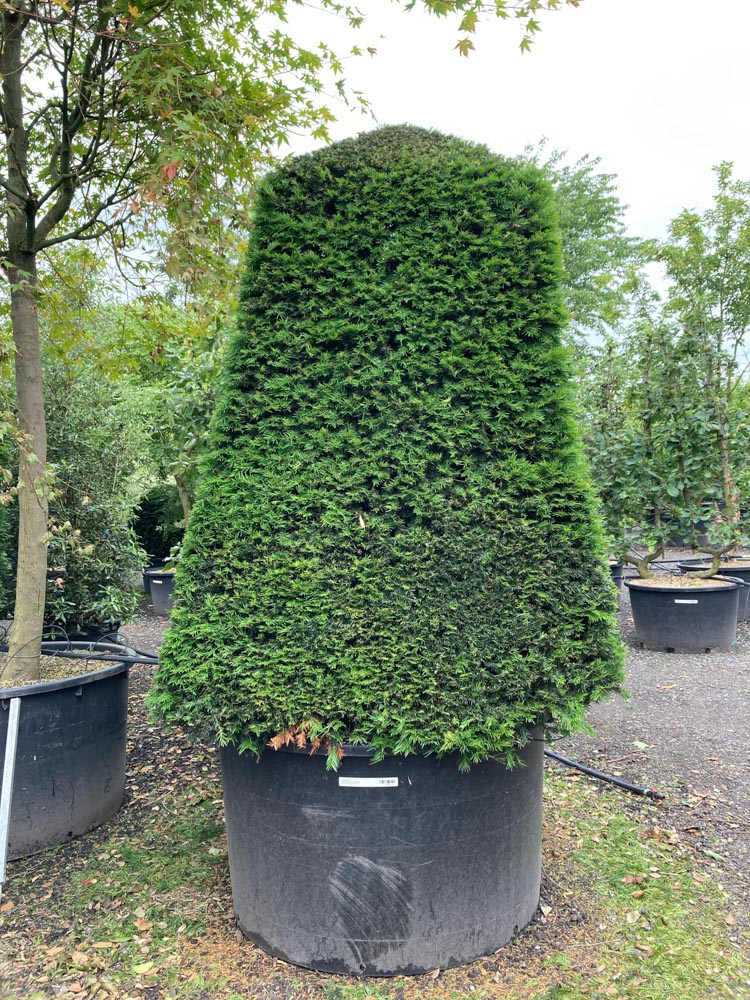
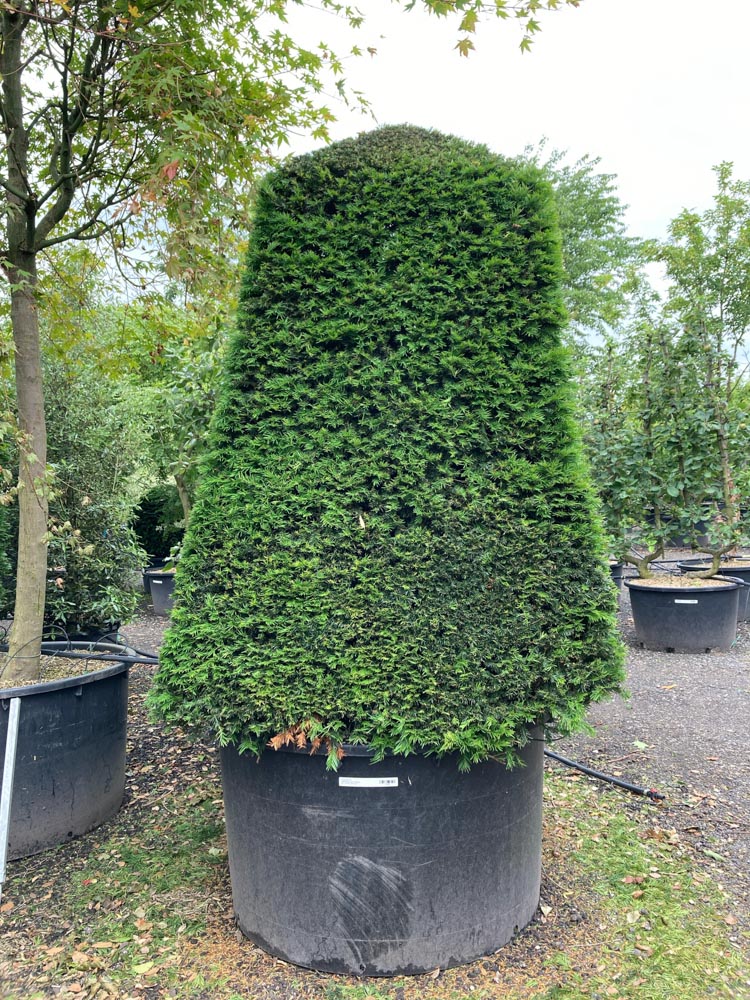
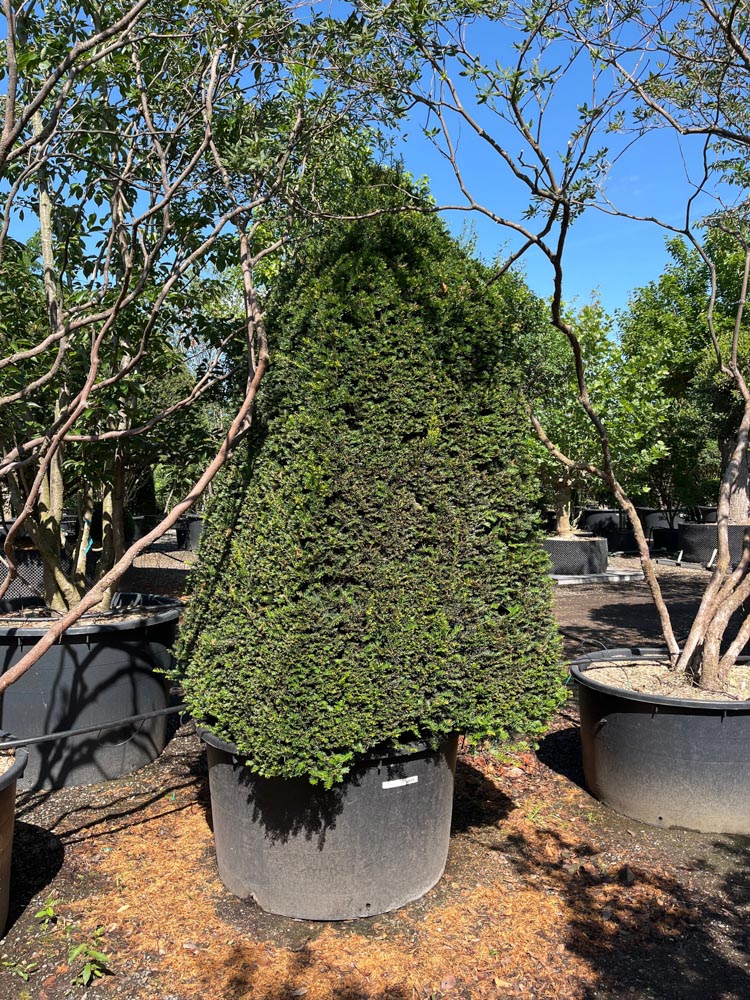
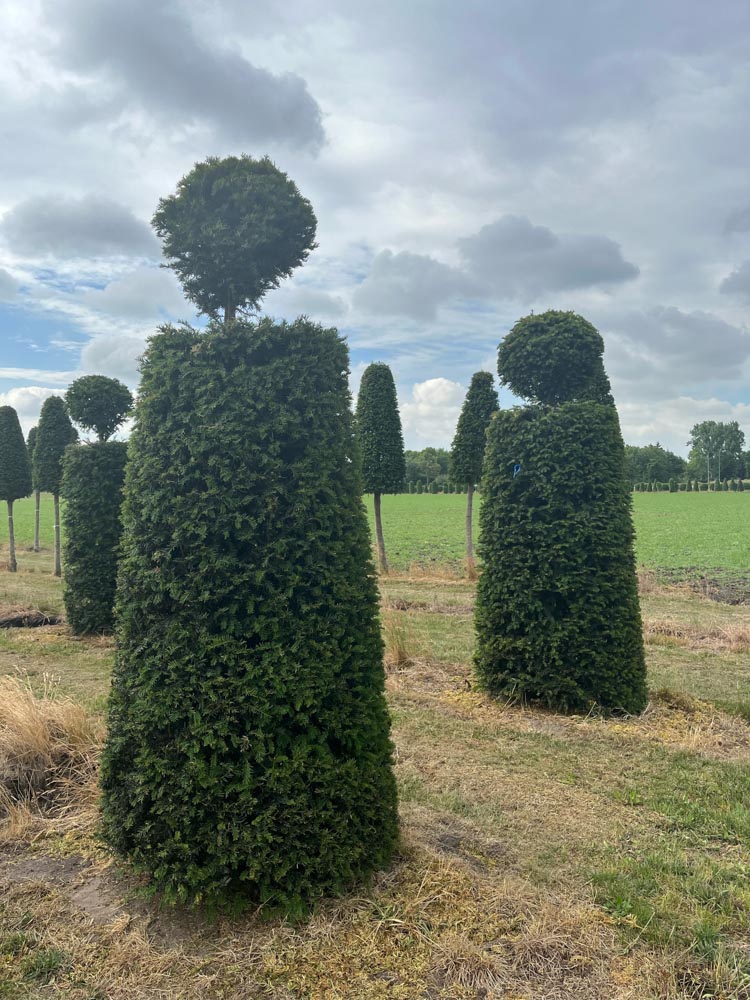
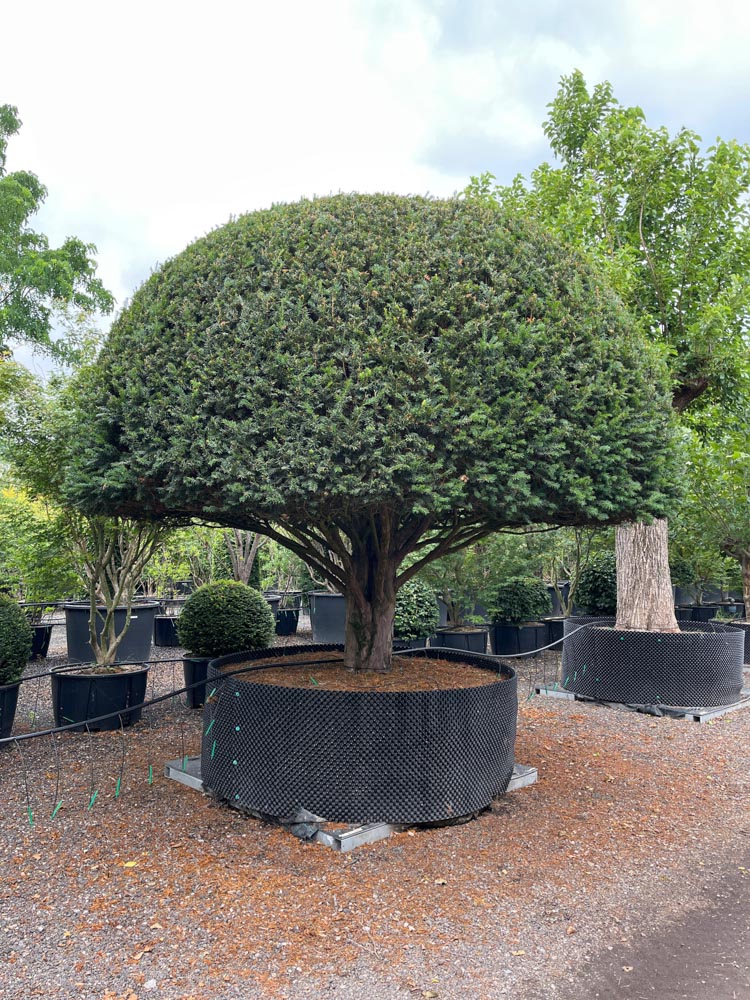
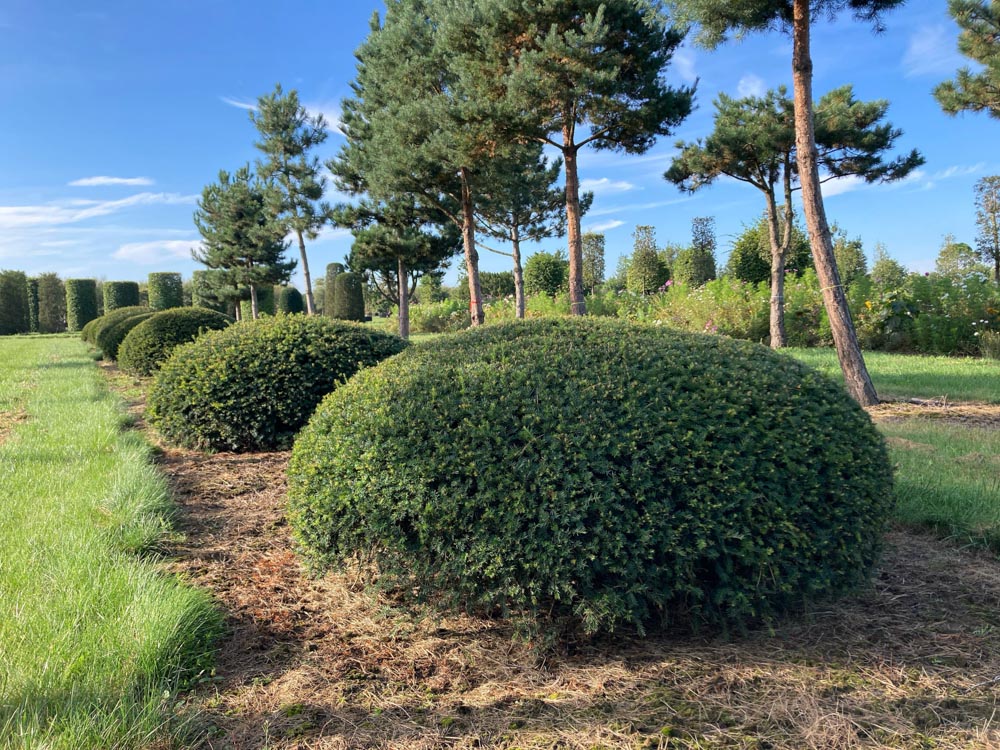
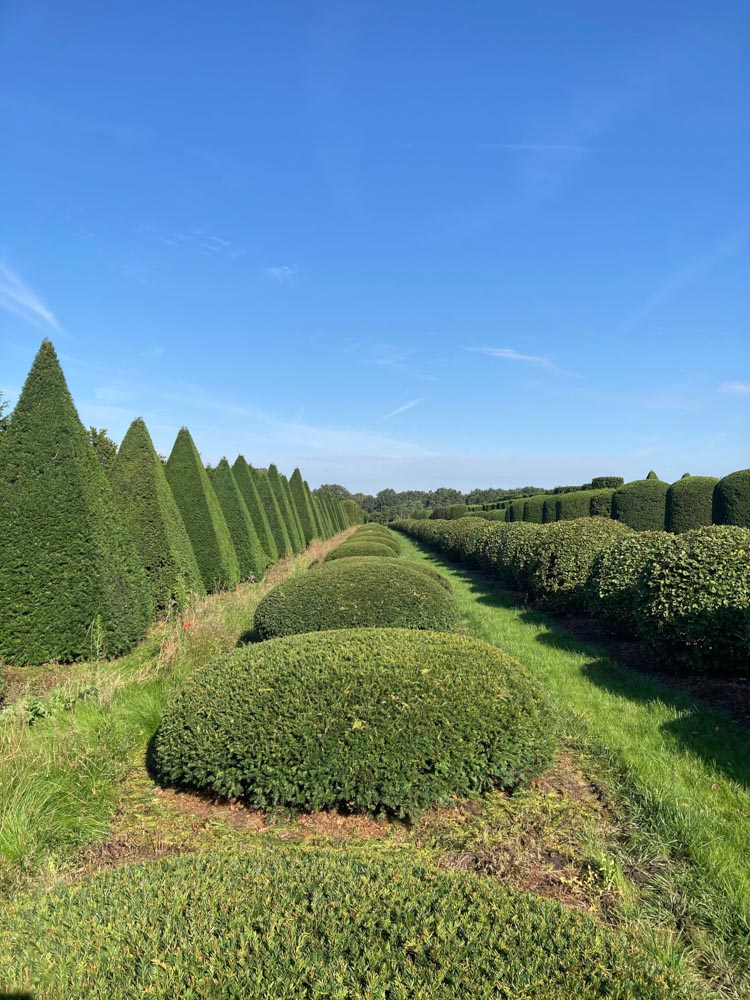
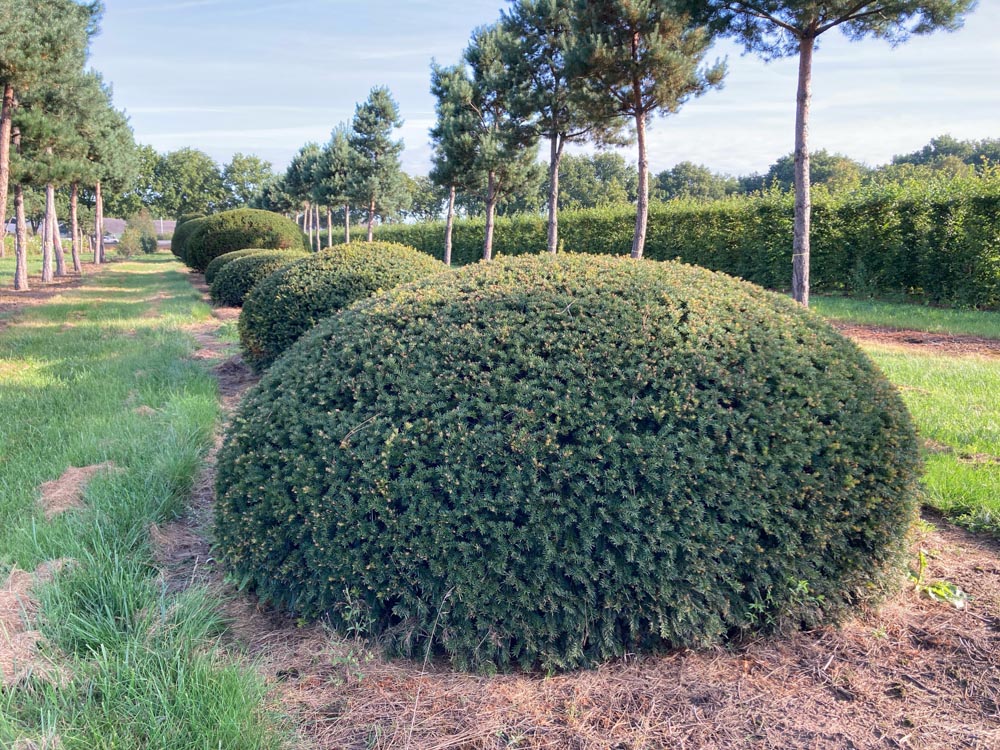
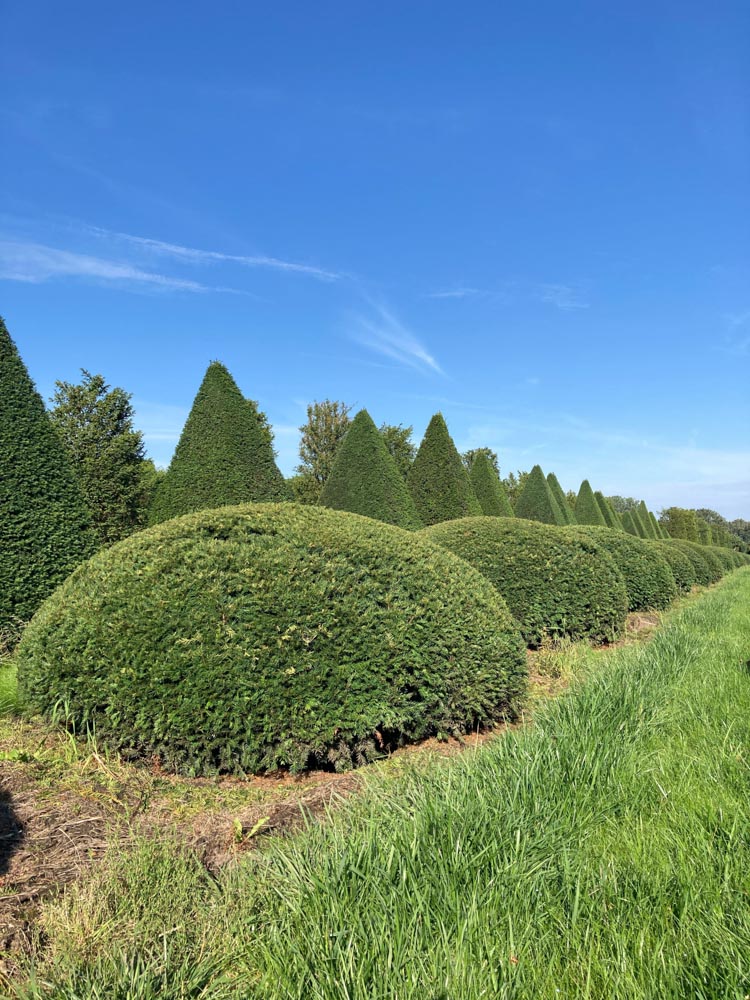
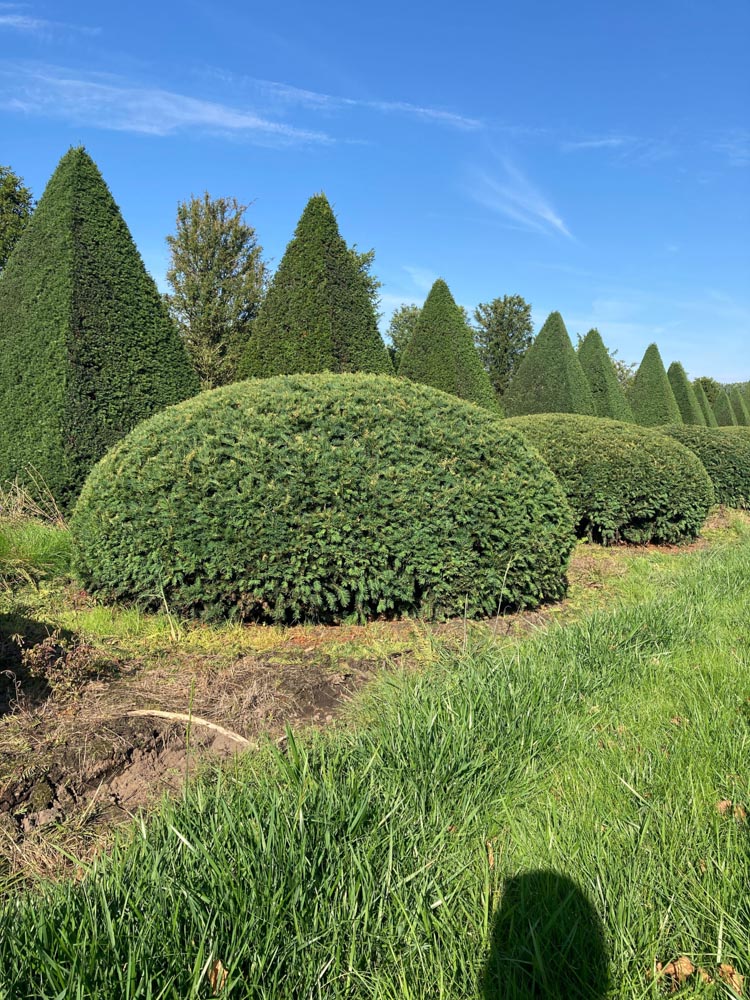
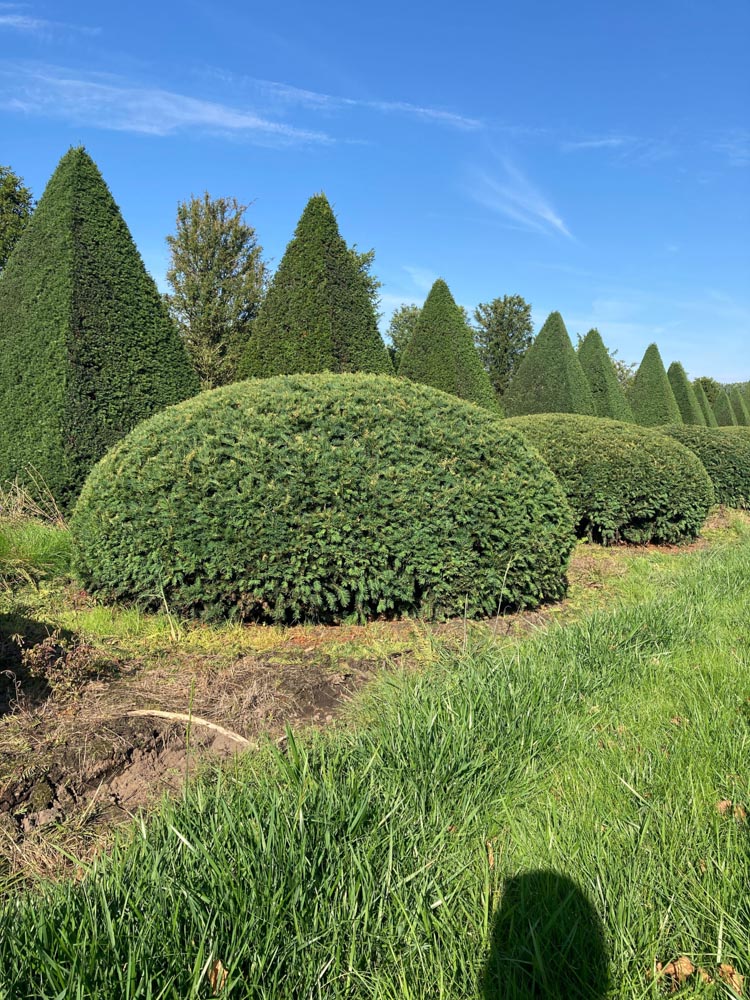
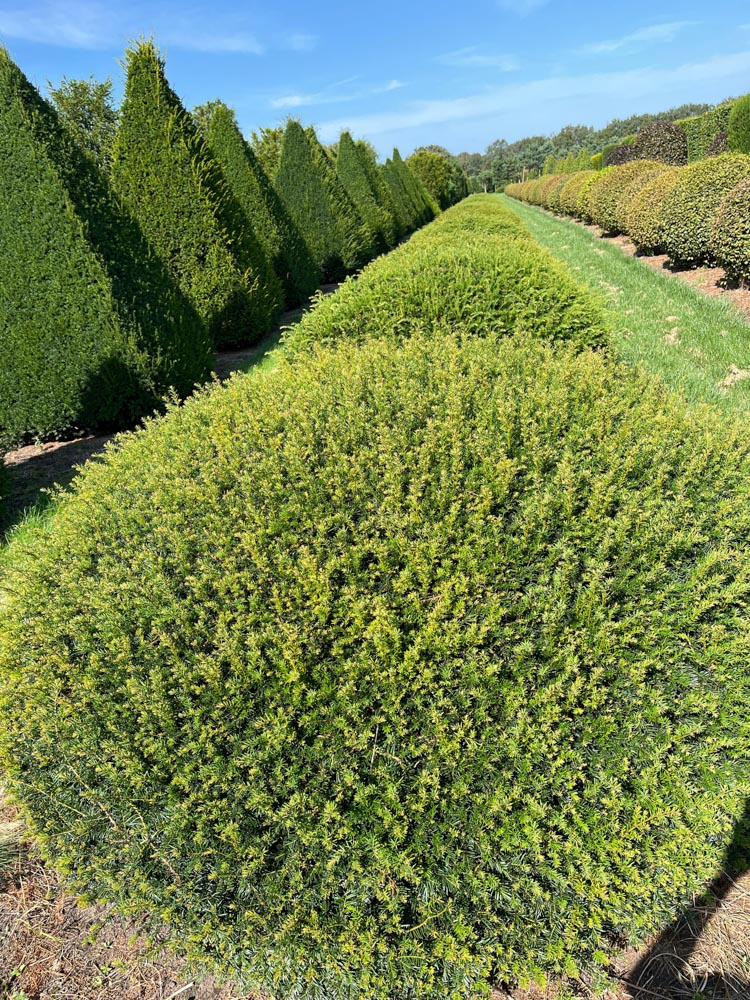
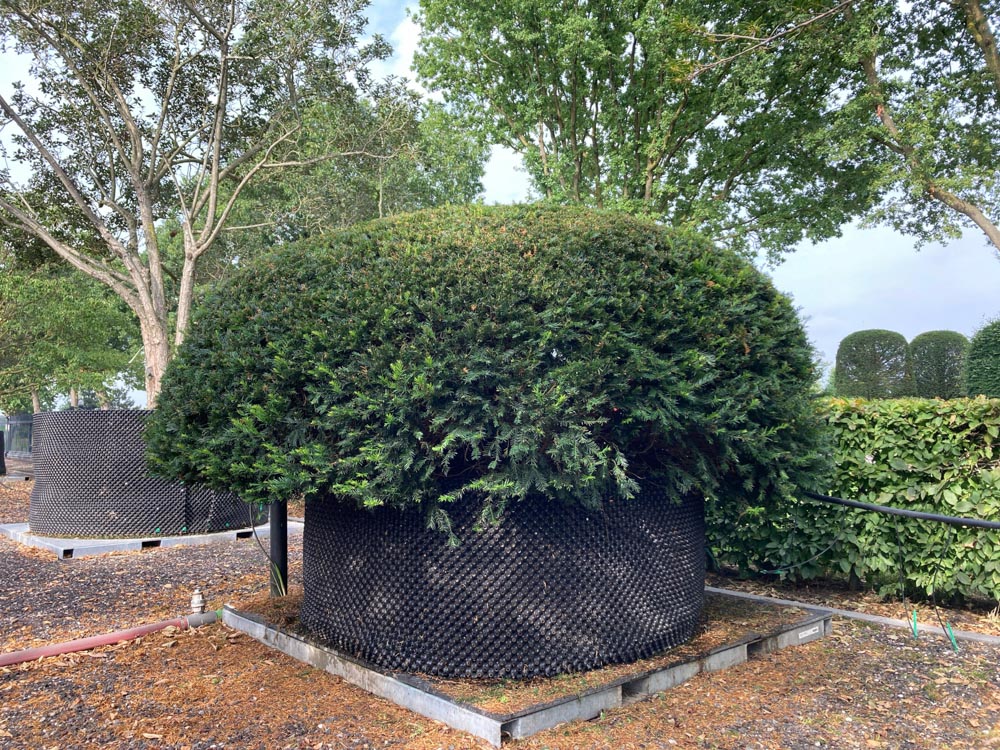
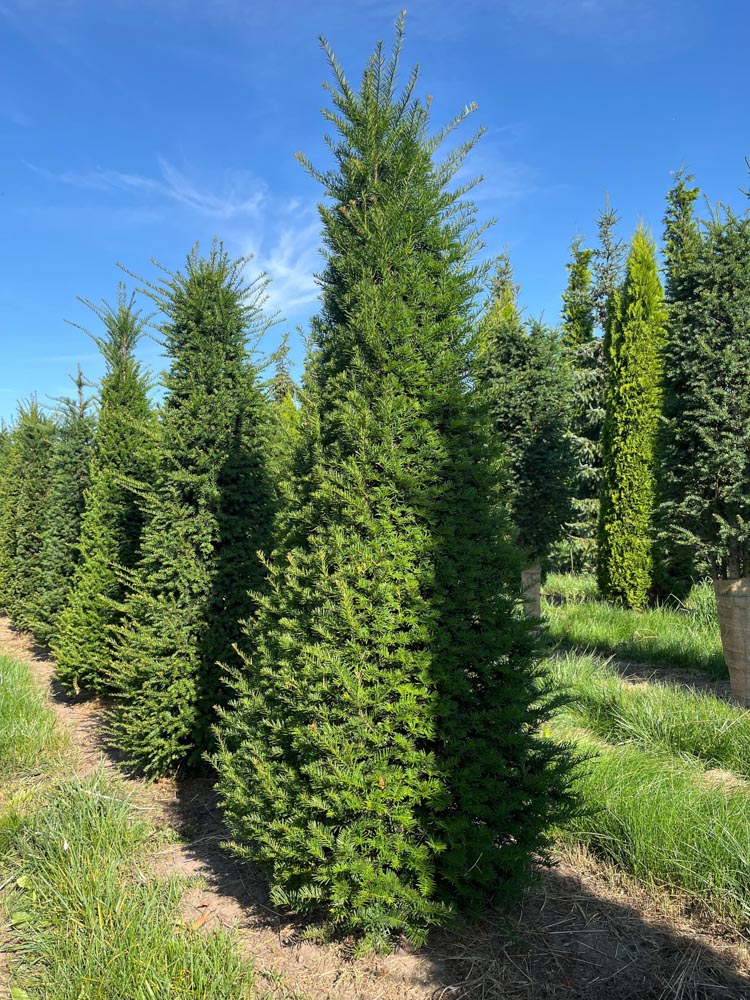
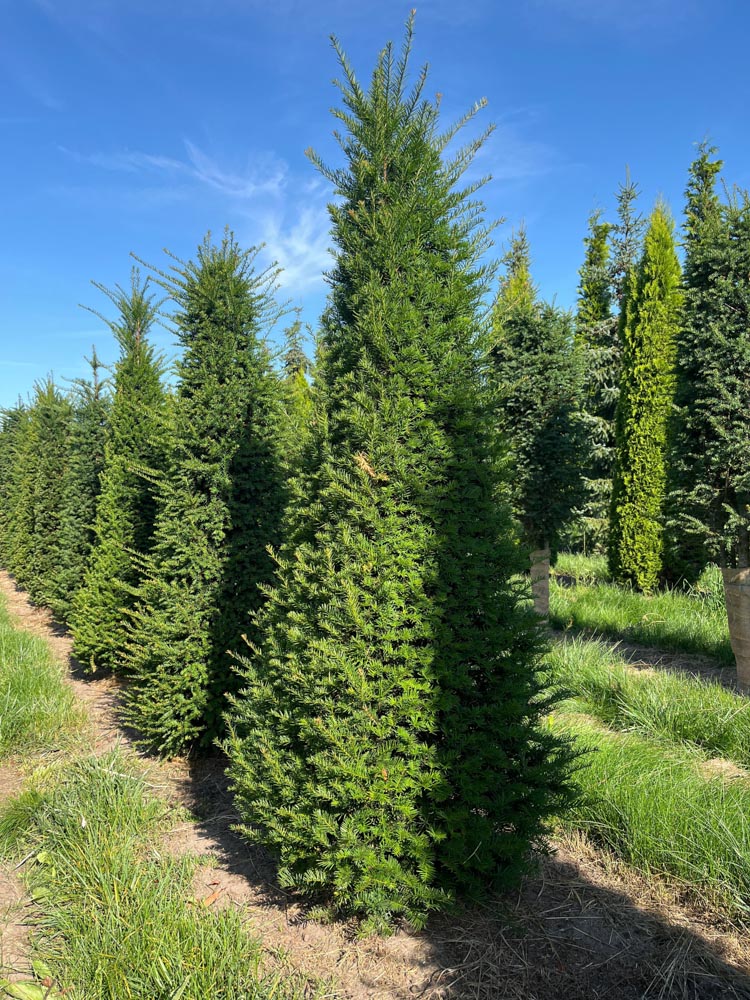
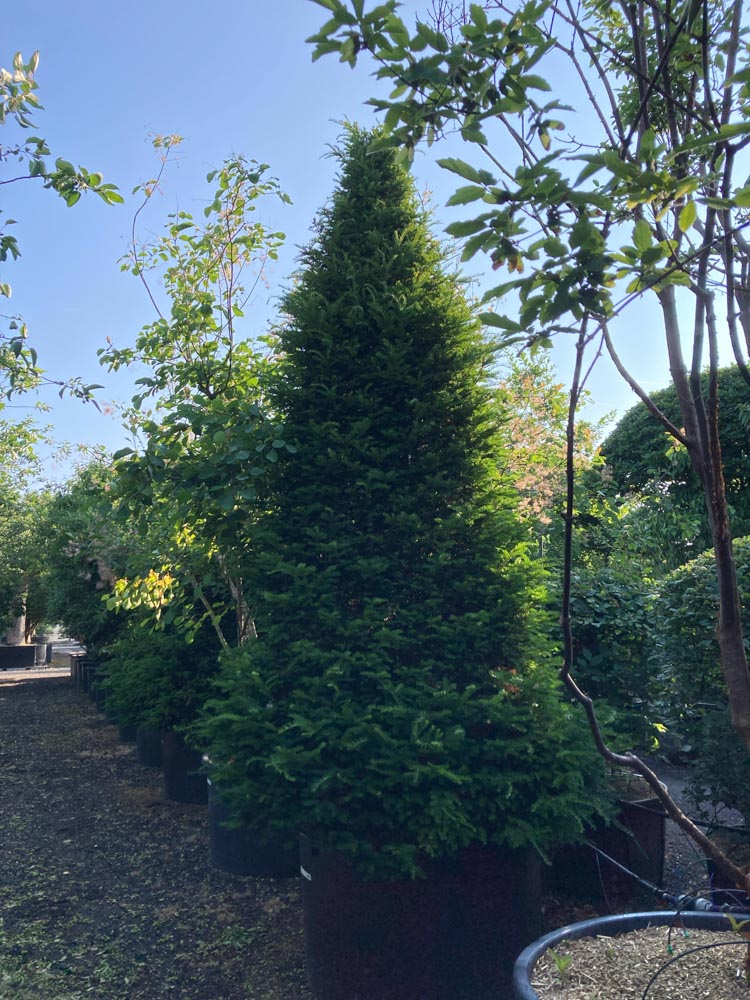
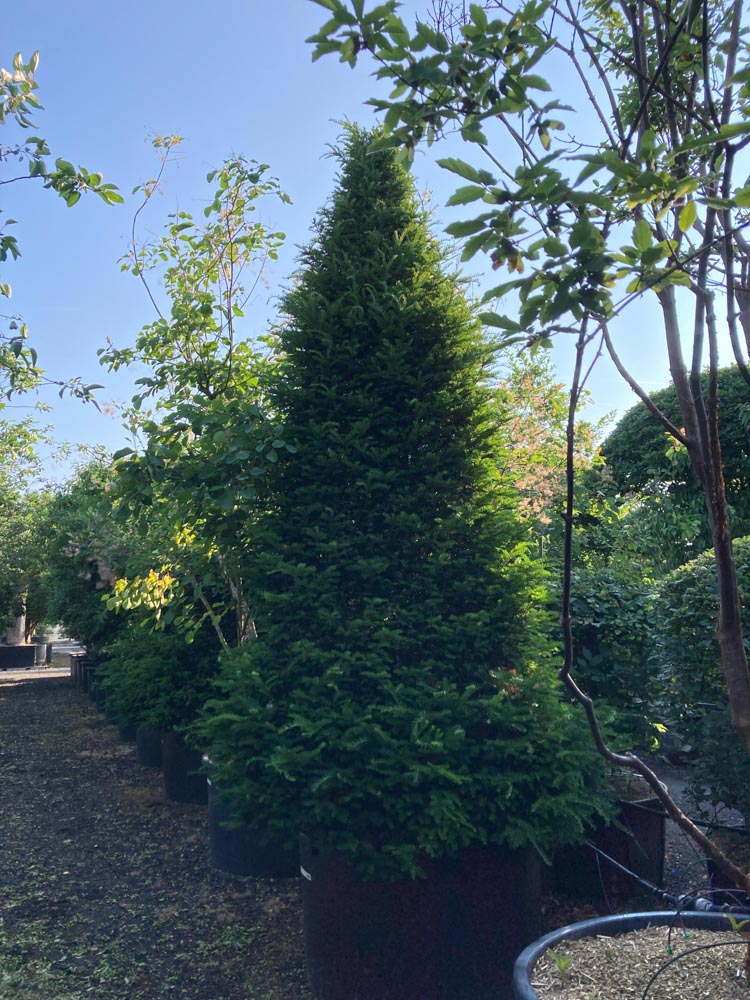
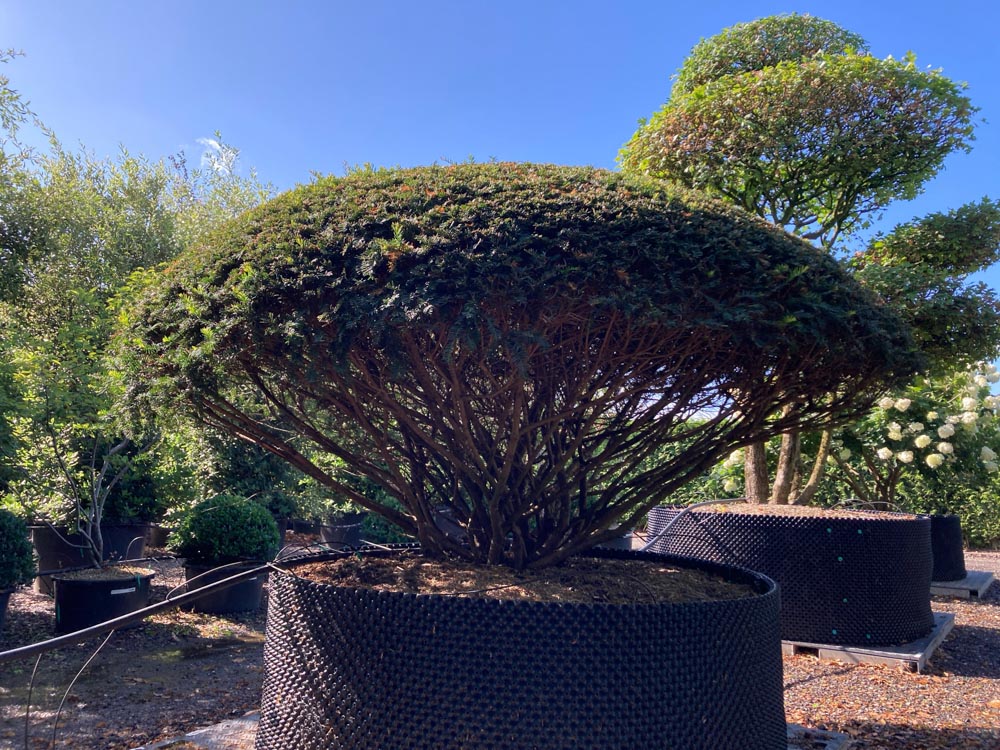
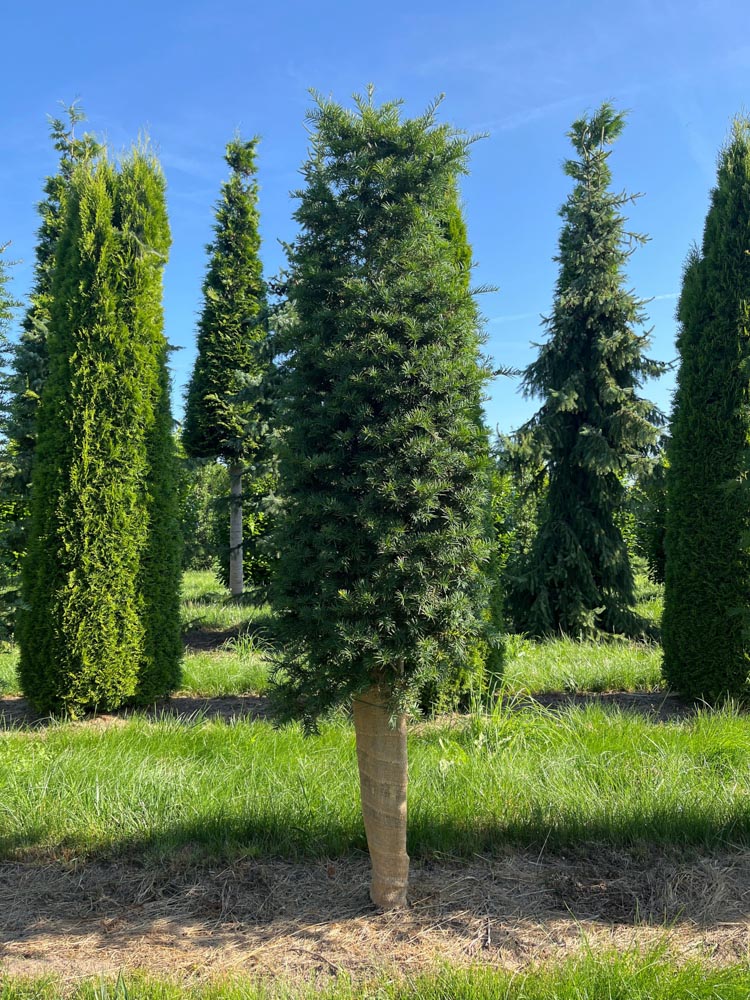
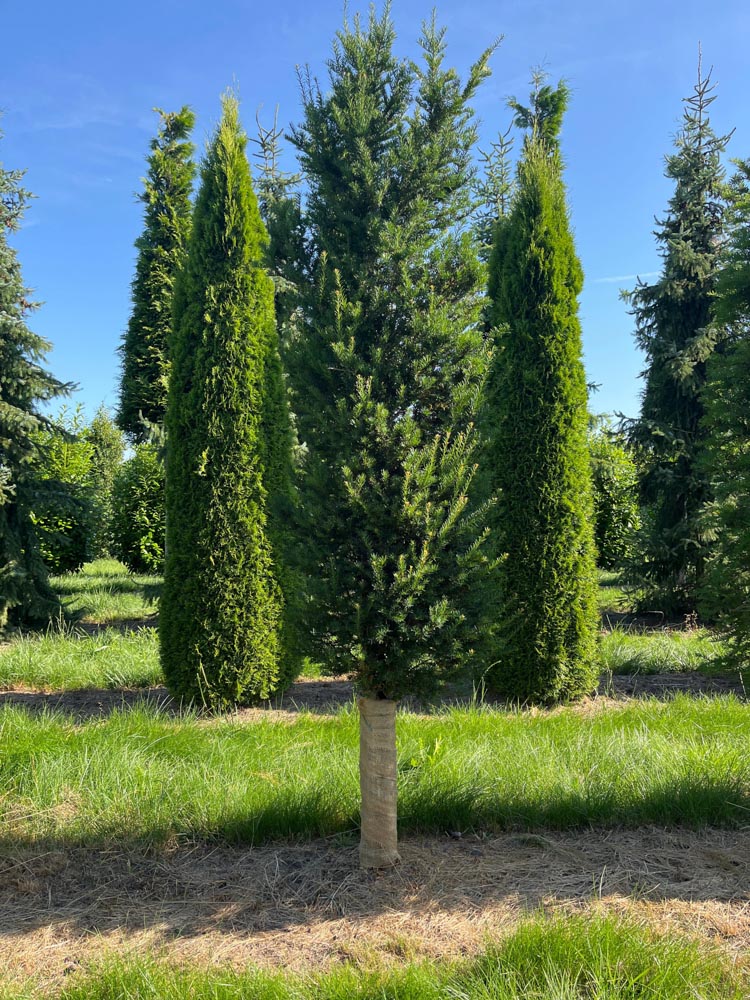
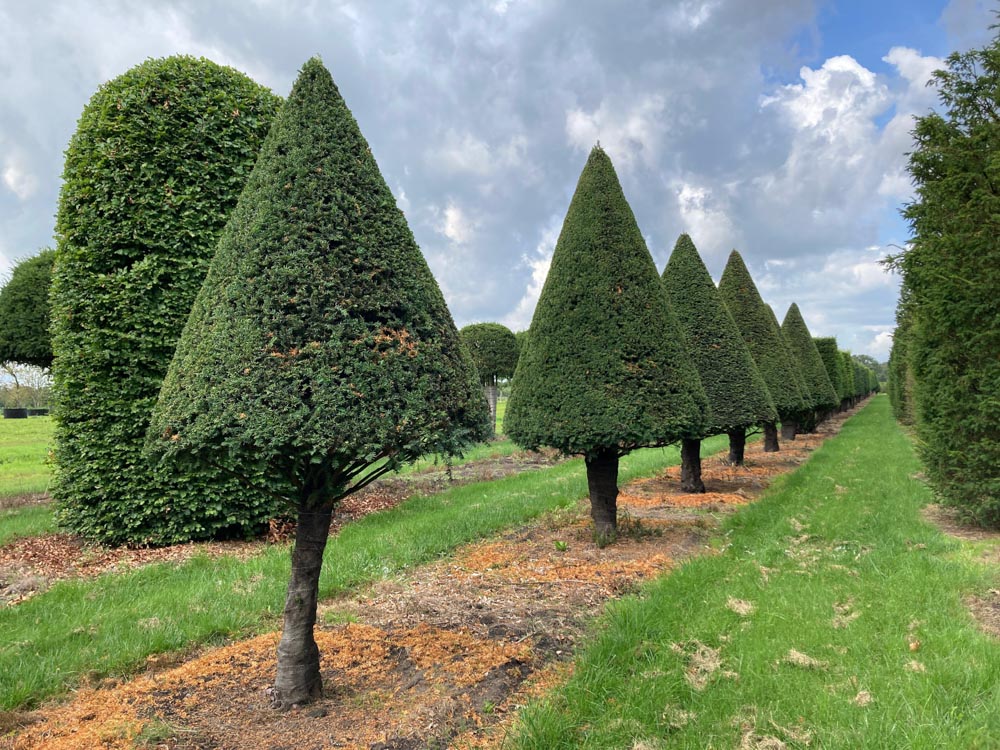
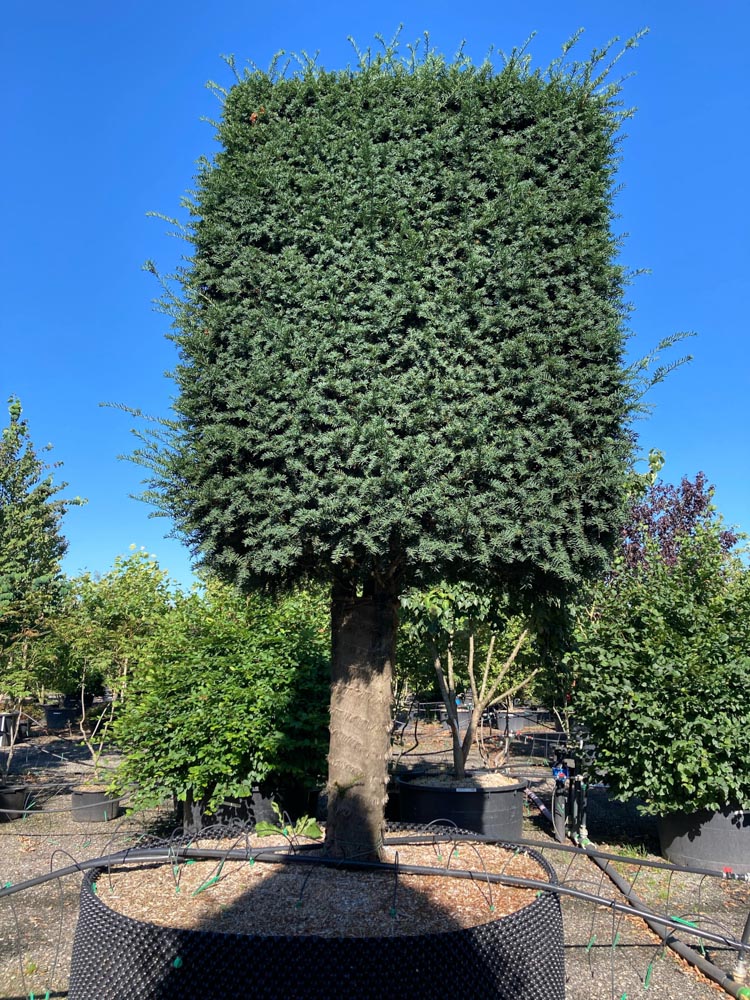
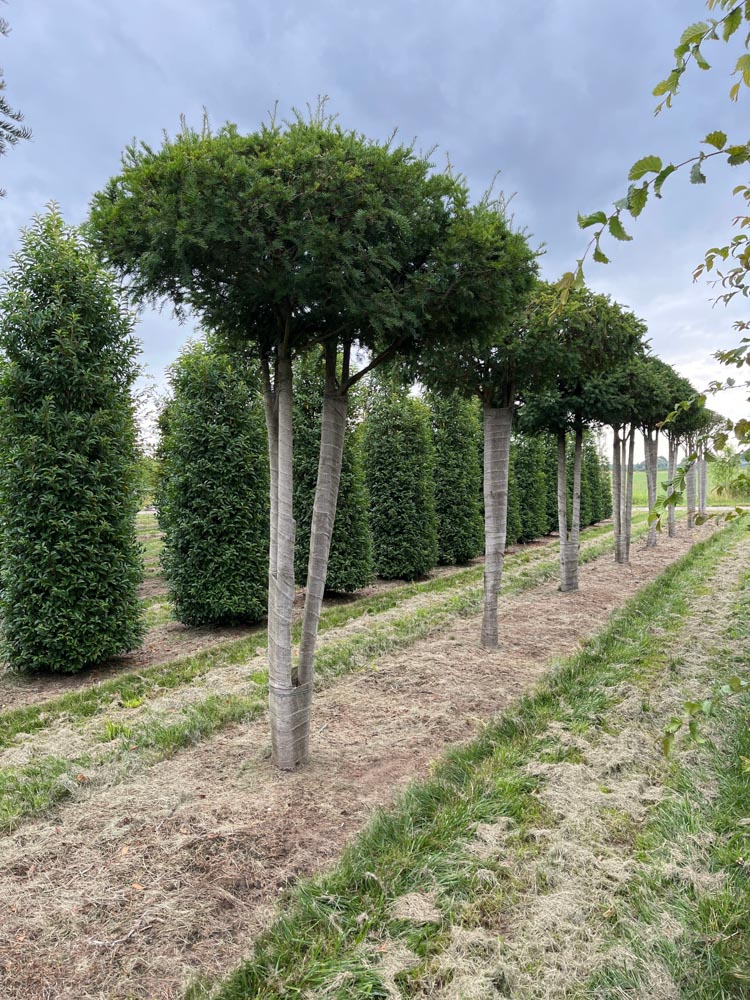
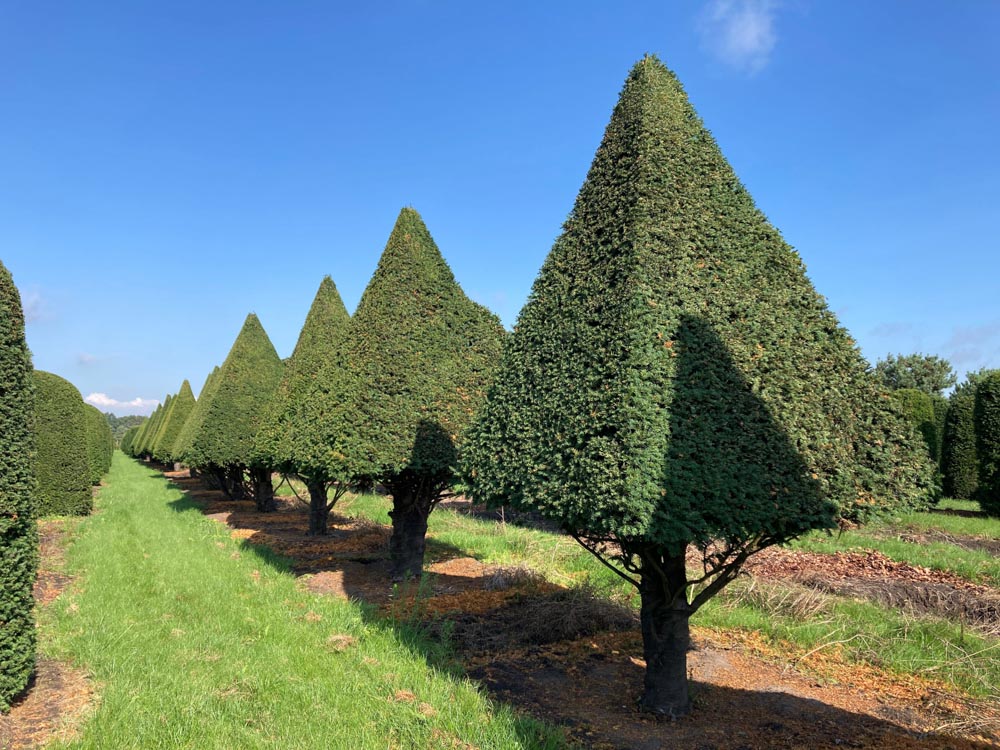
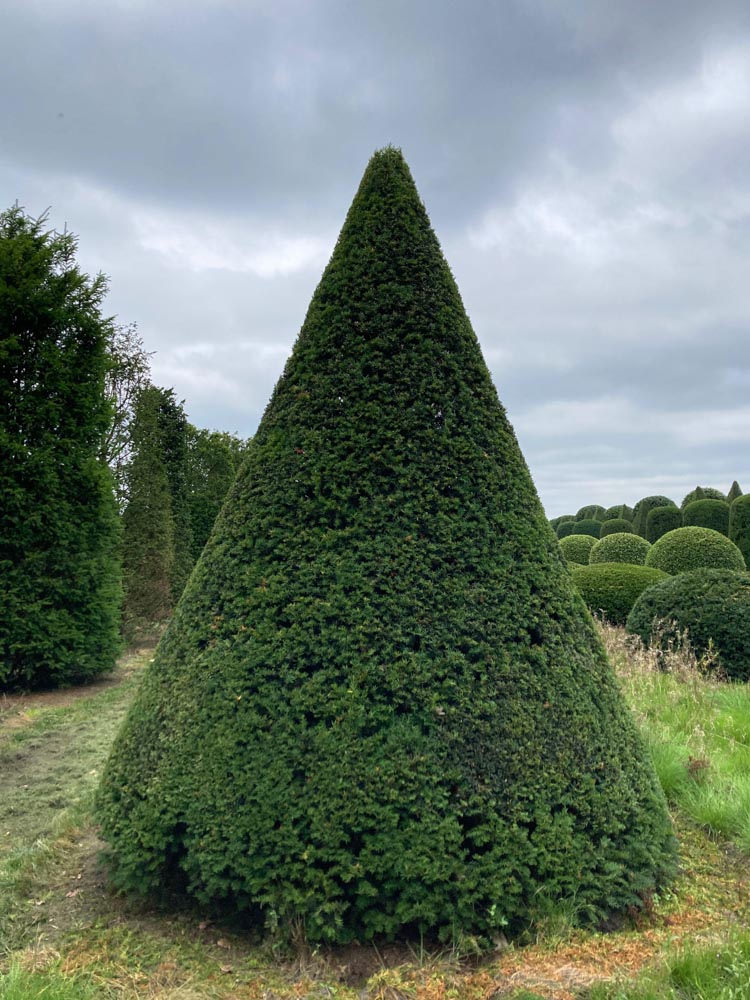
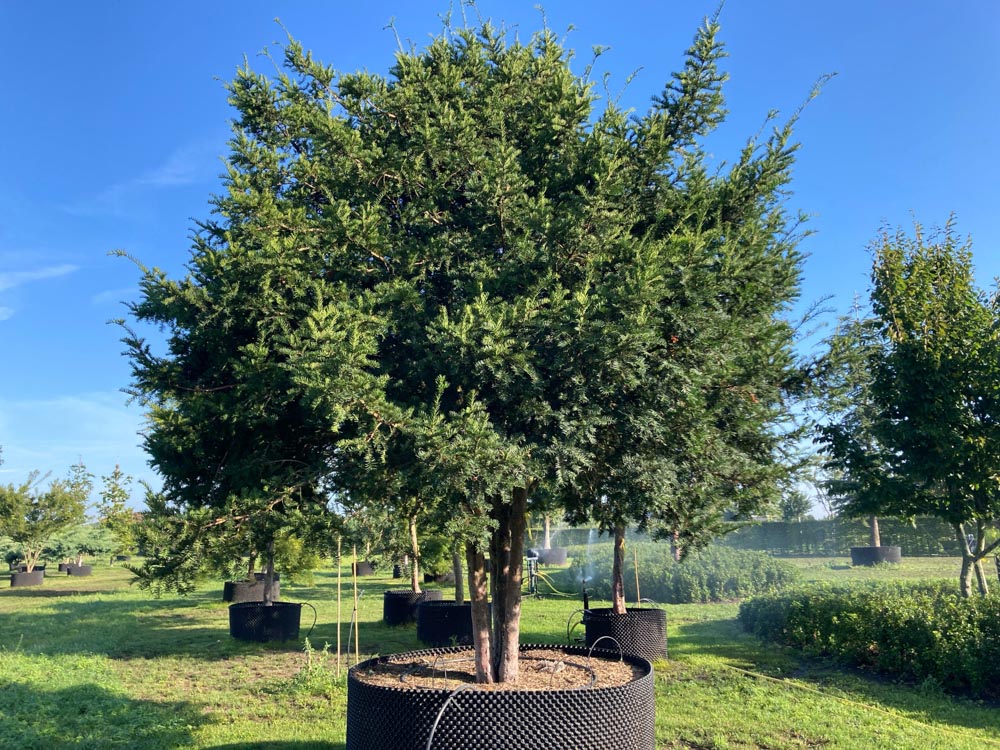
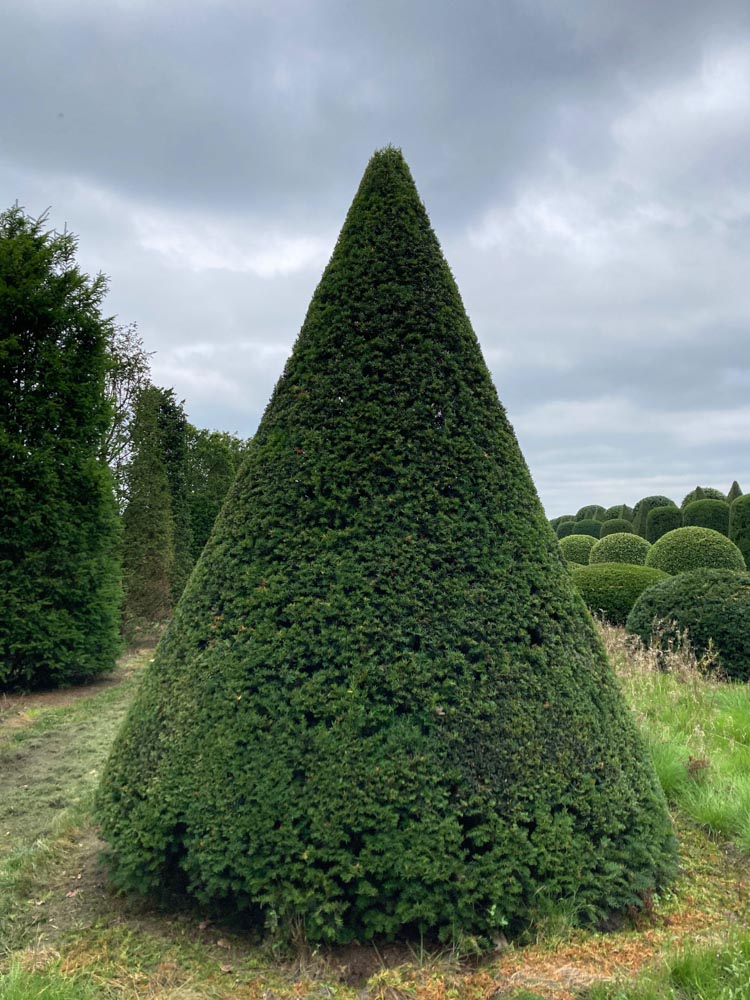
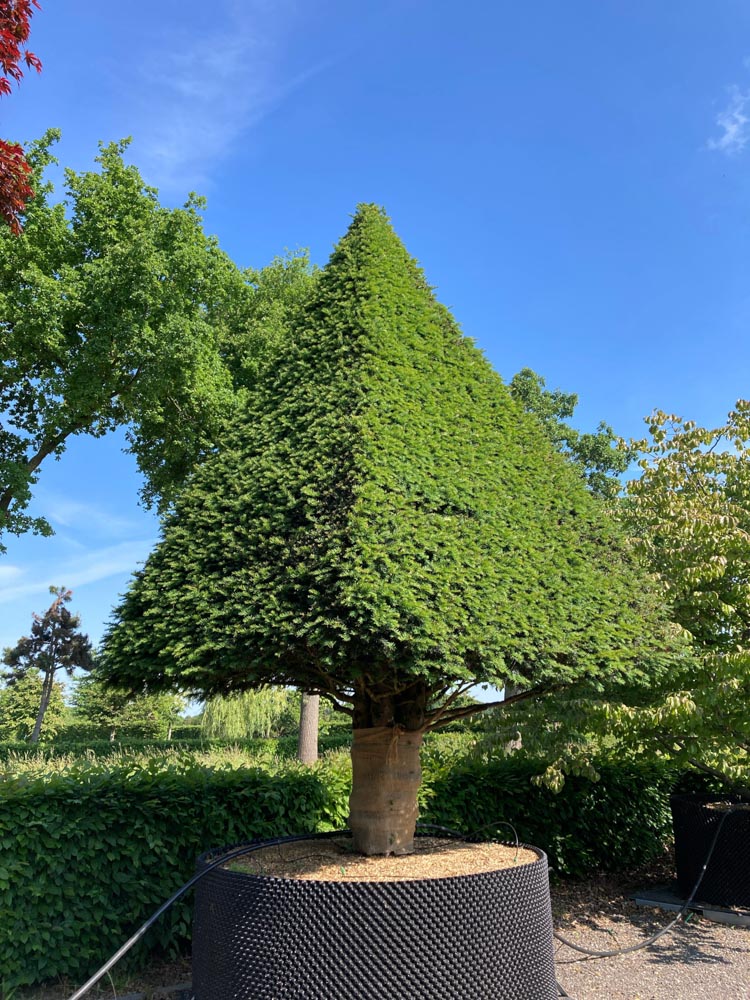
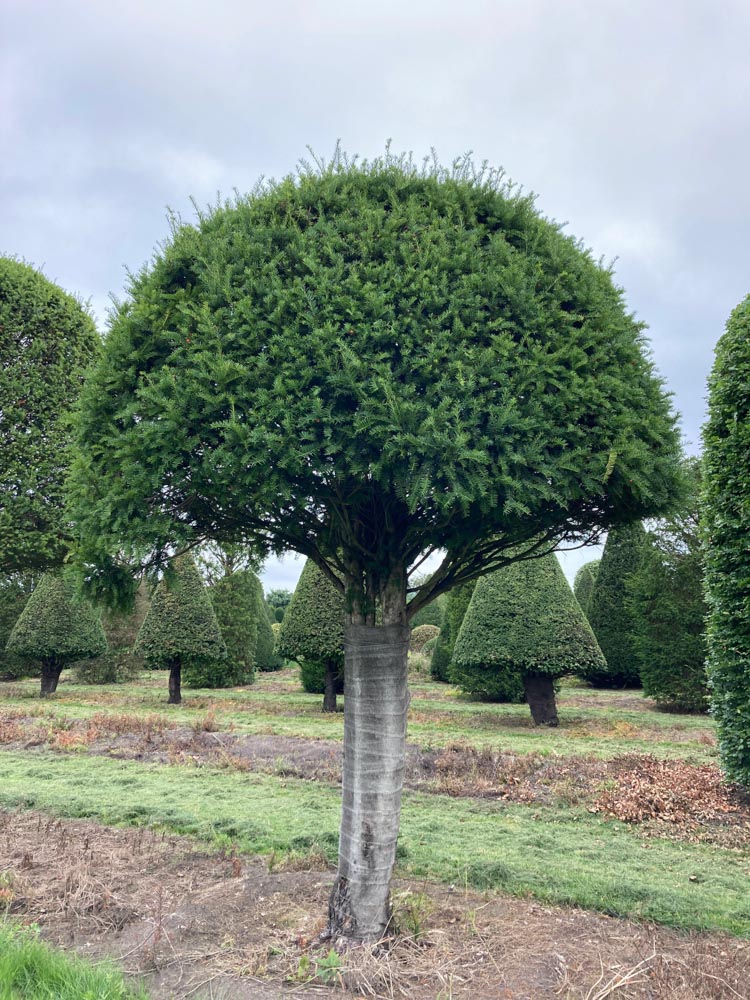
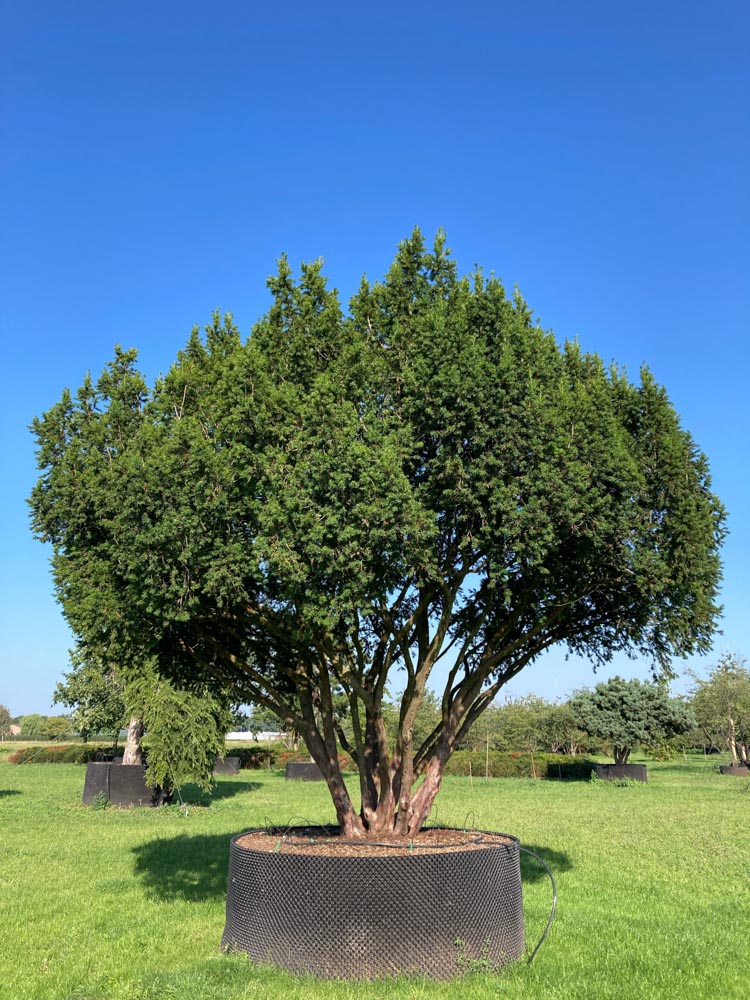
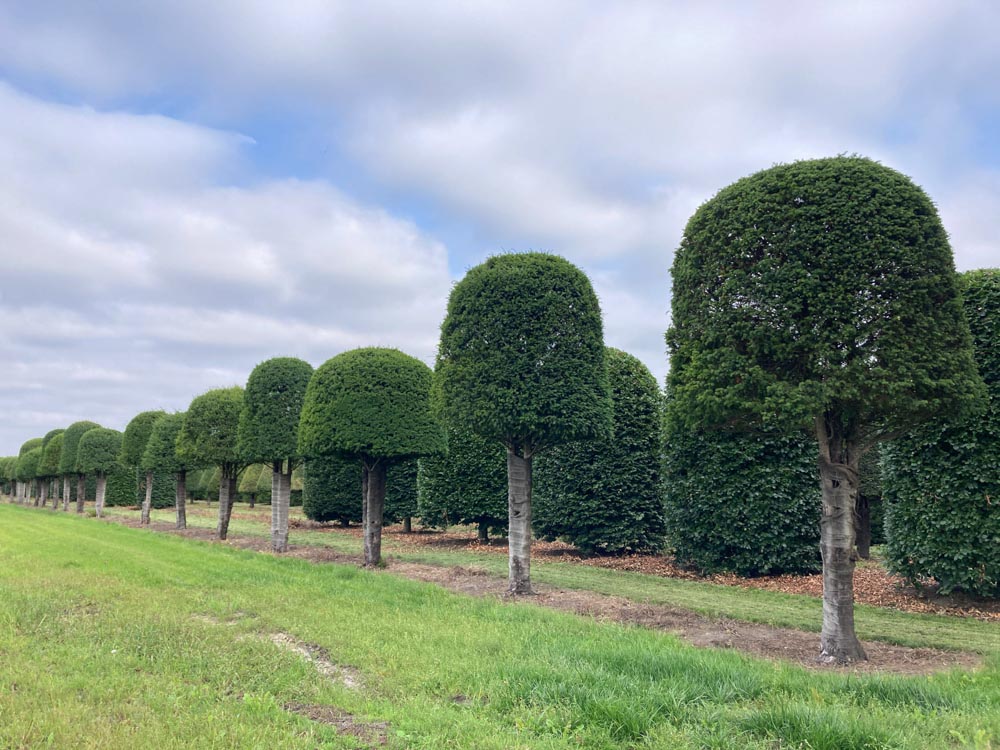
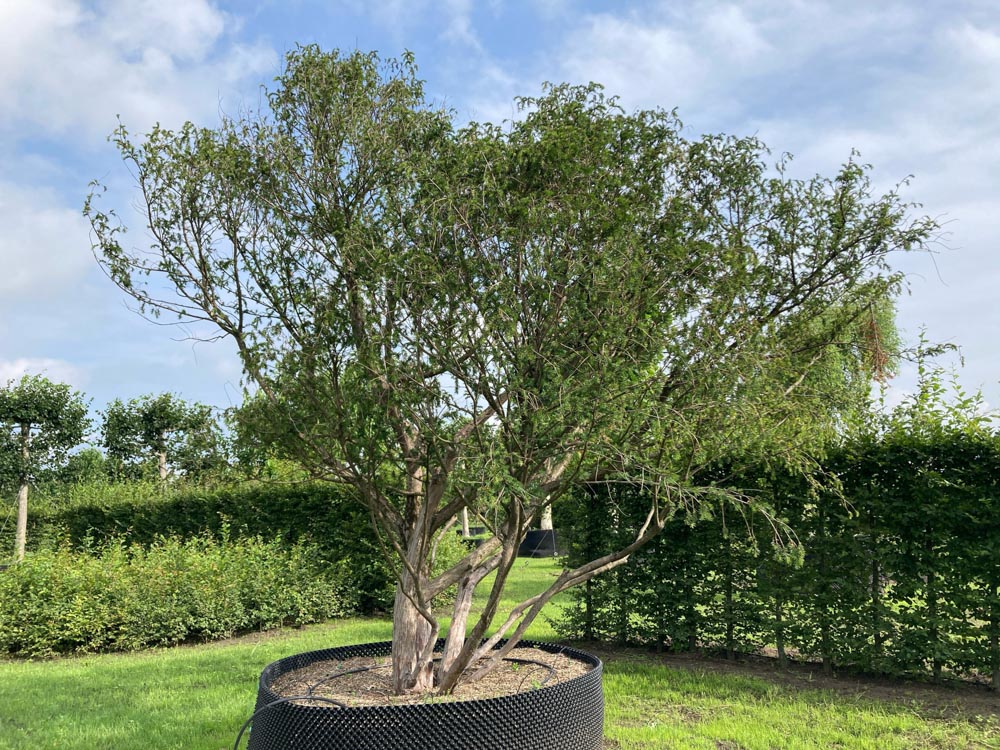
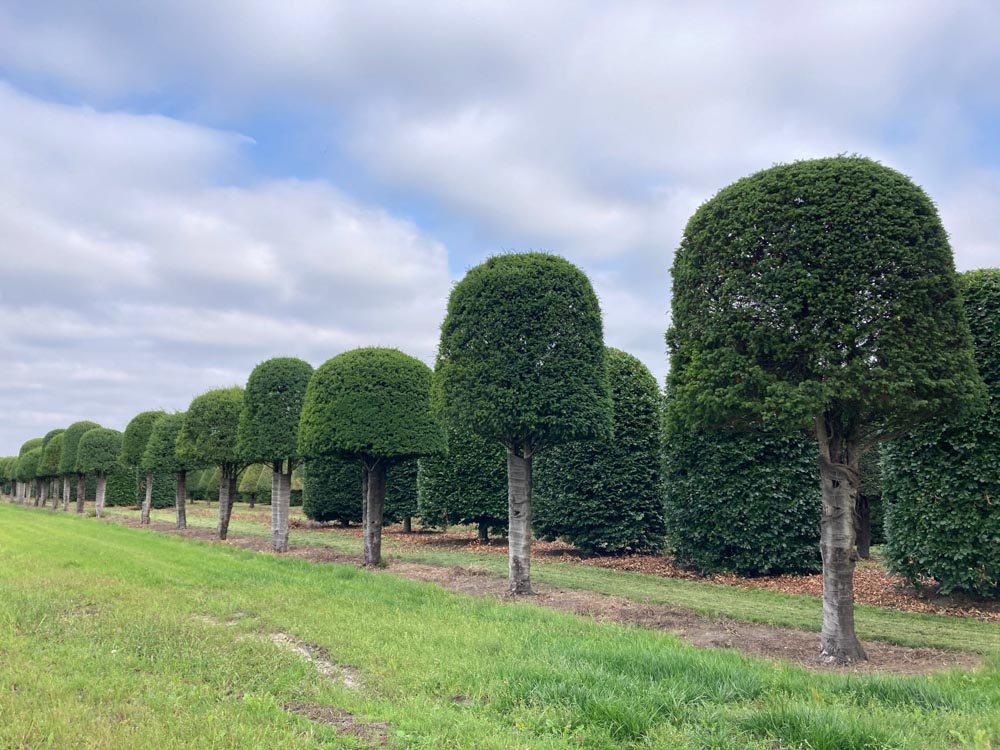
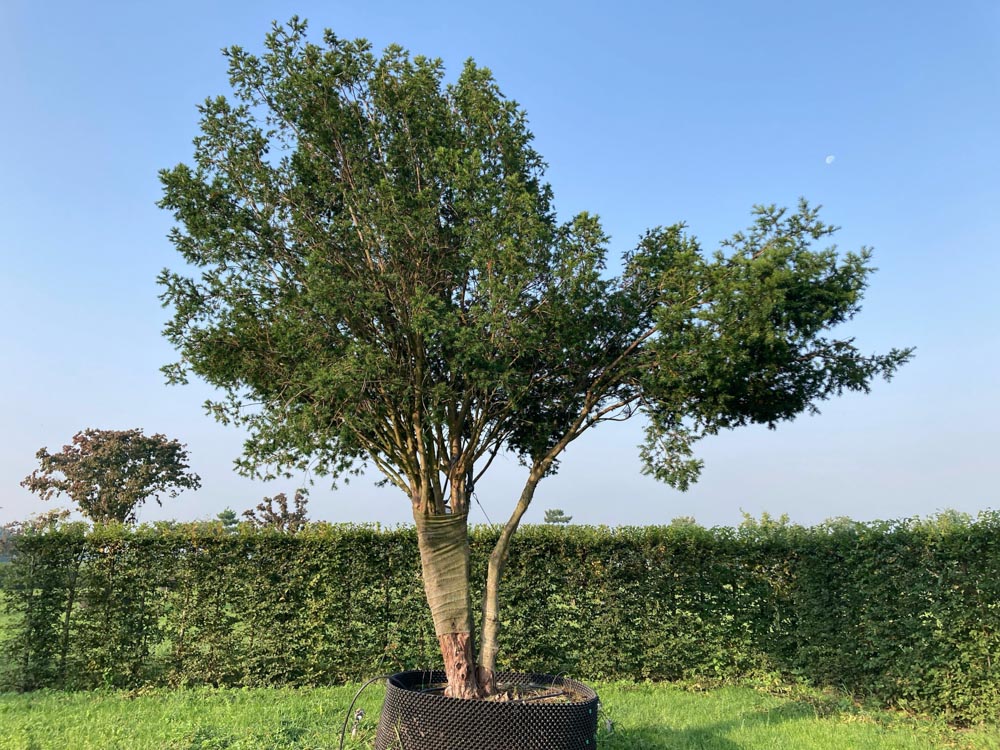
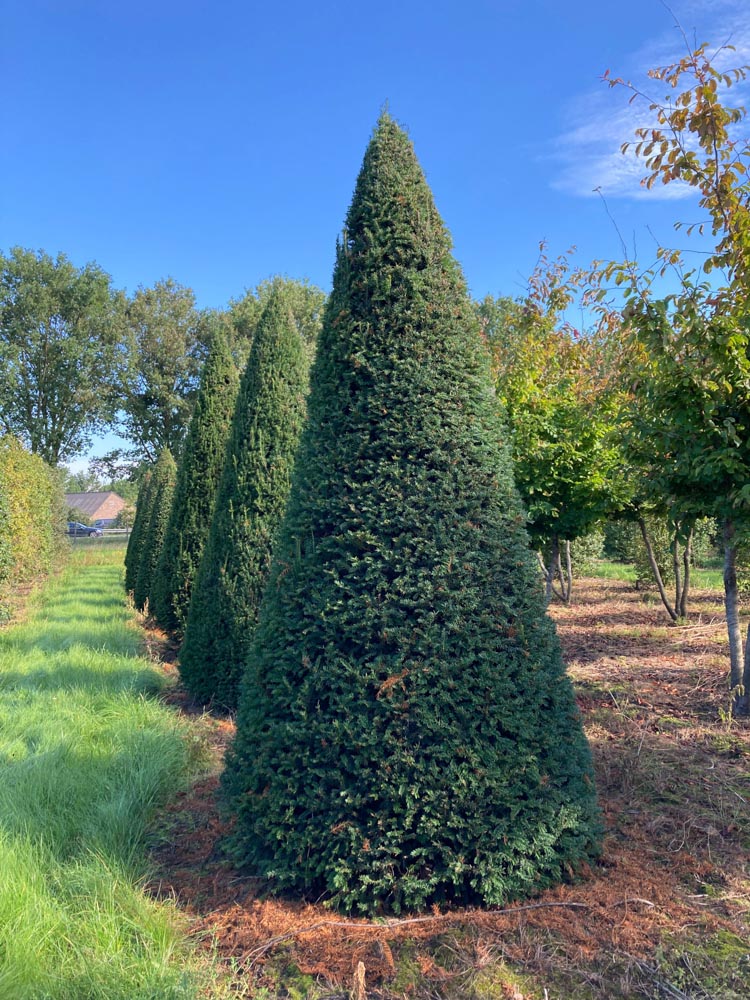
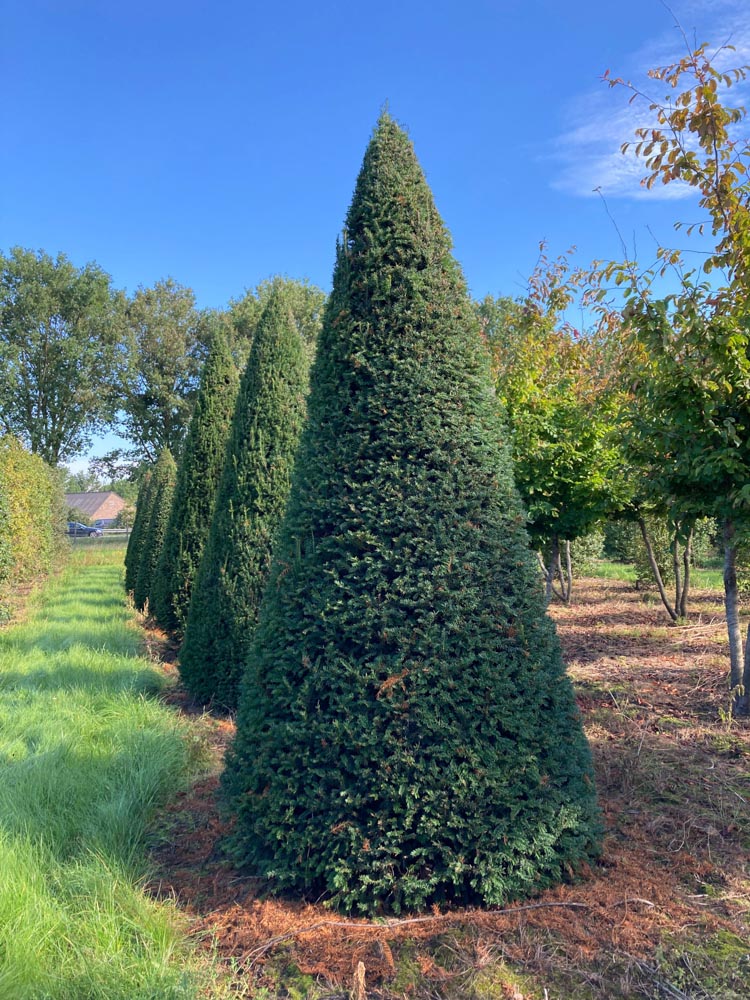
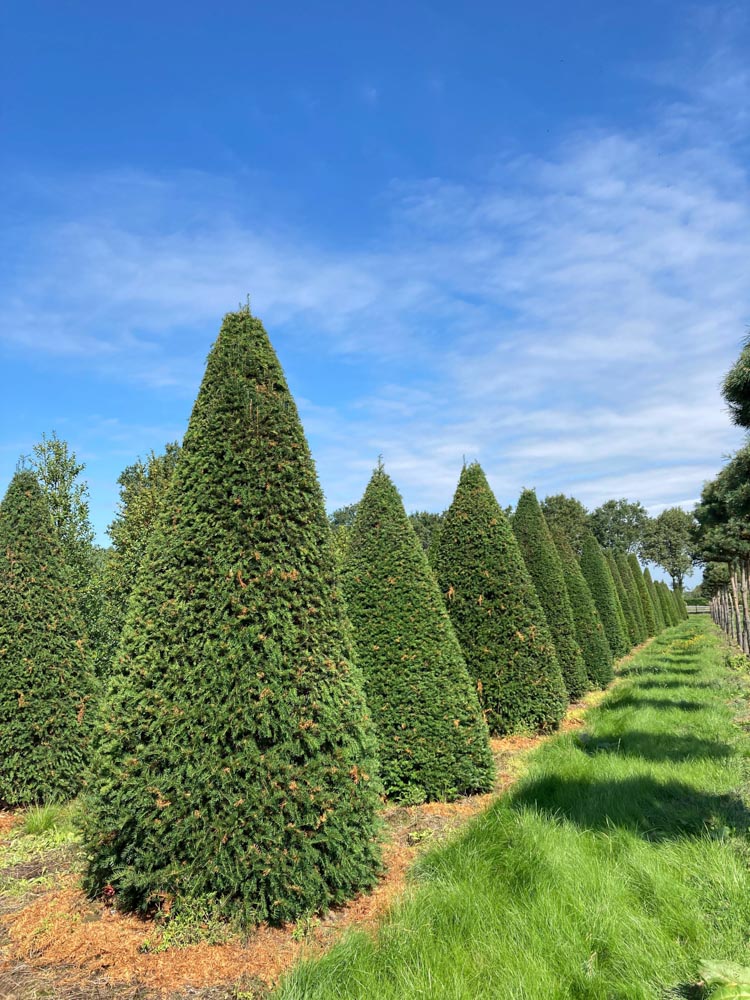
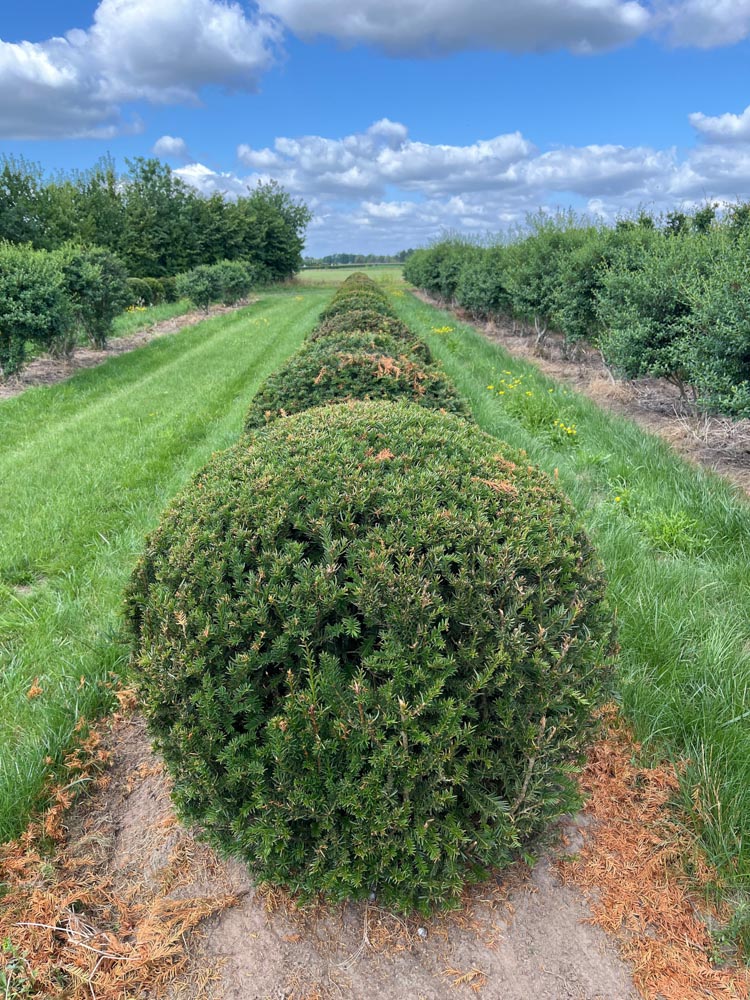
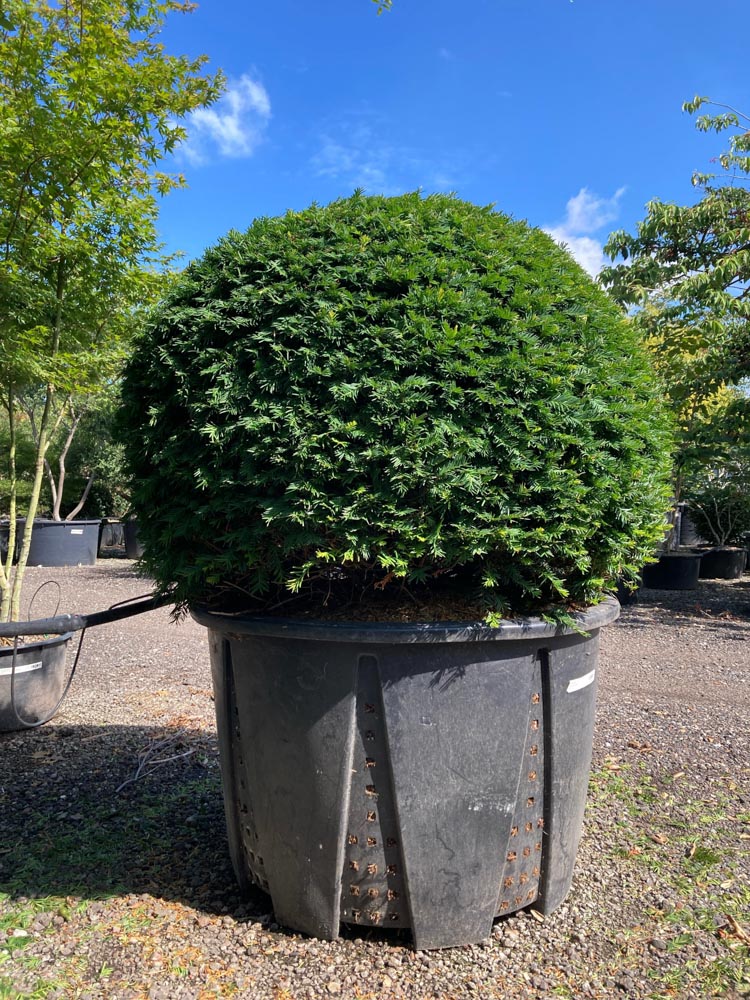
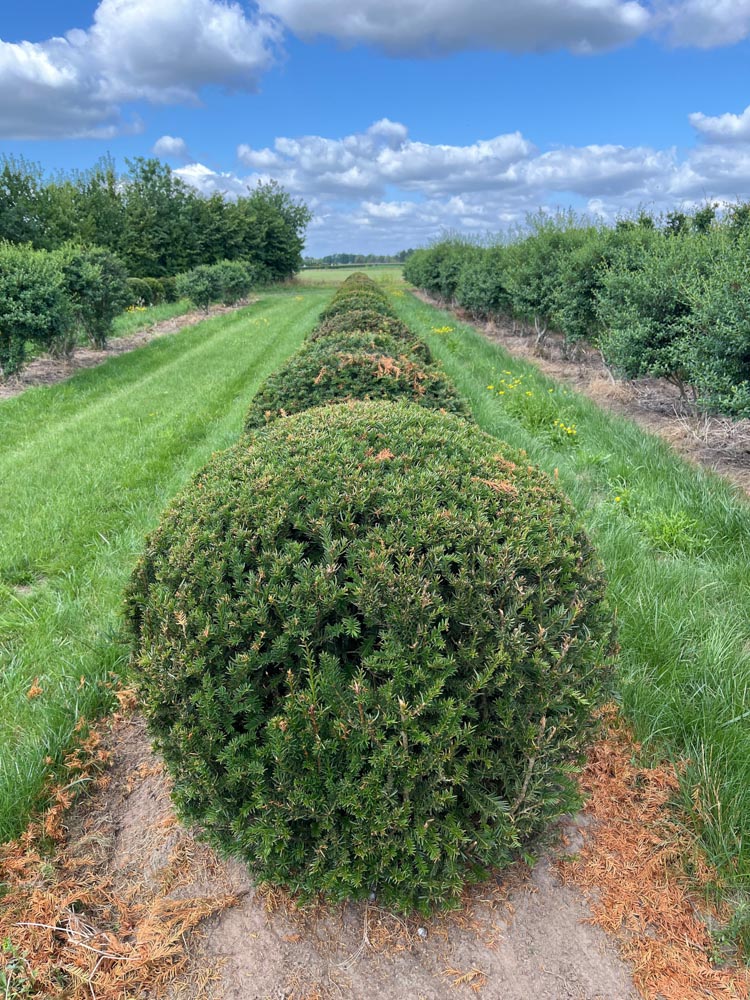
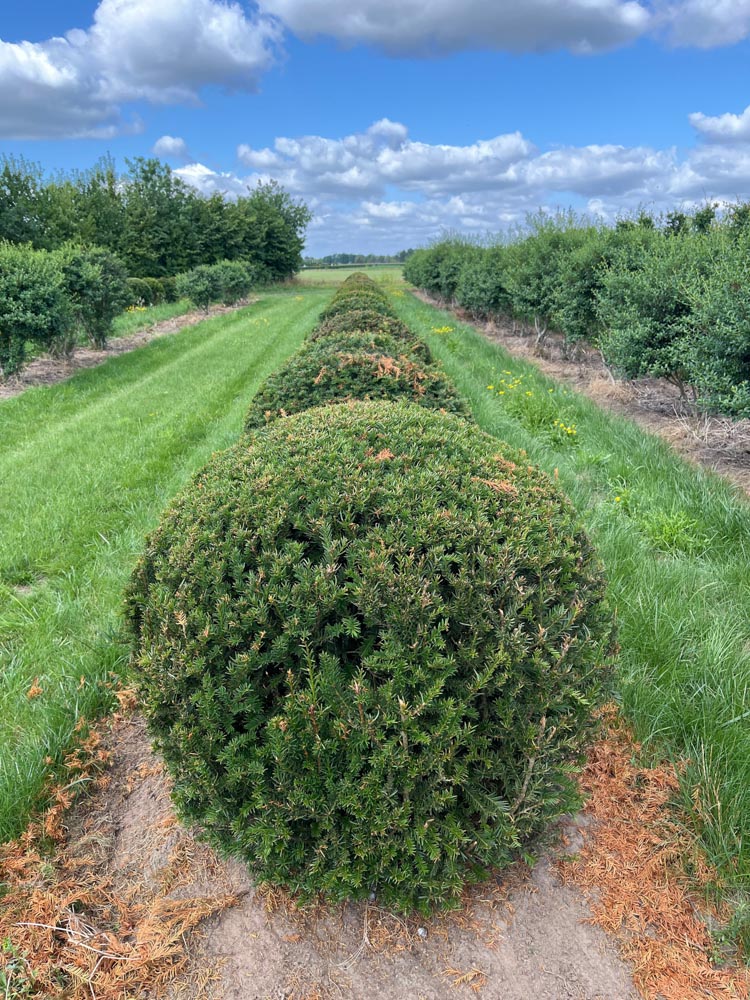
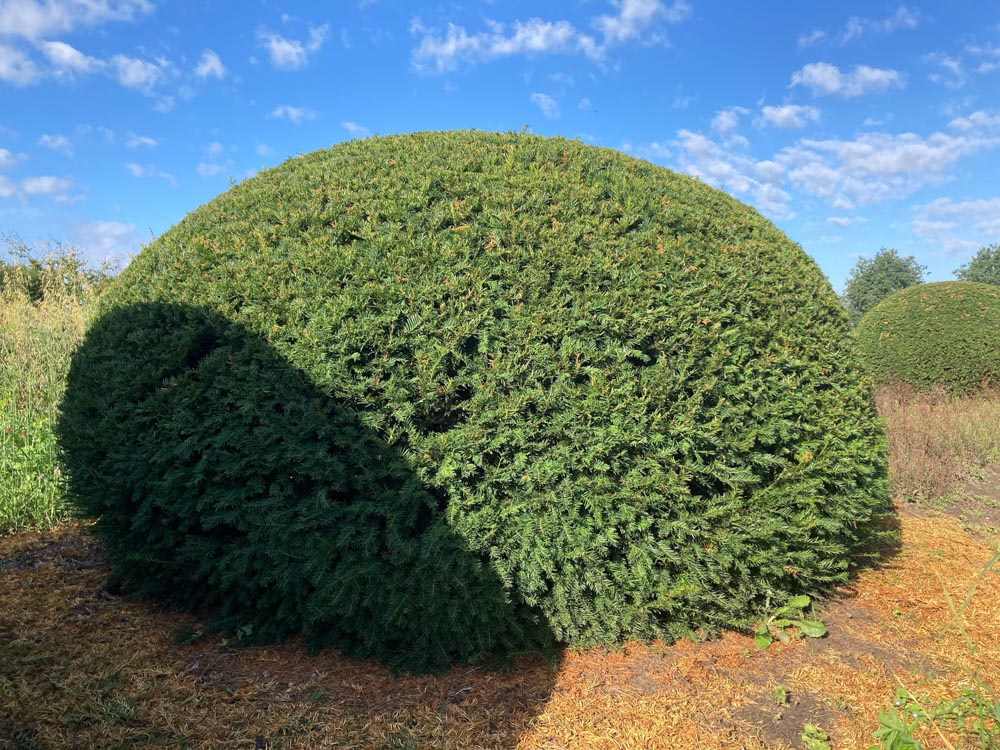
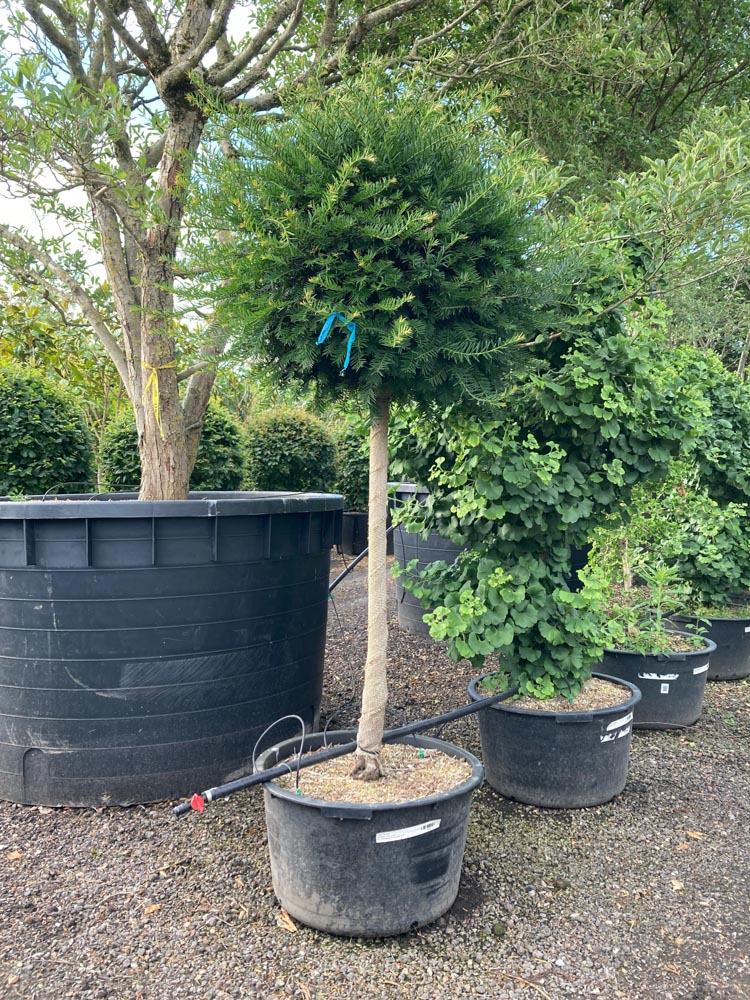
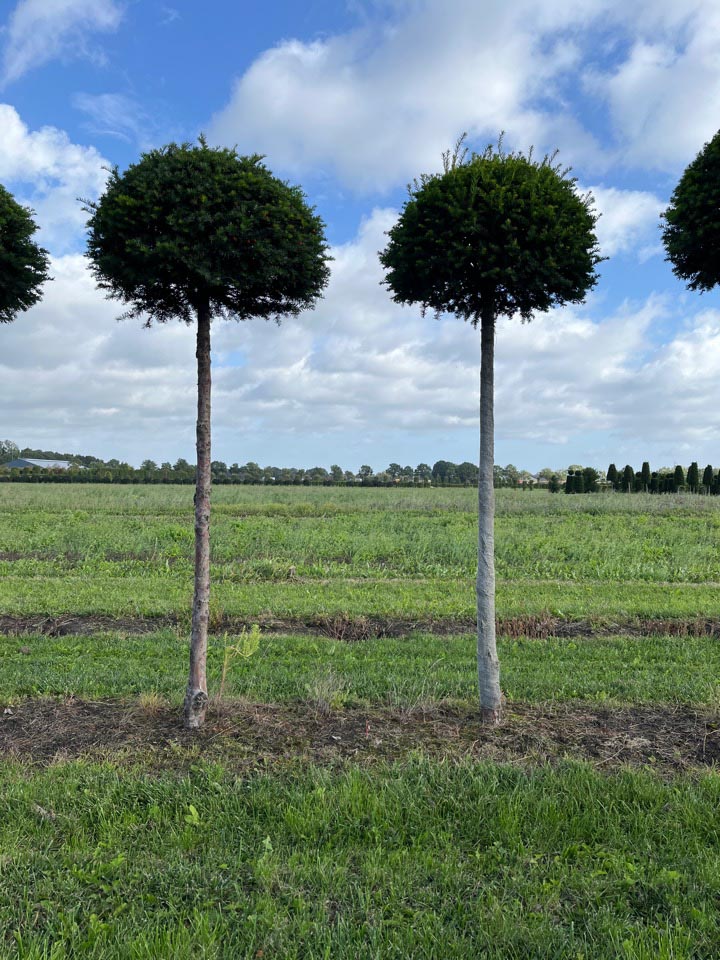
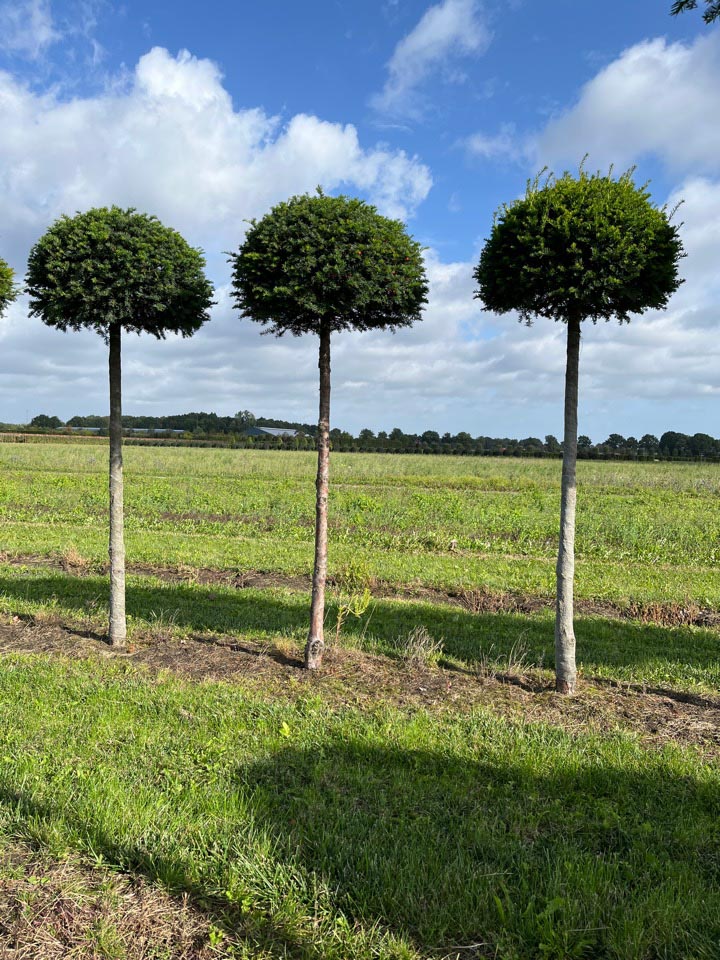
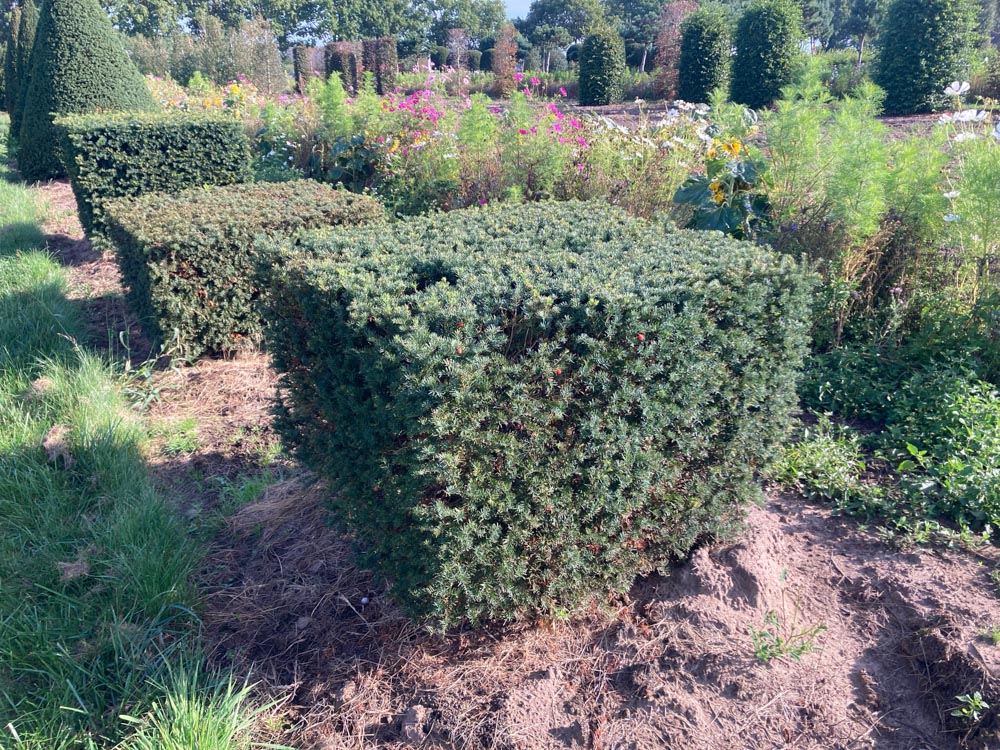
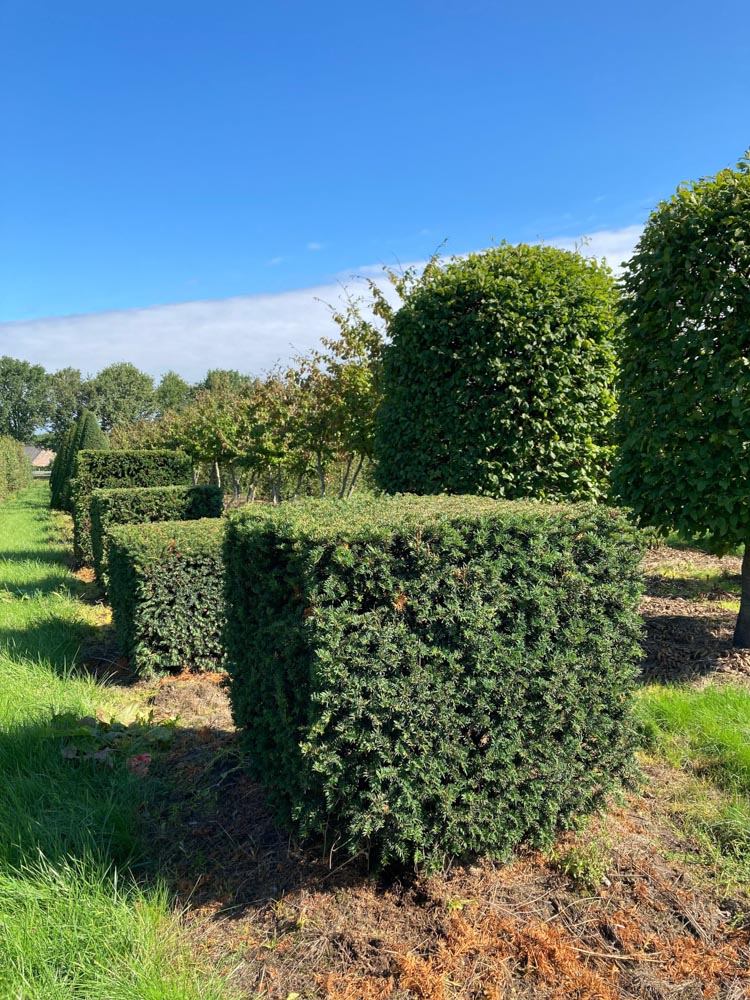
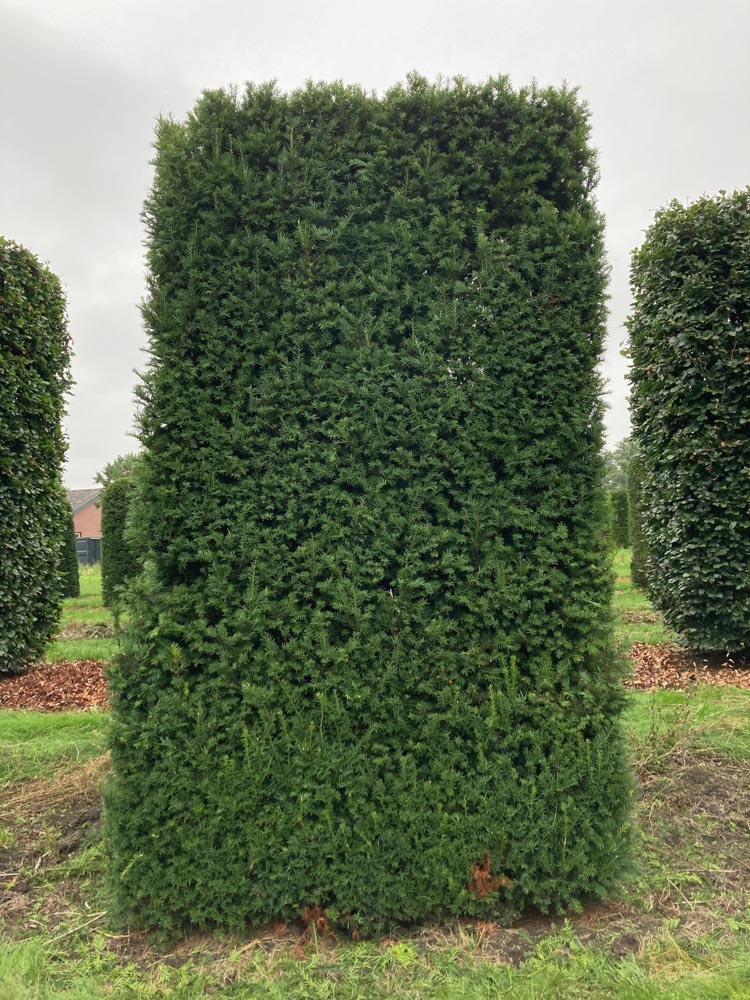
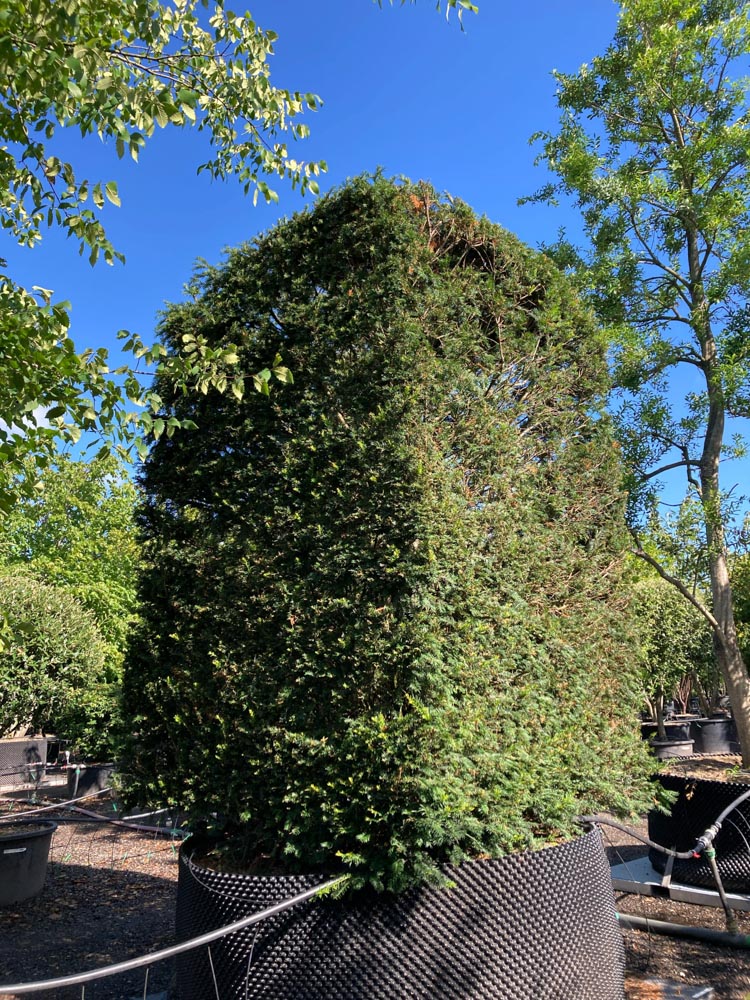
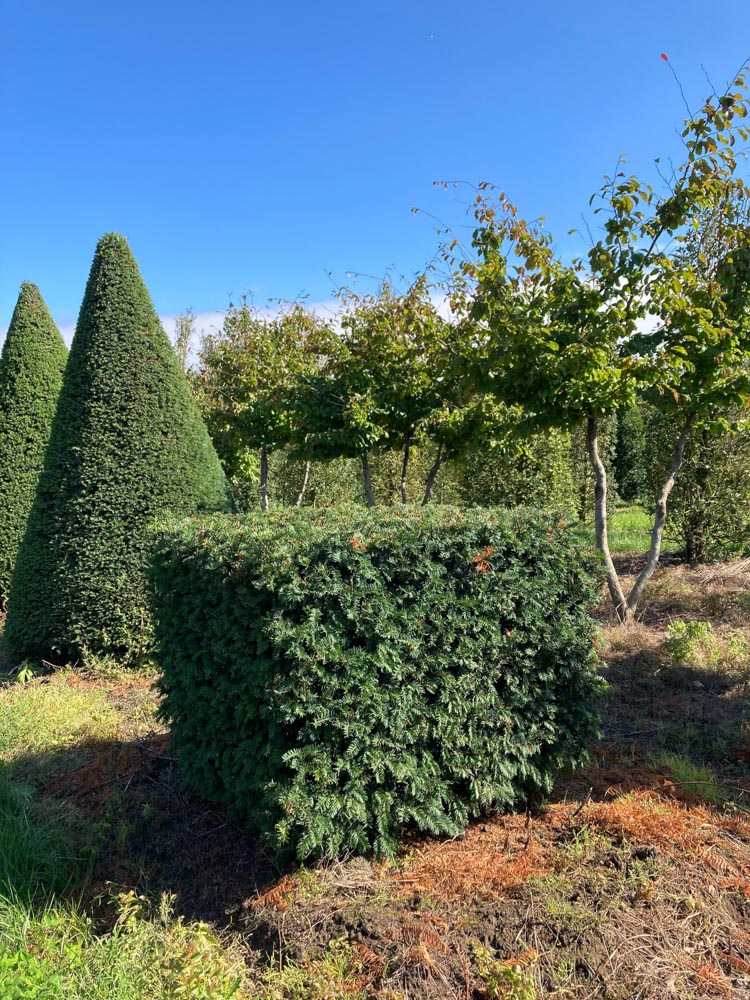
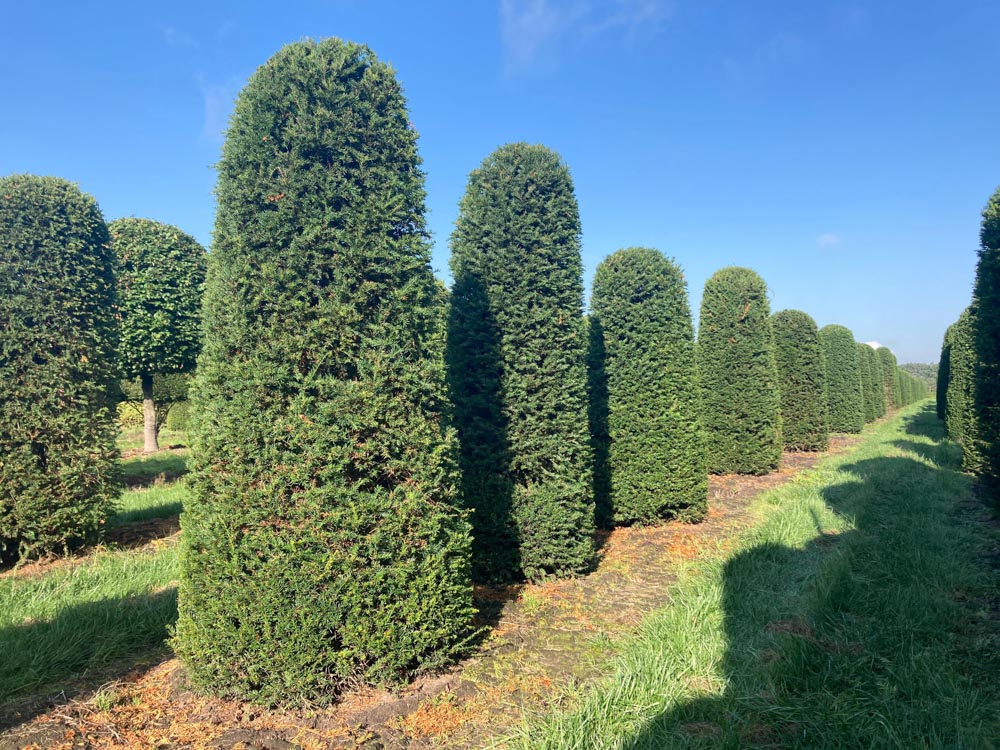
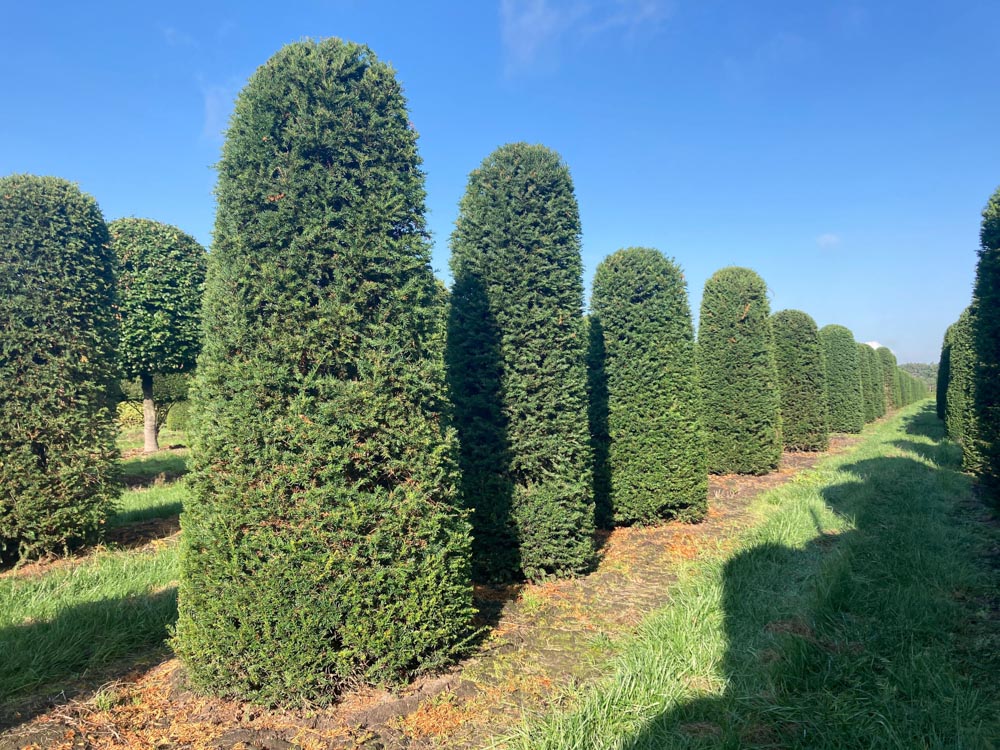
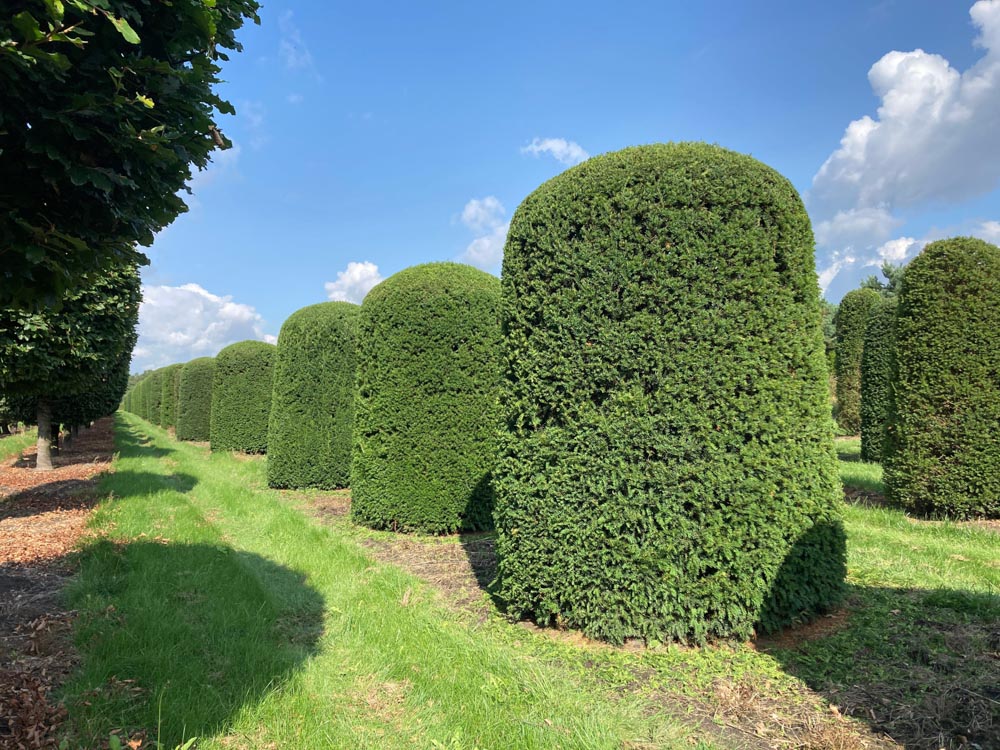
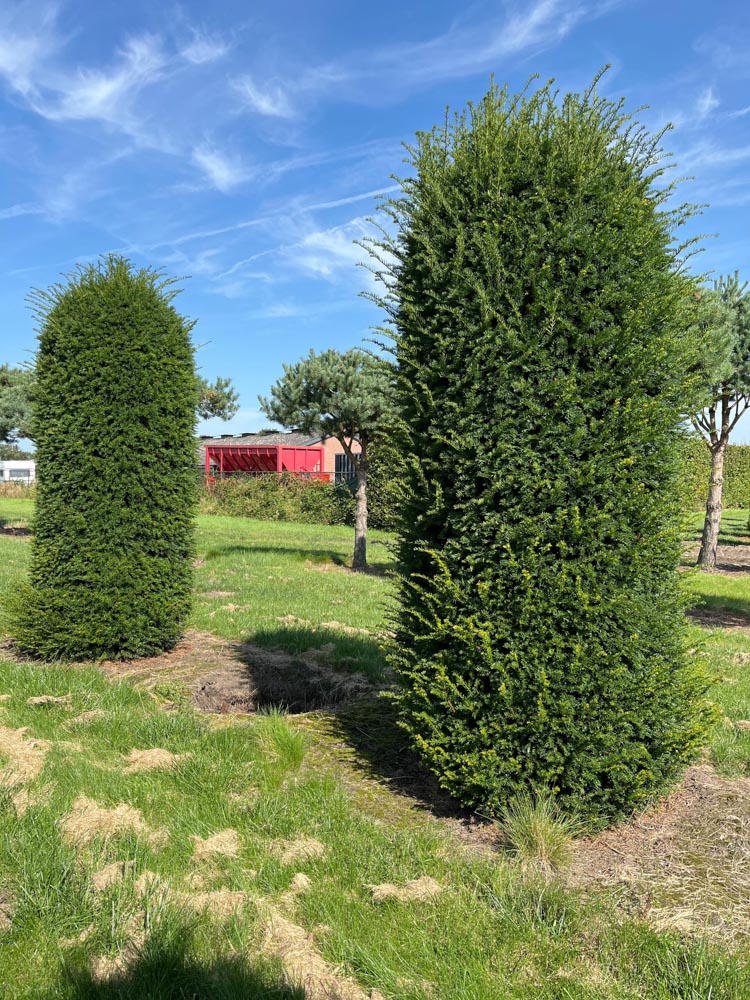
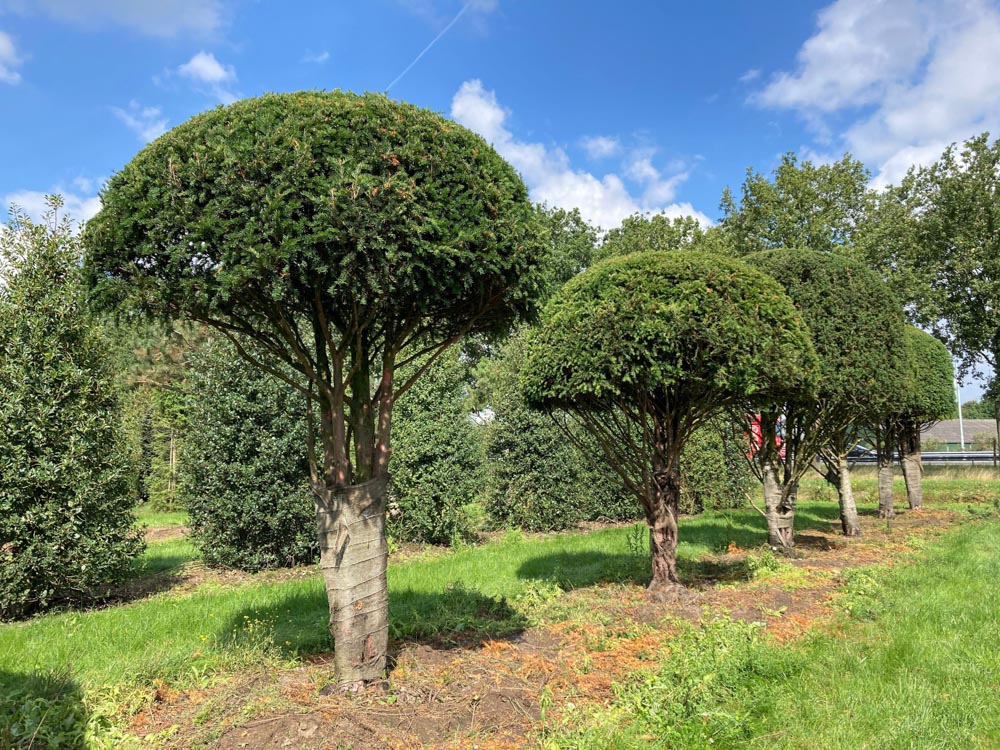
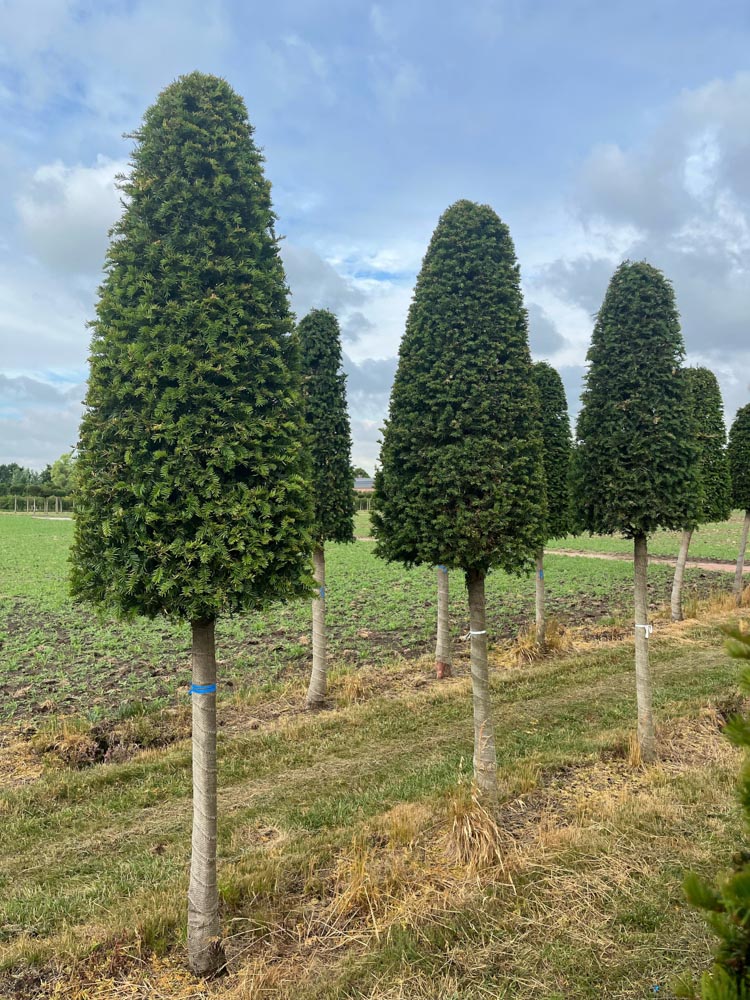
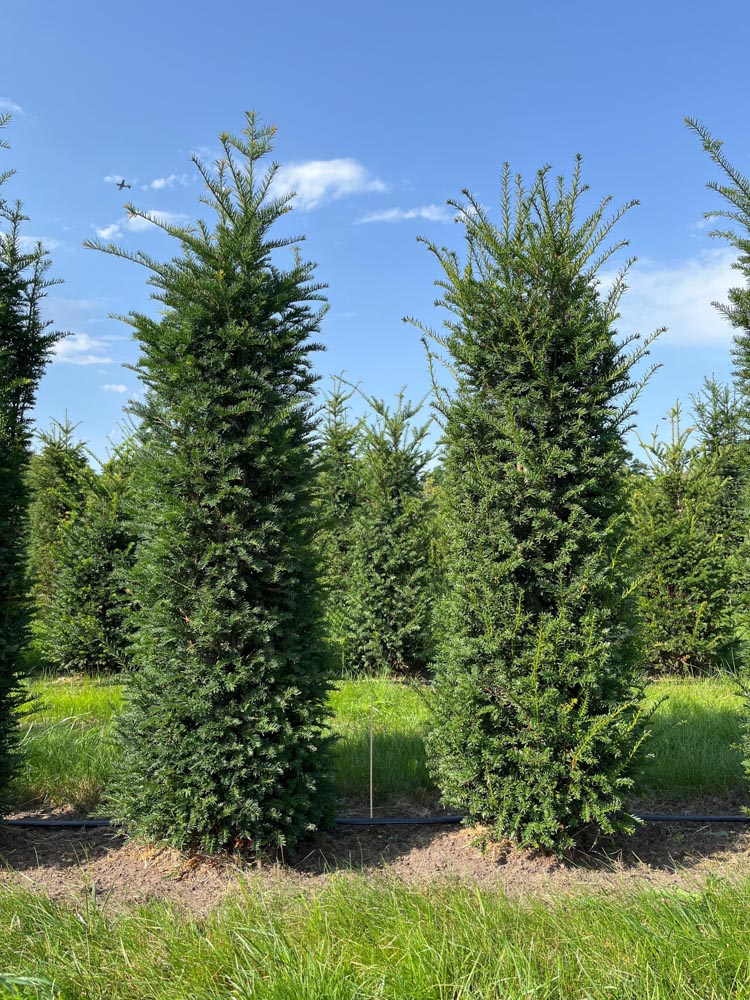
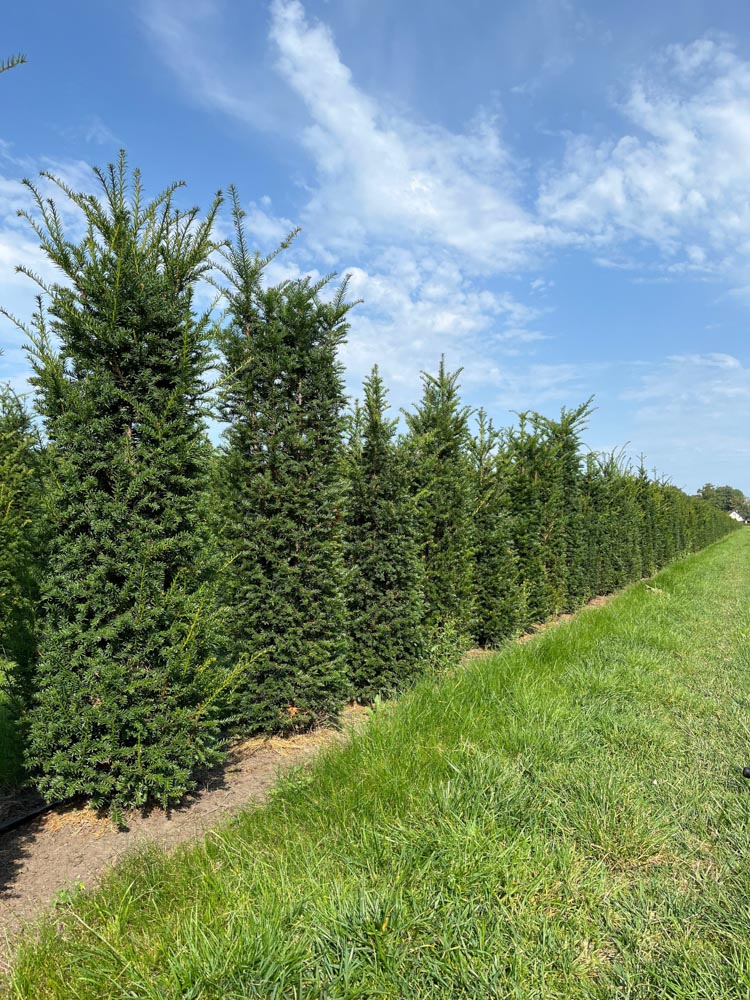
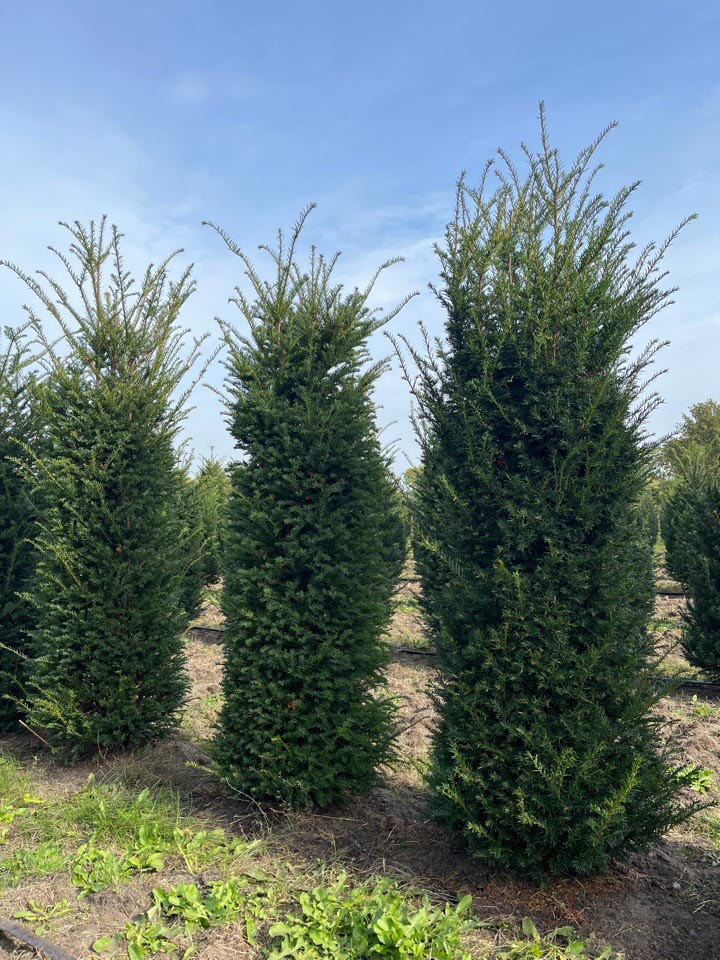
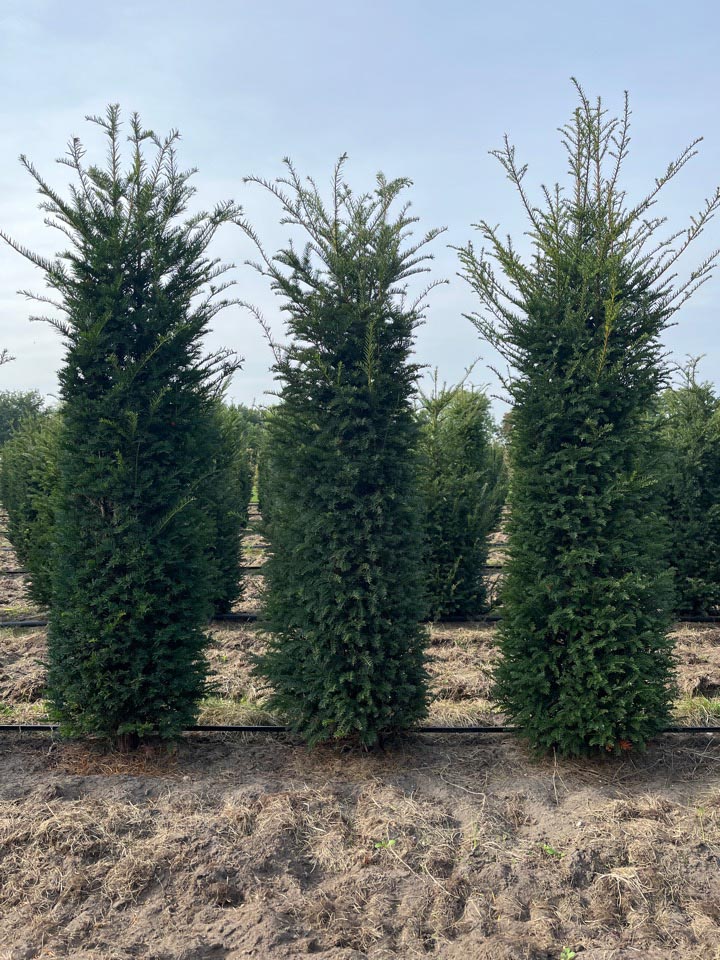
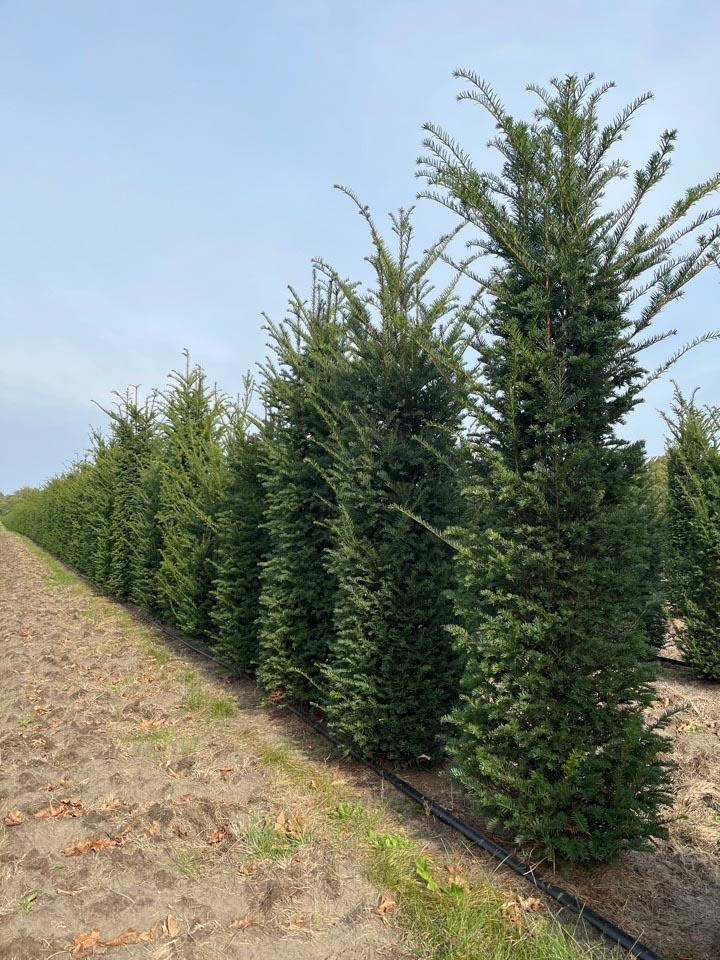
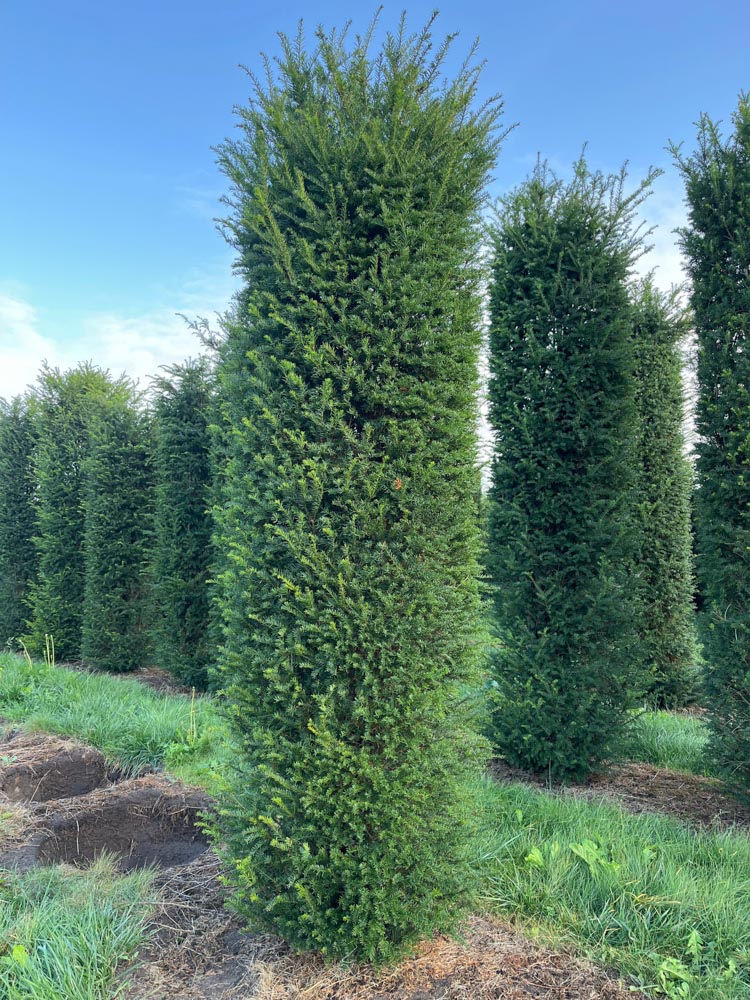
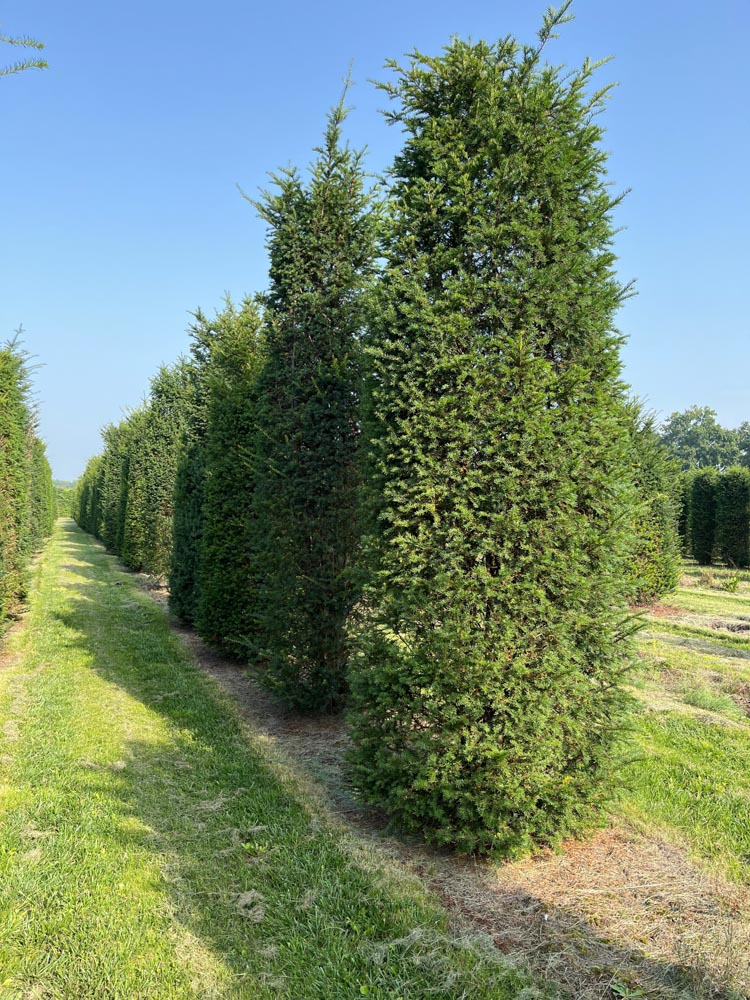
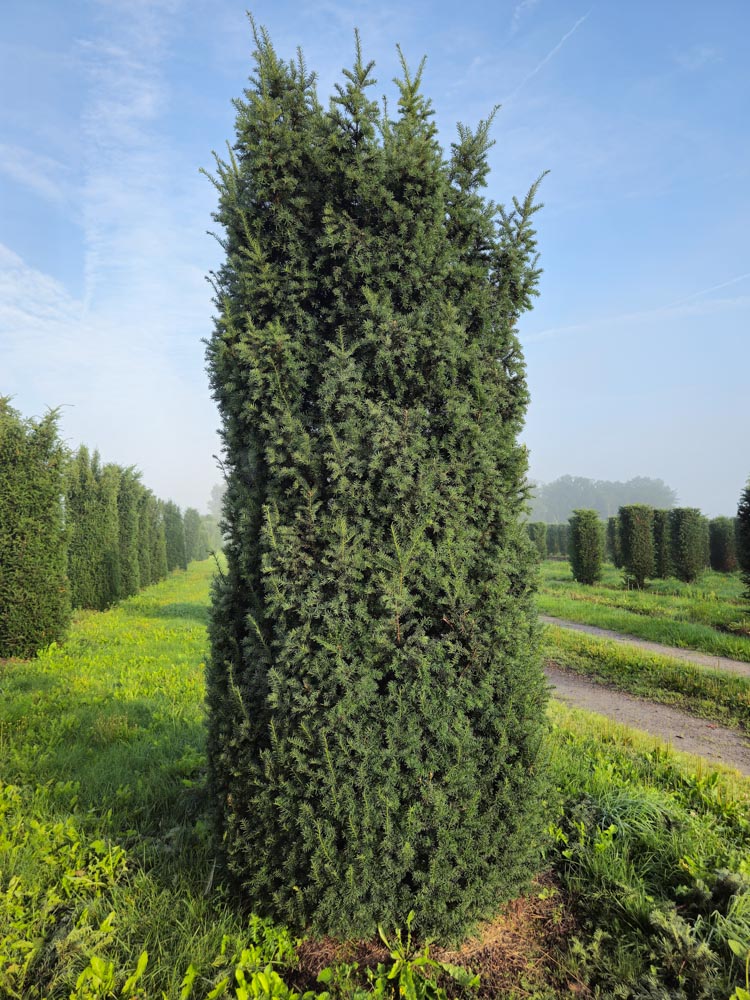
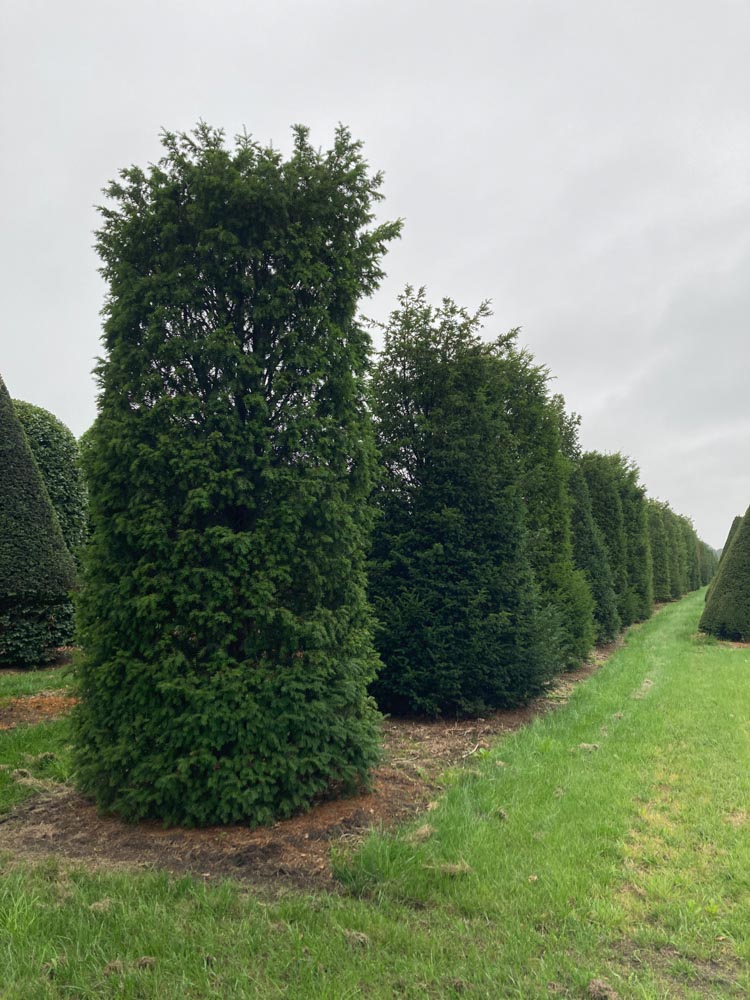
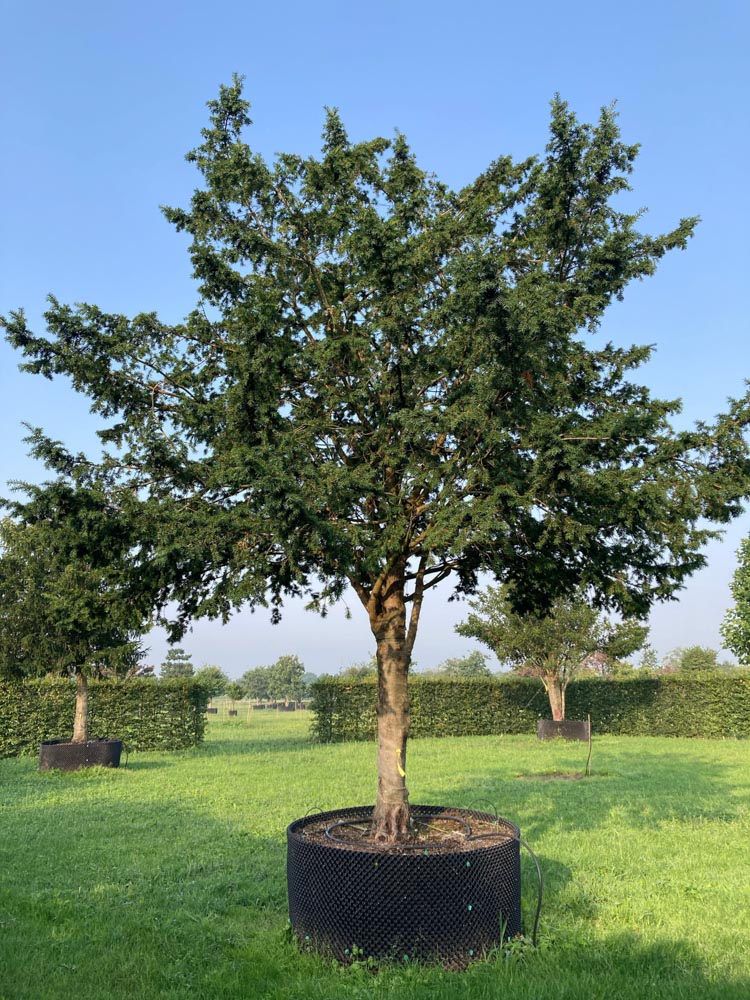
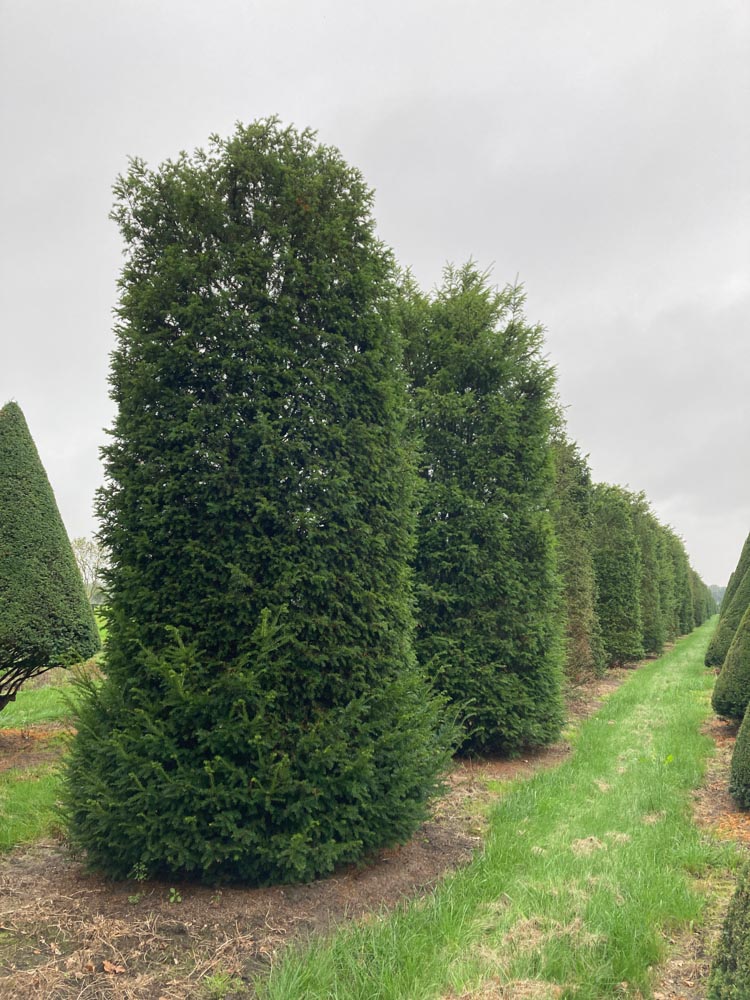
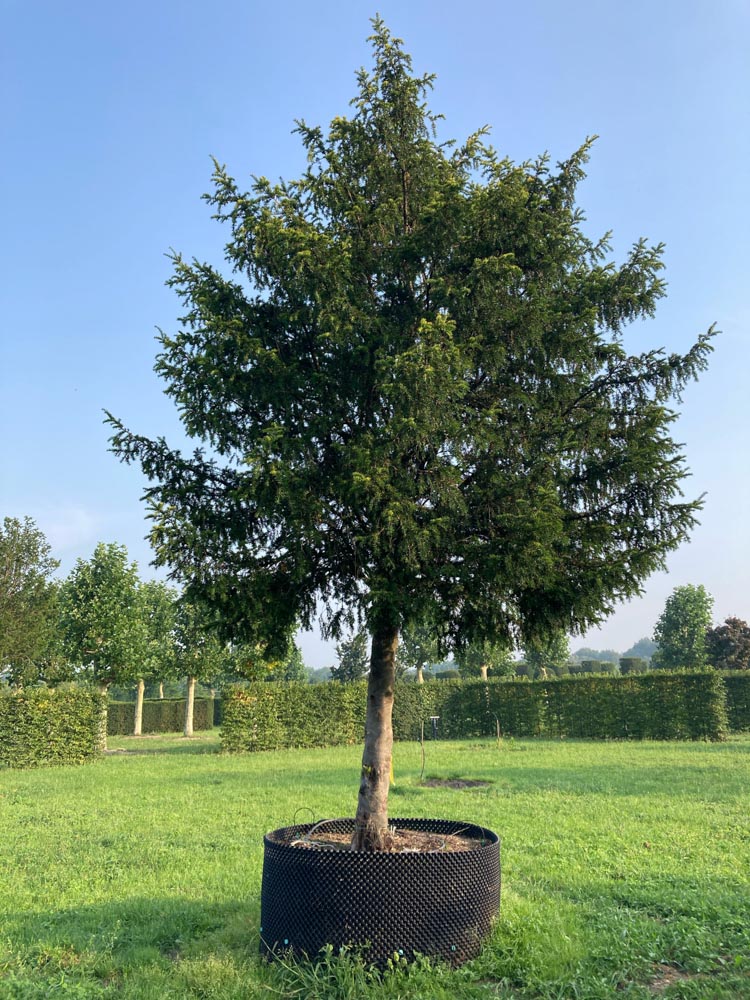
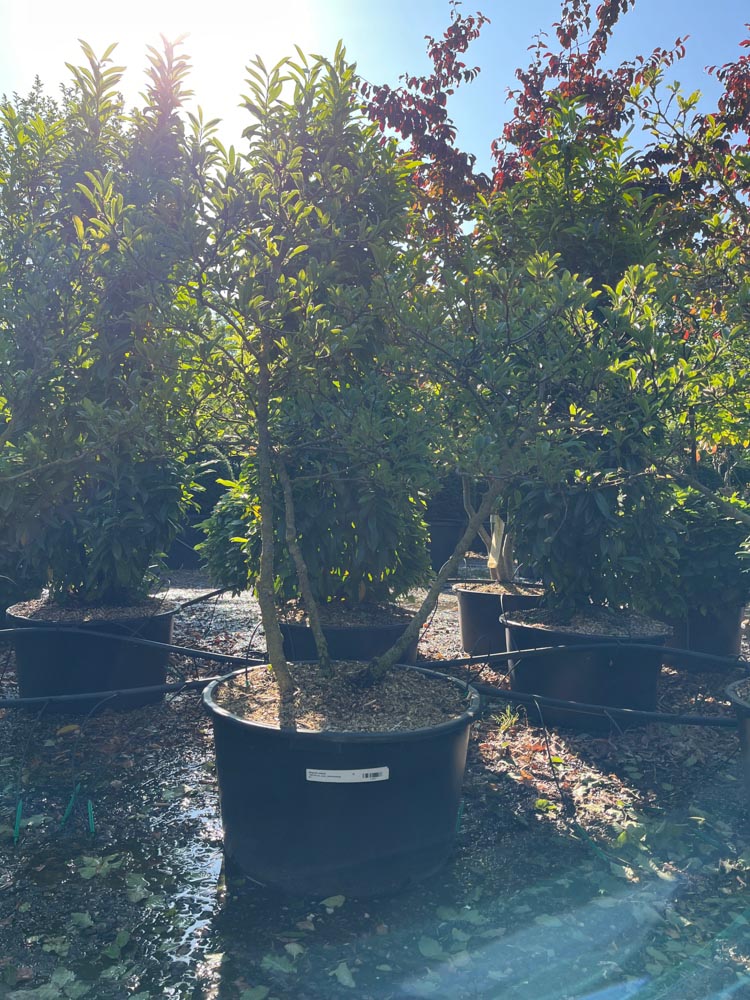
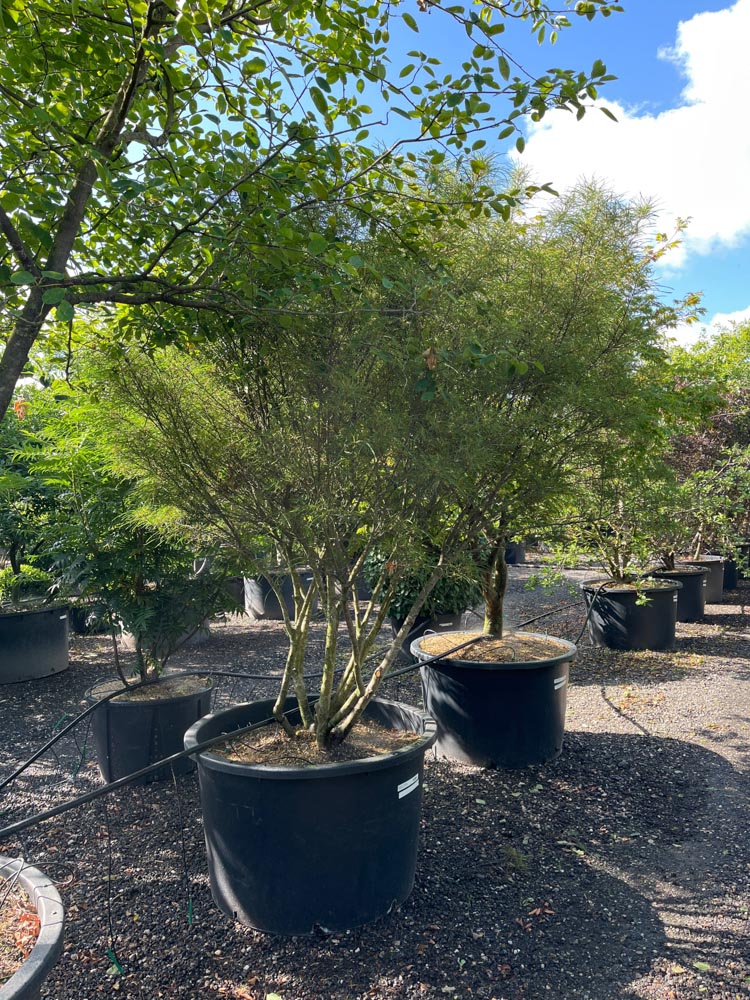
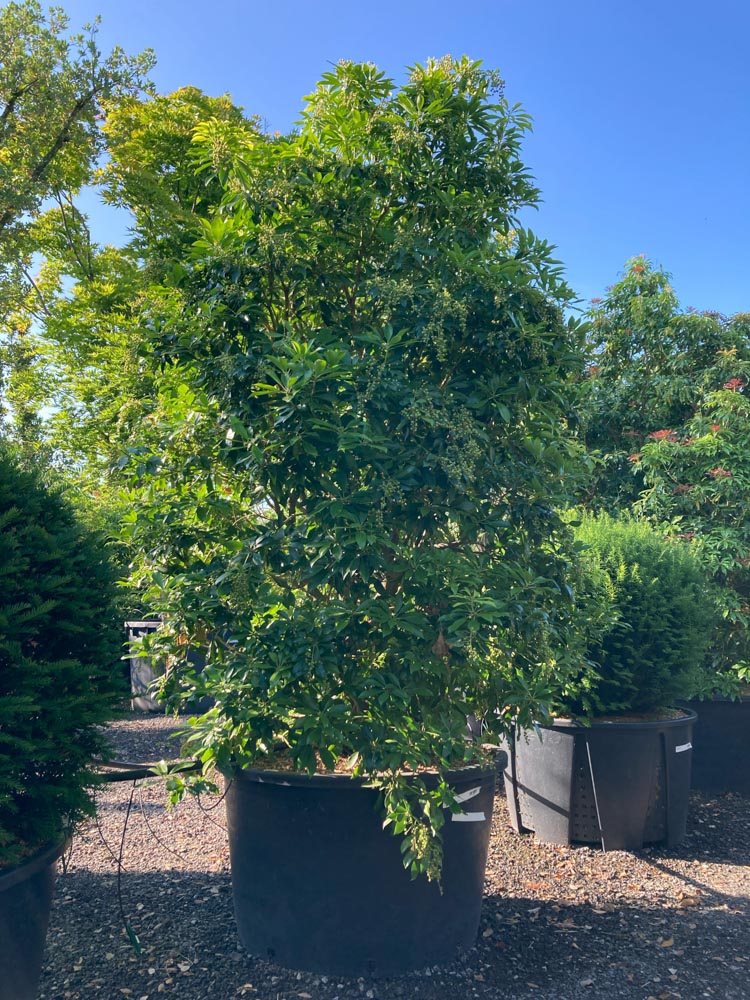
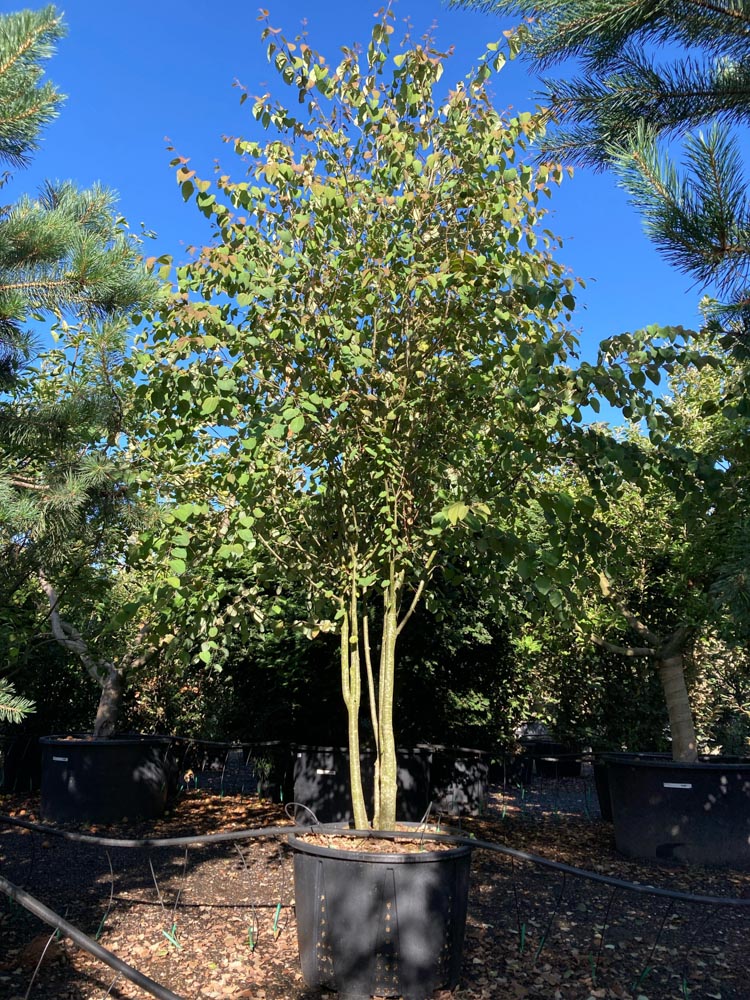
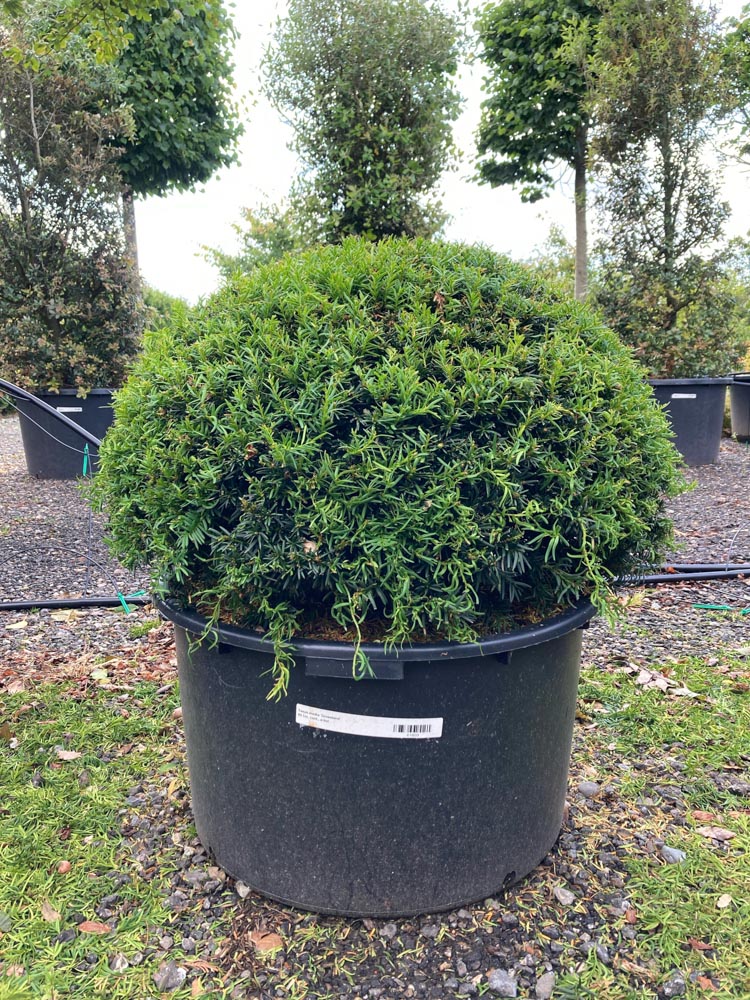
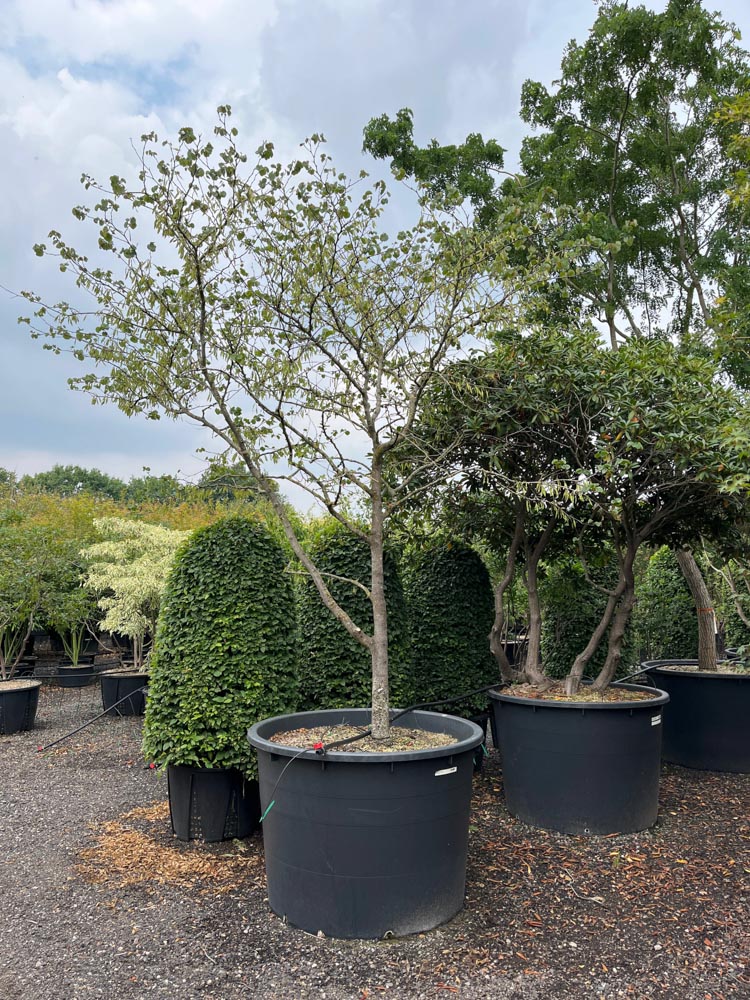
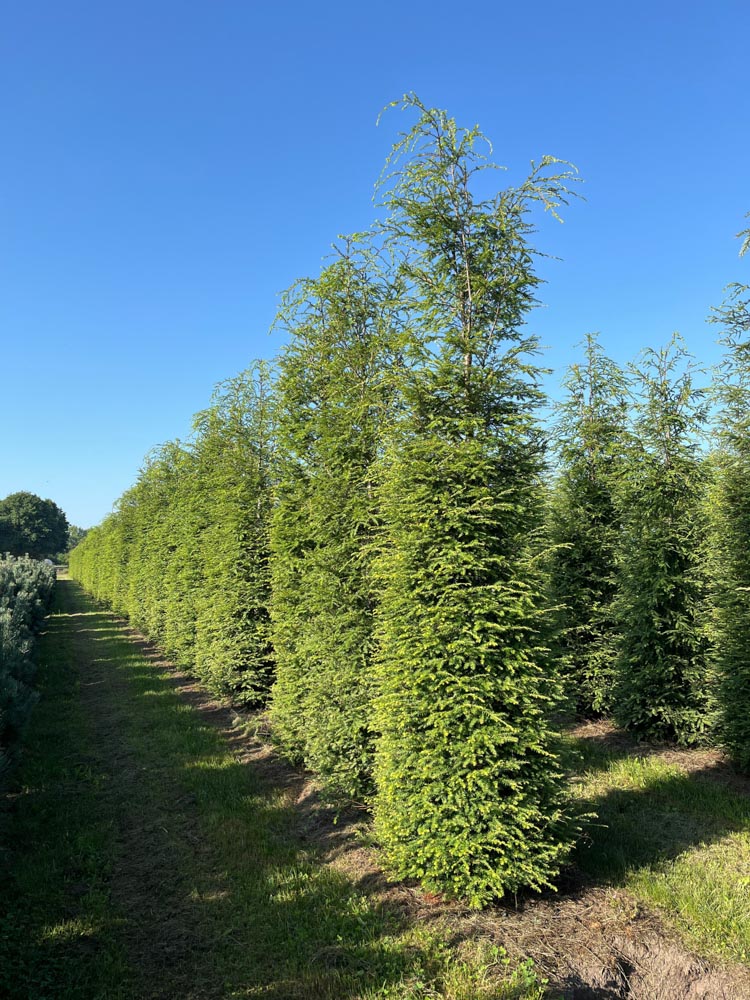
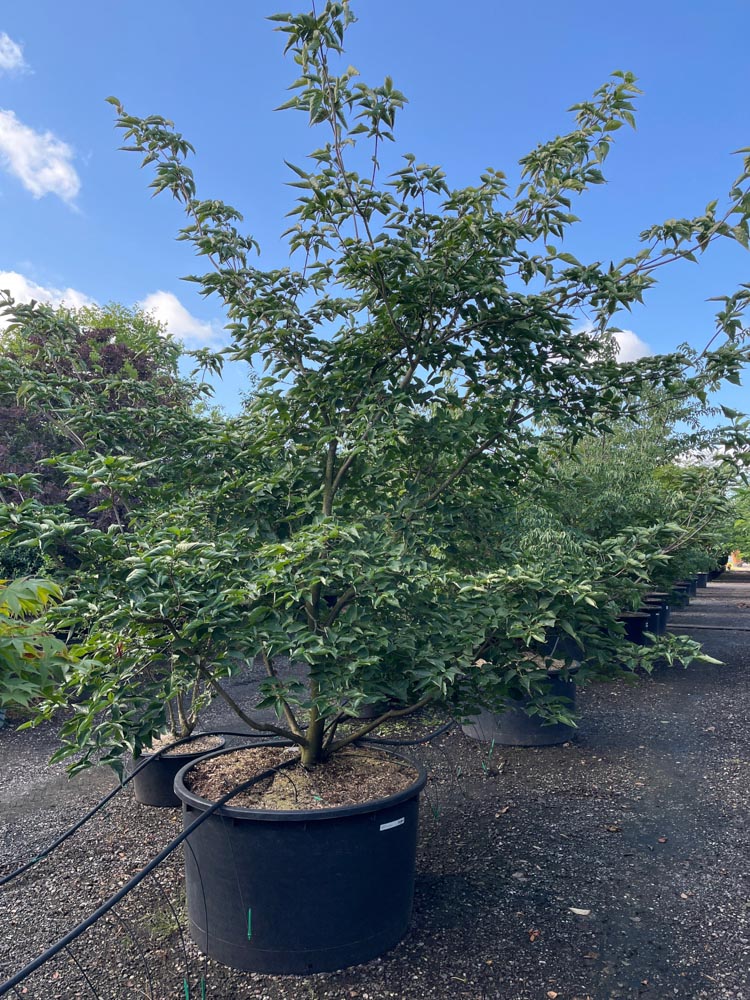
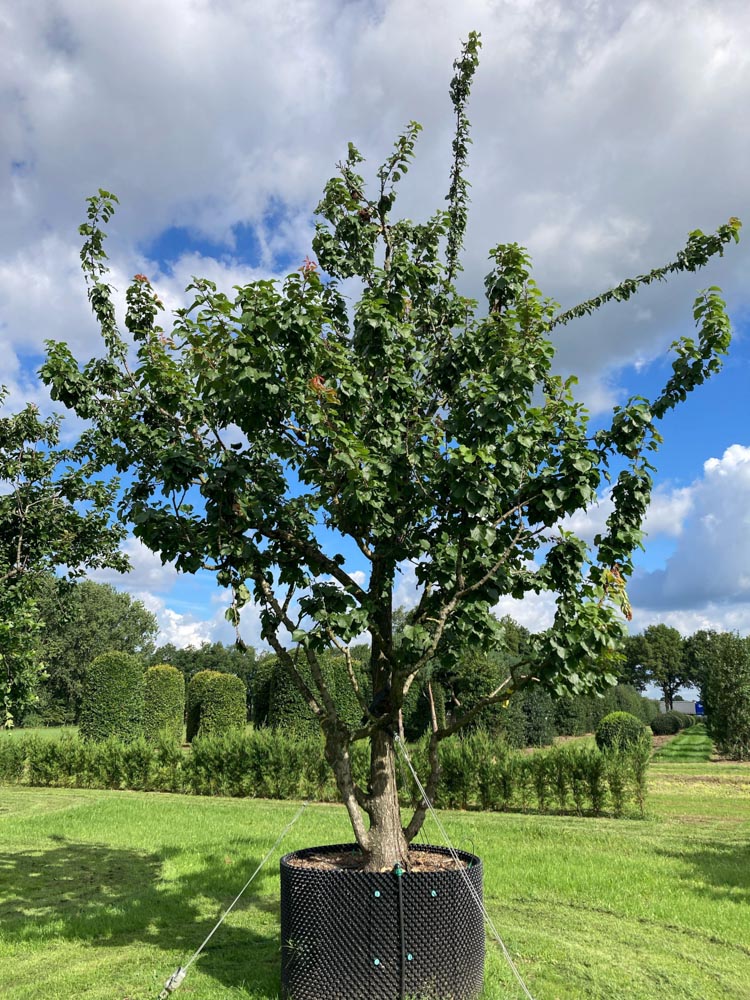
Taxus baccata, the vine tree or European yew, is one of Europe's most unusual trees. Native to North Africa, Europe and western Asia, it can live for thousands of years, making it one of the longest-lived trees in the world. In North Wales, specimens more than four thousand years old can be found. The growth habit is extremely variable: from broadly shrubby to upright, from broadly conical to open and picturesque. The trunk is reddish-brown and develops a distinctive, strongly grooved-fibrous bark with age. As an ornamental tree, the yew is peerlessly manageable: it tolerates all forms of pruning and topiary to the extreme, from perfect spheres and cones to complex shapes. Its leaves are dark green on top and lighter underneath, pinnately arranged on the twigs, present all year round. Flowering is inconspicuous: small yellow flowers in early spring. The fruits are ornamental: the red arilus (seed coat) envelop a single black seed and are particularly decorative. They ripen in autumn and are attractive to birds - the seed is poisonous but the red fleshy mantle is not. At Smits an exceptionally wide range: from 40/60 cm root ball to 500/600 cm container, in all shapes from topiary, beehive, cone, sphere, block, pyramid, spiral to free-growing and multi-stemmed.
Application and location
Taxus baccata is the most versatile evergreen tree or shrub for landscaping. From formal topiary and hedge to solitary free growth and espalier: all applications are possible. Sun, semi-shade and deep shade are well tolerated. Loam, sand and lime are suitable; no wet clay soils. Tolerant to drought and wind. Excellent winter hardiness. Attention: all parts except the red fruit mantle are toxic to humans and animals. Suitable for garden, park and urban use.
Do you already know exactly what you need?
Every garden and every greenery project is different. Therefore, at Smits Arboriculture we do not make standard quotations, but we like to look together at what suits your wishes, planning and the character of the project.